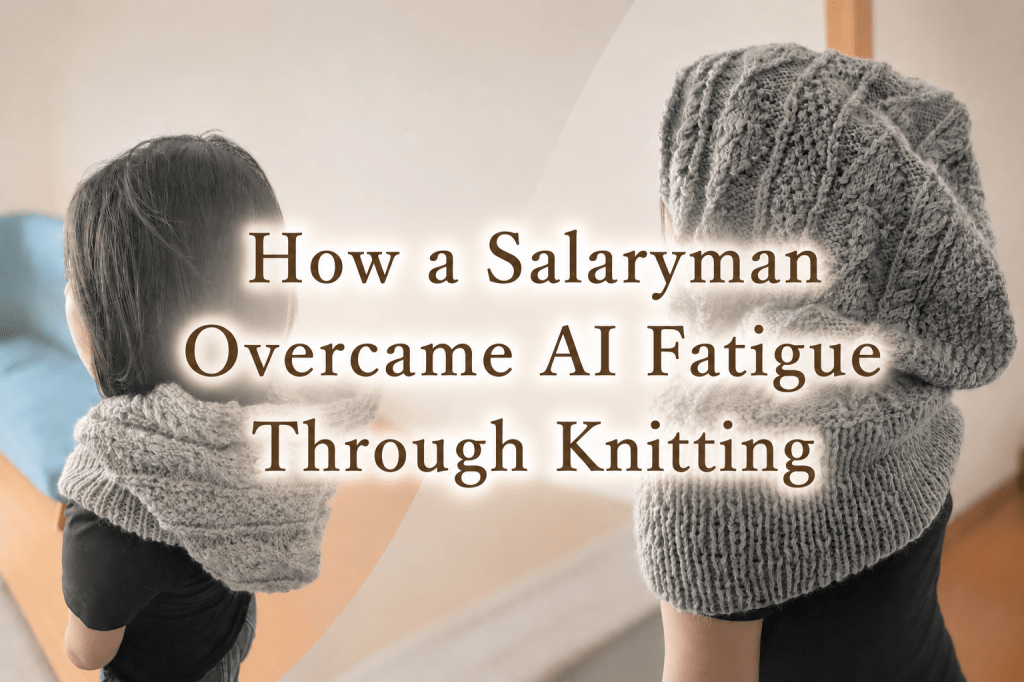
Ever since I started using AI, I’ve been spending more time knitting.
Not because AI is doing my work for me. If anything, the opposite happened. Ironically, the more AI can do, the more work seems to fall on the humans using it. My nerves felt stretched to their breaking point, and before long I found myself reaching for knitting needles and yarn just to calm down.
When I mentioned this to my psychiatrist, she smiled, raised her eyebrows in surprise, and said, “Mr. Kusaka, I actually think knitting makes perfect sense as a remedy for AI fatigue.”
I see my psychiatrist once a month to renew my prescription for sleeping medication. Usually it’s no big deal—just routine maintenance, like going to the dentist.
But last month was different. Even with the medication, I couldn’t sleep. Hours would pass, my sleep stayed shallow, and all I felt was my neck getting stiffer. Eventually I’d hear the first delivery trucks outside, throw off the blanket with an exhausted sigh, and give up on sleeping altogether.
I’ve always suffered from a lifelong condition of not wanting to work. But this was different. Along with that familiar reluctance came overwhelming fatigue and a constant feeling of exhaustion. Work had certainly been busy, but not busy enough to explain why I couldn’t sleep.
So I switched to working from home for a while. Whenever I found a spare moment, I knitted. Sometimes a small change of pace is enough to steady your mind.
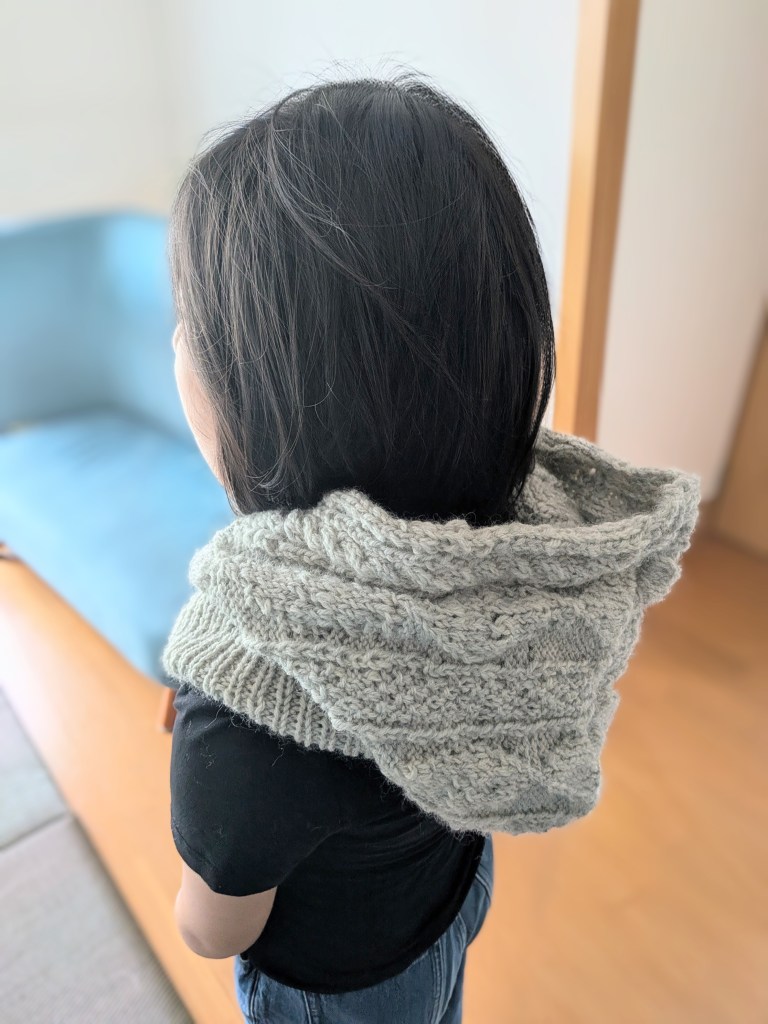
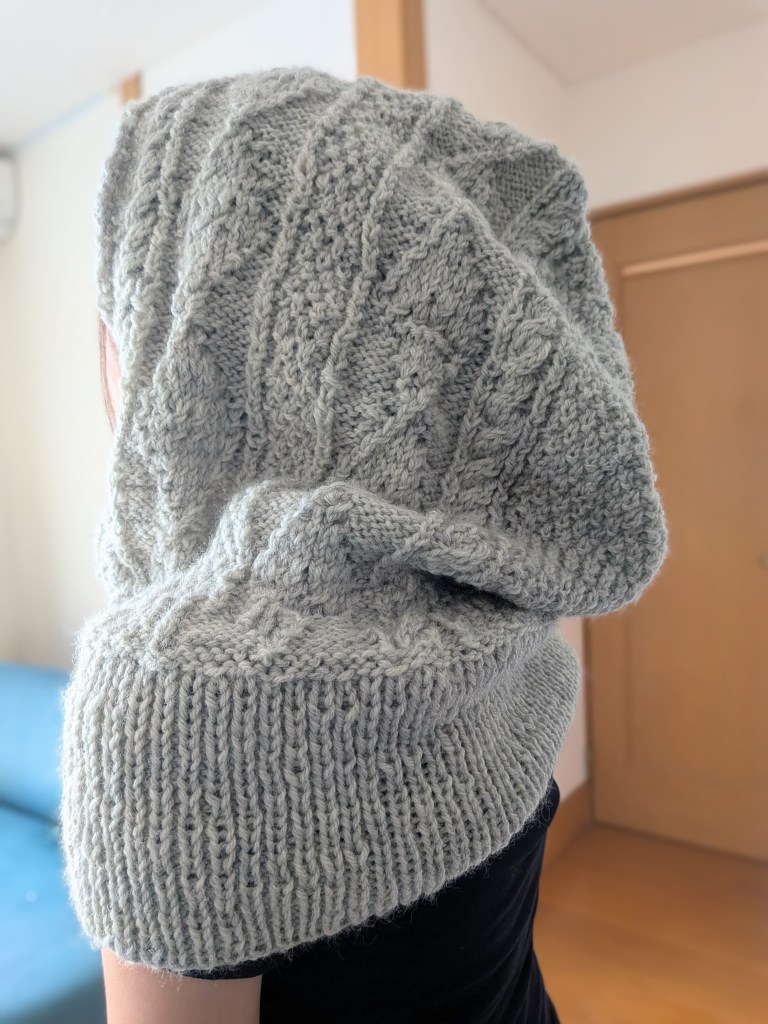
Of course, once I picked up the needles, “just a little knitting” was never going to happen. I’d quietly knit with my camera turned off during online meetings. It felt slightly wrong—which somehow made it even more satisfying. By then, the hooded neck warmer I was making was almost finished.
“So that’s how the last month has been,” I told my doctor. “Do you use AI for work?” “I do.” “How much?” “Pretty much all of my desk work.” After all, I was born with chronic work avoidance. Naturally, I’d also developed a tendency to let someone—or something—do my work for me.
“I think that’s the cause,” she said, pointing at the computer where she was typing my chart. “Lately, we’ve been seeing a sudden increase in patients with AI fatigue.”
Most of the AI we use today is conversational. But talking to AI isn’t the same as chatting with family, friends, or coworkers. You’re not having a conversation. You’re trying to extract the exact output you want by giving carefully crafted instructions.
If everyday conversation is a game of catch, prompting AI is more like pitching to strike someone out. People assume AI automatically makes life easier. Sometimes it reduces the amount of work. That doesn’t necessarily mean it reduces the amount of thinking.
“Mr. Kusaka,” she continued, “using AI all day is basically the same as negotiating all day.” That instantly clicked. At first I was fascinated by how fast and capable AI was. Now I often catch myself thinking, Ugh… I have to deal with this thing again.
It feels a bit like arguing with an inflexible client, a stubborn boss, or an overly logical senior coworker. It’s a kind of conversation our brains have never really had to do before.
I even wondered if we’d eventually get used to it. “We probably won’t,” she said. “Our brains didn’t evolve for this. I think we’ll see more and more patients with AI fatigue.”She grinned. “Which is good for my business.” Then she laughed. “I’m kidding.” She had the confidence of someone who knew exactly what she was talking about.
The problem is, I can’t imagine working without AI anymore. It’s become indispensable. One of her patients happens to be the founder of an AI startup. “He only uses AI in the mornings now,” she told me. “He pushed himself so hard using it all day that he ended up with terrible headaches and eventually collapsed. Now he limits his AI time.” Maybe the pain in my neck every night wasn’t so different.
“So, going back to what you told me earlier,” she said, “I think knitting is an excellent idea. It’s a surprisingly sensible treatment for AI fatigue.” Not once did she give me that You knit? Really? look. A true professional.
If I was going to spend hours every day talking to AI, then I needed to balance it with stretches of time away from screens—something slower, something tactile, something that used all five senses. “You’re using your creativity,” she said. “You’re using your hands. Your brain is working in a completely different way. It might actually be one of the best remedies for AI fatigue.”
I left the clinic feeling strangely validated. That evening I spread out my knitting chart again. The hooded neck warmer was nearly finished. Only the hood itself remained. As the stitches gradually decreased toward the top of the head, the finish line was finally in sight. Unfortunately, that’s when things became the hardest.
I couldn’t understand the decrease instructions. Knitting charts look a bit like graph paper. Each square contains a stitch symbol, and when a decrease happens, the stitch disappears on the next row. Before long, the chart starts looking like Swiss cheese, and it no longer resembles the piece of knitting in your hands.
“I decreased one stitch in the previous row… so why is this square empty?” “I’ve knitted three more rows, so I should have six fewer stitches… right? Wait… where am I?” Past midnight, I found myself talking to the chart. I’d knit, rip it back, accidentally unravel too much, then quietly pretend it was intentional by adding another decrease.
Oddly enough, that imperfection was comforting. Even when the pattern became a little crooked, the wool was still soft. There was something about touching real yarn—something completely absent from words like generate and output—that slowly relaxed my overworked brain.
The next morning, I finally handed the finished neck warmer to my daughter. She pulled it over her head and smiled. “It’s just like Little Red Riding Hood!” She was right. I’d often wondered whether anyone actually wore a hood like that in real life. Apparently they do. Sometimes they knit one themselves. The hood fit perfectly, keeping her head warm.
Everyone has their own way of protecting themselves. Mine just happens to be knitting. Looking back, maybe the reason I couldn’t sleep last month was simple. I hadn’t been knitting enough. So next month, I think I’ll spend a little more time with my needles.
Actually… Quite a lot more. In the meantime, AI can keep helping me with work. I’ll stick with knitting to help myself.


Leave a Reply