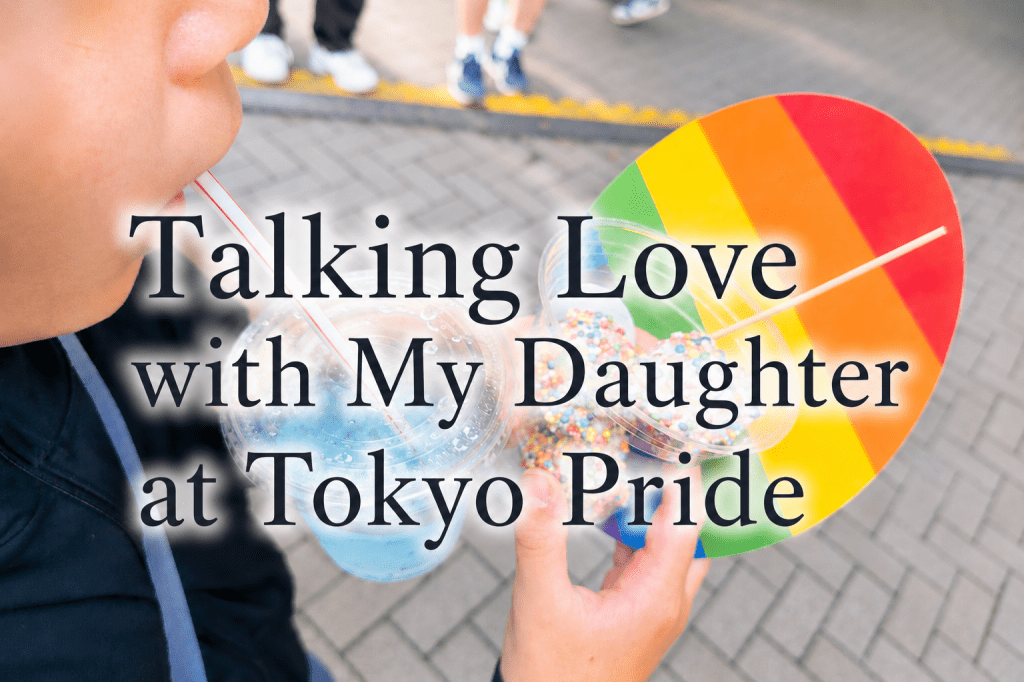
“Mom, how many people have you dated?” My daughter was asking my wife. Hey, could you not ask that while Dad is standing right here?
My daughter is in fourth grade now, and she’s starting to take an interest in romance. She already has a boyfriend, and one of her classmates is part of a couple that’s been together for seven years. I’ll say that again: they’re in fourth grade.
And at her school, sex education classes are about to begin. Our local government promotes “comprehensive sexuality education,” and it has even published pamphlets designed to help people better understand sexual minorities. But this is ultimately a matter of human rights. It isn’t something children should learn only at school.
So I took my daughter to Tokyo Pride 2026.It was Sunday, June 7. In Tokyo’s Shibuya district, the rain had just stopped, leaving behind an overcast sky. Neither too hot nor too cold—it was perfect weather for a family outing.
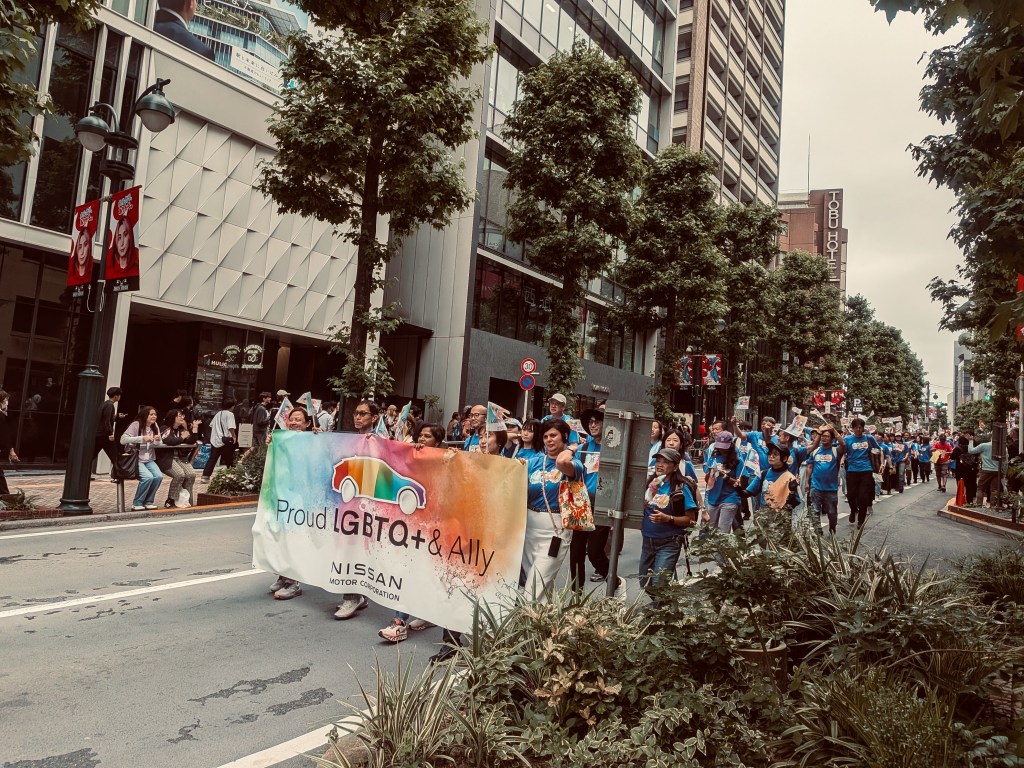
Tokyo Pride 2026 is an event dedicated to protecting the rights of the LGBTQ+ community and increasing social awareness. Its goal is to deepen understanding of human rights and eliminate prejudice and discrimination, which is why people from all kinds of backgrounds participate—people with disabilities, people from overseas, and many others.
As we walked from Shibuya Station toward Yoyogi Park, home to NHK’s headquarters, we passed parade groups from various organizations and companies. Some were families like ours, carrying banners and leading the procession.
People along the streets cheered, and participants waved back with smiling faces. It was probably the one day of the year when all of Shibuya felt wrapped in happiness and peace.
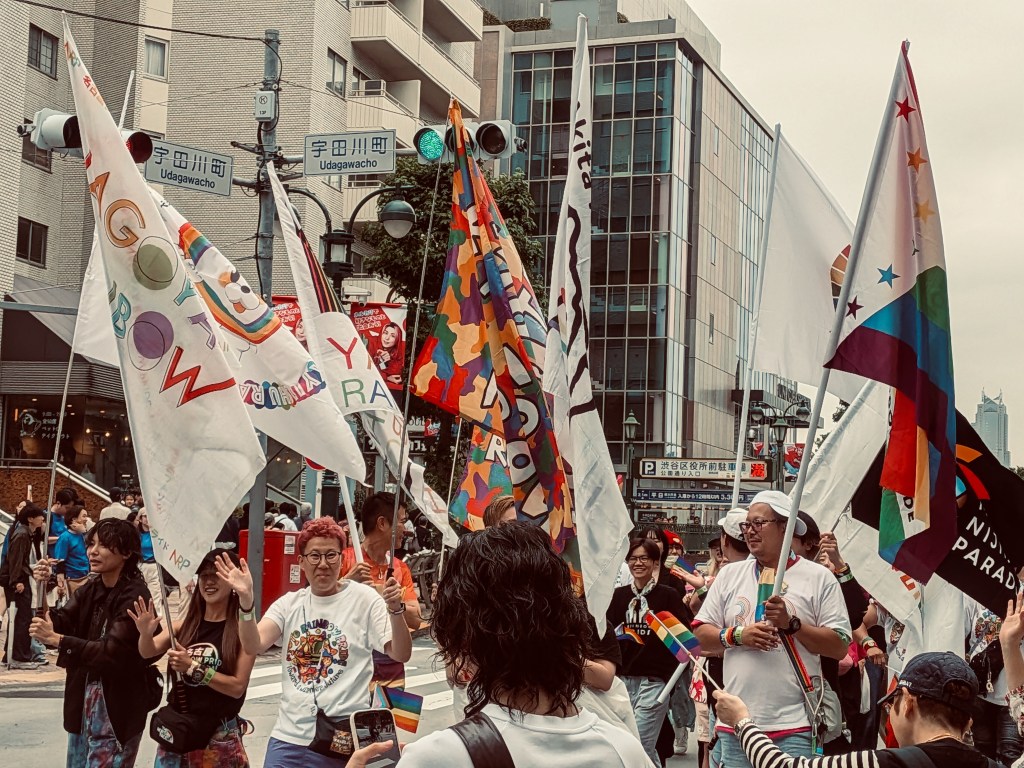
Just behind us, someone suddenly shouted: “I am gay! He is my husband! Happy Pride!” I turned around and saw a young male couple. One was calling out to the crowd while the other stood beside him, grinning and saying, “Thanks.”
In that instant, the attention of the crowd converged on them, and an explosion of cheers erupted. I raised my hands above my head and applauded too.
“What did he say?” my daughter asked. “He said, ‘I’m gay. He’s my husband.’” She kept turning around to watch the celebration, which looked as if the crowd might lift them onto their shoulders at any moment.
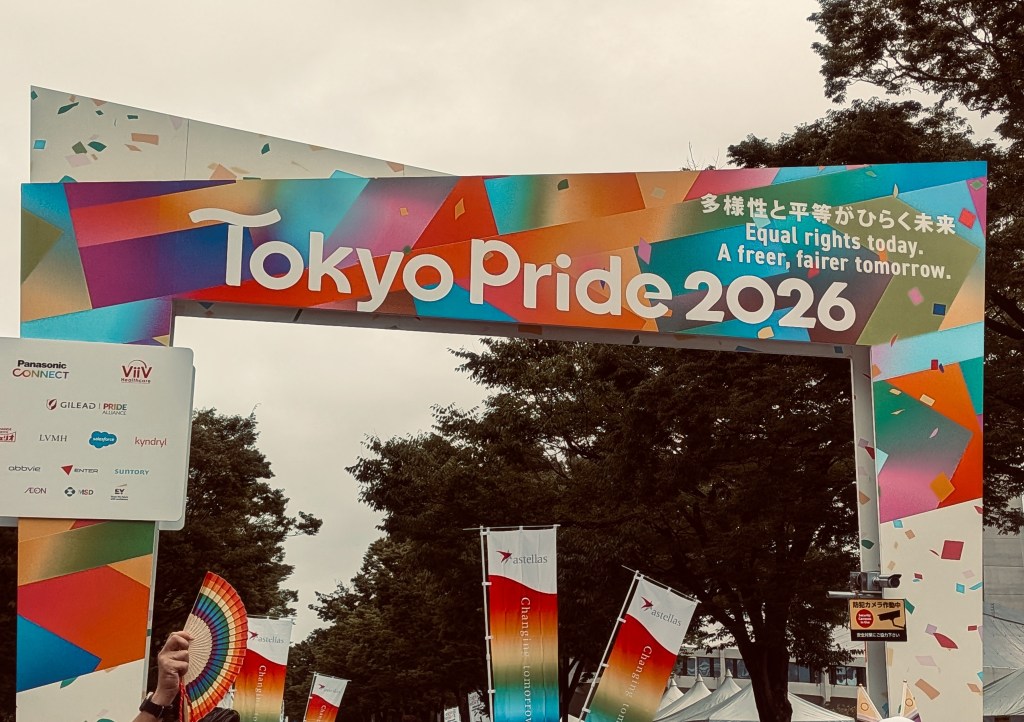
I’d brought my daughter to Tokyo Pride before.But this is one of the largest Pride events in Asia. According to the organizers, around 300,000 people attend—roughly the entire population of Akita City gathered in one place.
When she was younger and much smaller, she would get exhausted before she could really enjoy the event. Every year followed the same pattern: we’d pass through the main gate, and then I’d carry her the rest of the way.
But she’s grown up. I can’t carry her anymore, and even if I could, she wouldn’t let me. On the other hand, she’s grown stronger. This year, the two of us managed to make it all the way to the food area together. We spotted a food truck that looked promising and got in line.
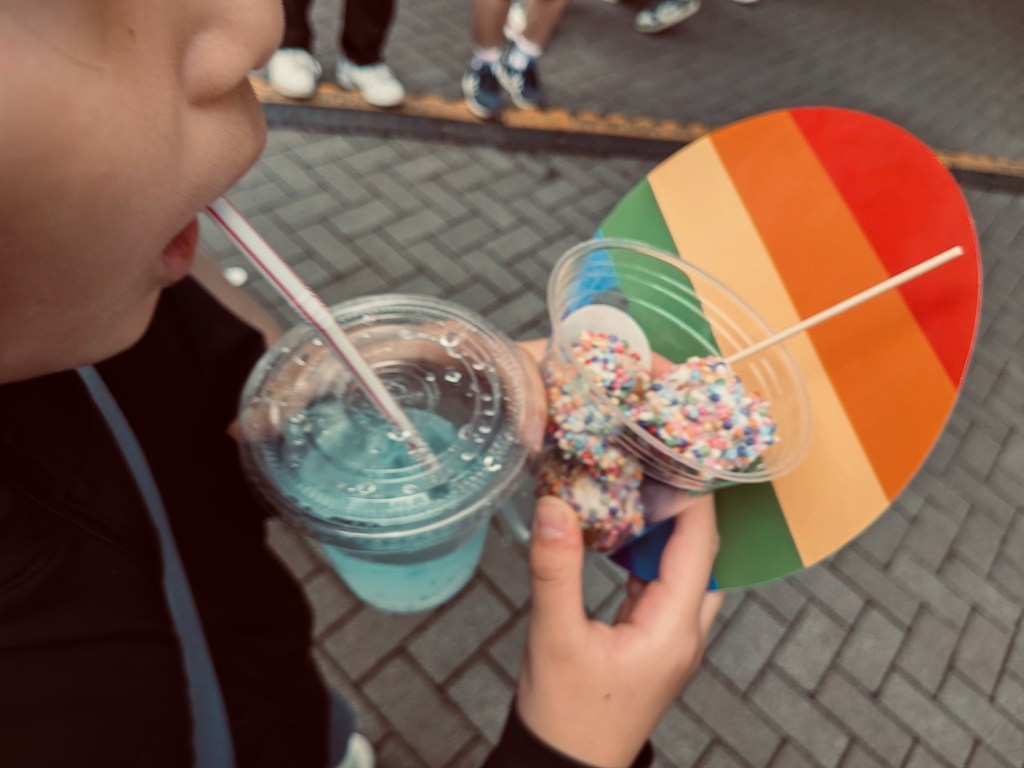
The smell of meat grilling. The aroma of spices. Voices calling out “Cheers!” and “Long time no see!” People in extravagant costumes. People wearing almost nothing. People covered in body paint. People with no makeup at all. Parents pushing strollers. People using white canes. People of every imaginable skin tone.
As we watched the crowd pass by, my daughter and I talked. “There are all kinds of people here.” “More like there are only all kinds of people.” “It sure is crowded.” “Well, everyone’s having fun, so that’s good.” She acted as if she were an experienced veteran—I’ve been here before, you know—but her eyes kept darting everywhere. Maybe growing taller had changed what she could see.
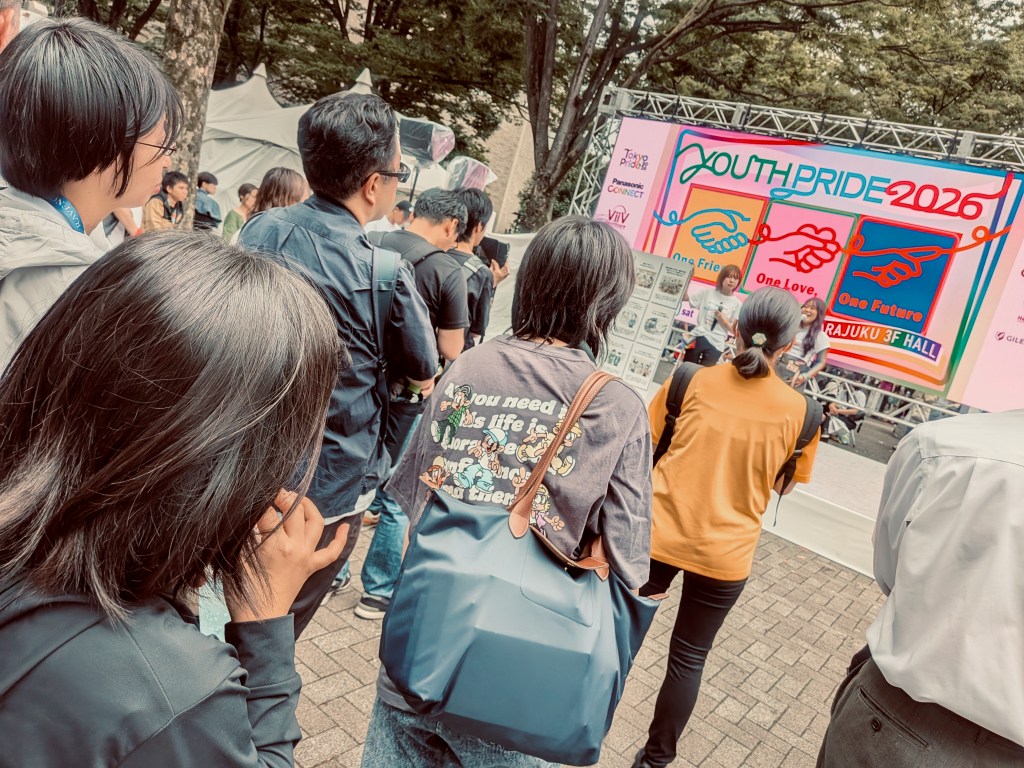
“Are there kids in your class who are dating?” “A few. Girls talk about that stuff more. Boys don’t, really.” “There are probably boys who like boys, too. And girls who like girls.” “Definitely not in my class! That’s just not the vibe.”
There it was. I had been waiting for that one. Dad had done his homework. “No, I’m sure there are.” “You think so?” “They just don’t say it.” “Maybe.” “How many kids are in your class?” “Twenty-nine.” “Then statistically, there should be two or three.” “That’s actually kind of a lot.” “It is kind of a lot.” Looking across various surveys, somewhere around 8–10 percent of people belong to a sexual minority. When I explained that, my daughter—who had only recently learned percentages in school—looked genuinely surprised.
“You know, you could end up being one of those ‘kind of a lot’ people too.” “But I’d be okay,” she said. “I know what it feels like to get hit. The boys hit me all the time.” That was not where I expected the conversation to go. “Wait, what? Who? Where? How?” “It’s fine. I hit them back.” She held up her small fist. Well, that’s… reassuring. Actually, no, it’s not. Maybe I’ll teach her how to kick next time.
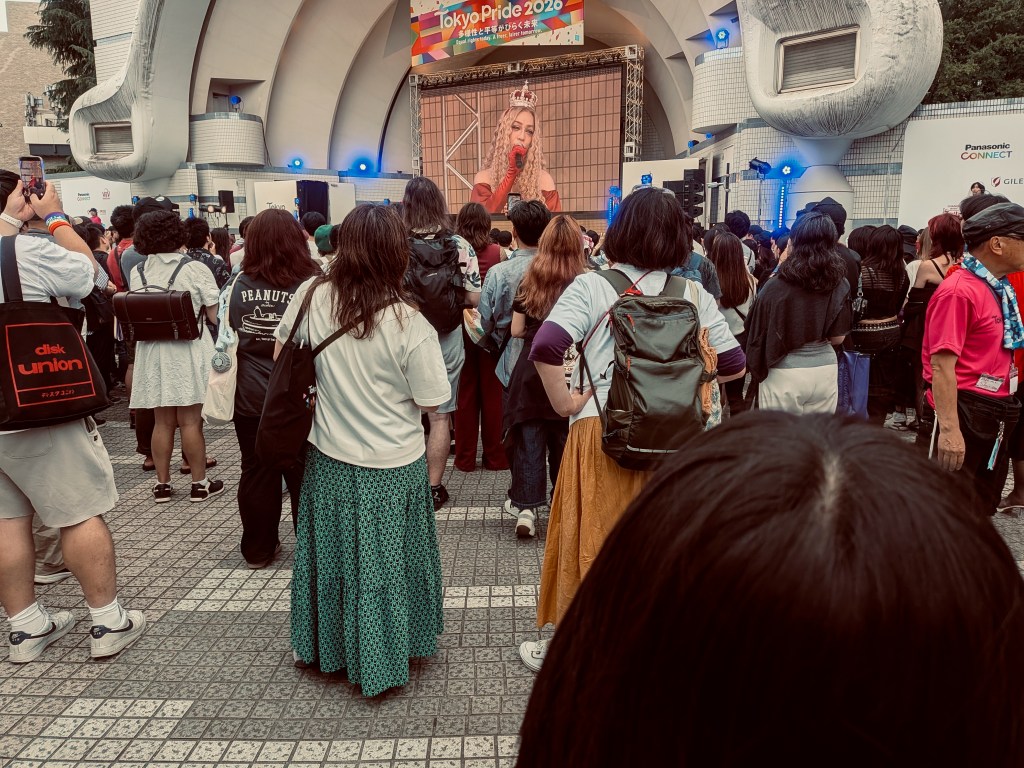
After the juice, doughnut, and fries had settled in her stomach, my daughter began asking questions one after another. “Can a woman become a man? What about their body?” “Why is that person carrying an elephant-shaped watering can on their head?” “Is that singer a man or a woman? Why are they so popular?” Sometimes I answered. Sometimes I struggled. Sometimes we searched for answers together as we walked through Yoyogi Park toward Harajuku Station.
We climbed the stairs to a pedestrian bridge. “I’m tired. I’m not good with extroverted people. I’m an introvert.” “There were probably people here today who decided to be party animals just for one day.” “You’re an introvert too, Dad.” Sorry about the genetics.
When we reached the top of the bridge, we could see the entire venue spread out below us. I told her that this year’s main topic at Tokyo Pride was marriage equality. We talked about same-sex marriage. About marriage as a legal institution in the first place. Apparently she had never really thought about marriage before. Which made perfect sense.
“You’ll probably learn about it in school soon.” “I wonder if I’ll get married someday.” “You probably can. And you don’t have to.” “A law that says only we can get married? That’s creepy. That’s messed up.” Timid, but sharp-tongued. No wonder she calls herself an introvert. In more ways than one, she was definitely my daughter.
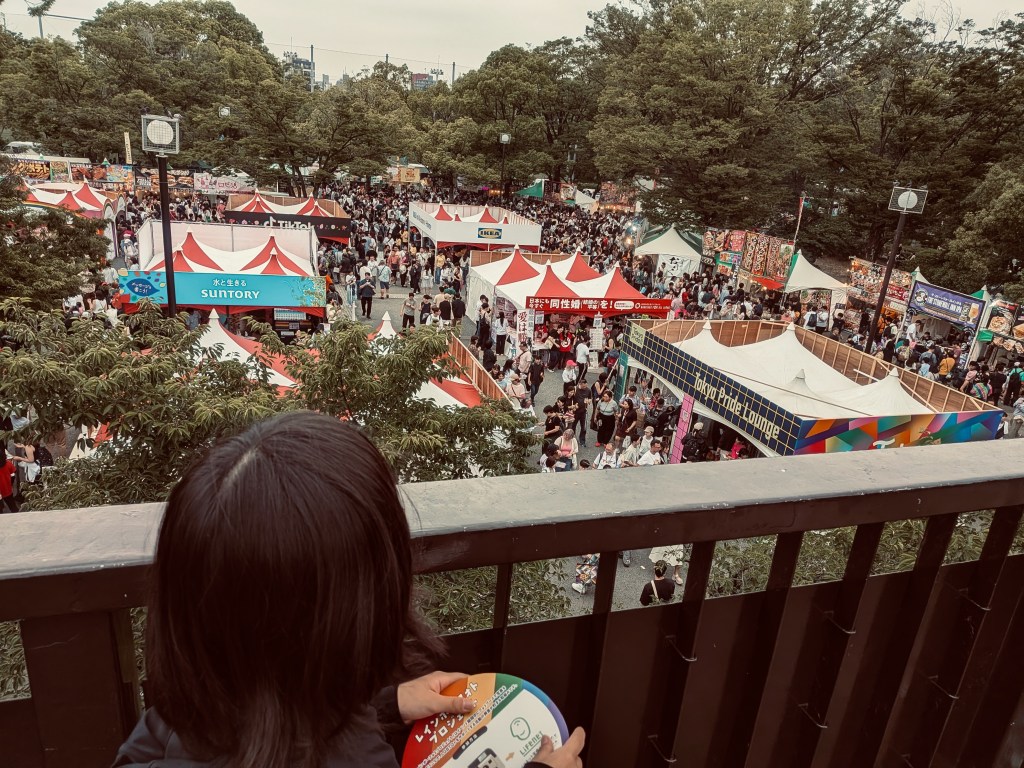
“Dad, have you ever dated anyone?” My daughter turned and looked at me. Ah. Here it comes. “Your mother.” “Before her?” “Yes.” “…” If you’re going to doubt the answer, why ask?
Instead of continuing the cross-examination about my romantic history, I bought her an ice cream from a kiosk, and we headed home.
I think I’ll invite my daughter to come with me again next year. By then, I hope marriage equality will have moved one step closer to becoming a reality. I want to send her into a future where there are more ways for people in love to become a family than there are today.


Leave a Reply