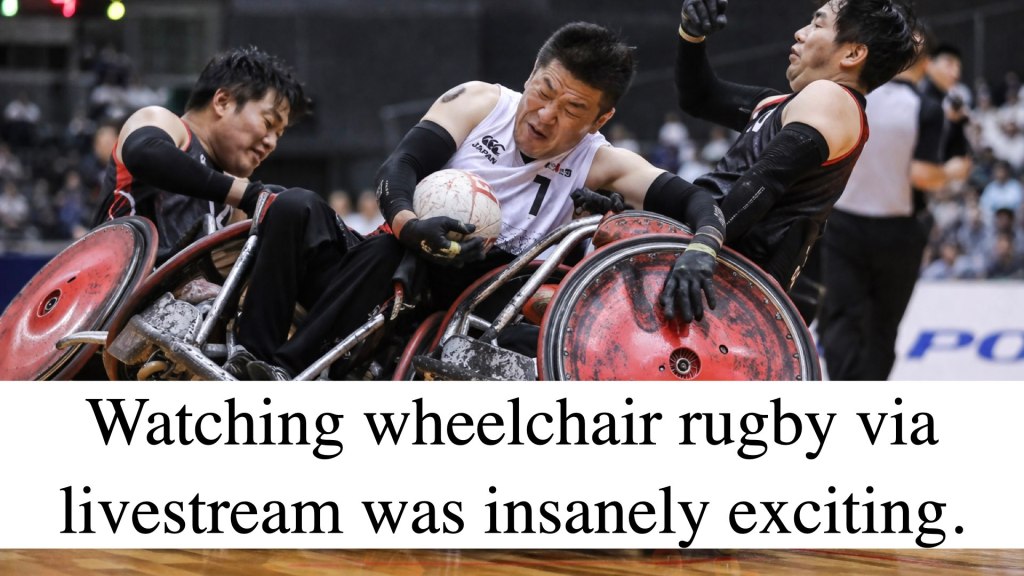
Every year during Japan’s long stretch of spring holidays, I’m reminded of how much my daughter has grown. This year, she handed down a royal decree: I was to take her and her boyfriend out somewhere.
Having watched me survive married life by prioritizing “my wife’s mood over my own opinions,” my daughter apparently sees fathers as beasts of burden for women. Honestly, she’s not entirely wrong. For the record, donkeys are actually as smart as dogs. Anyway, I contacted the mother of T — my daughter’s boyfriend — and took the fourth-grade couple to a trampoline gym.
The truth is, though, I really wanted to go watch wheelchair rugby that day.
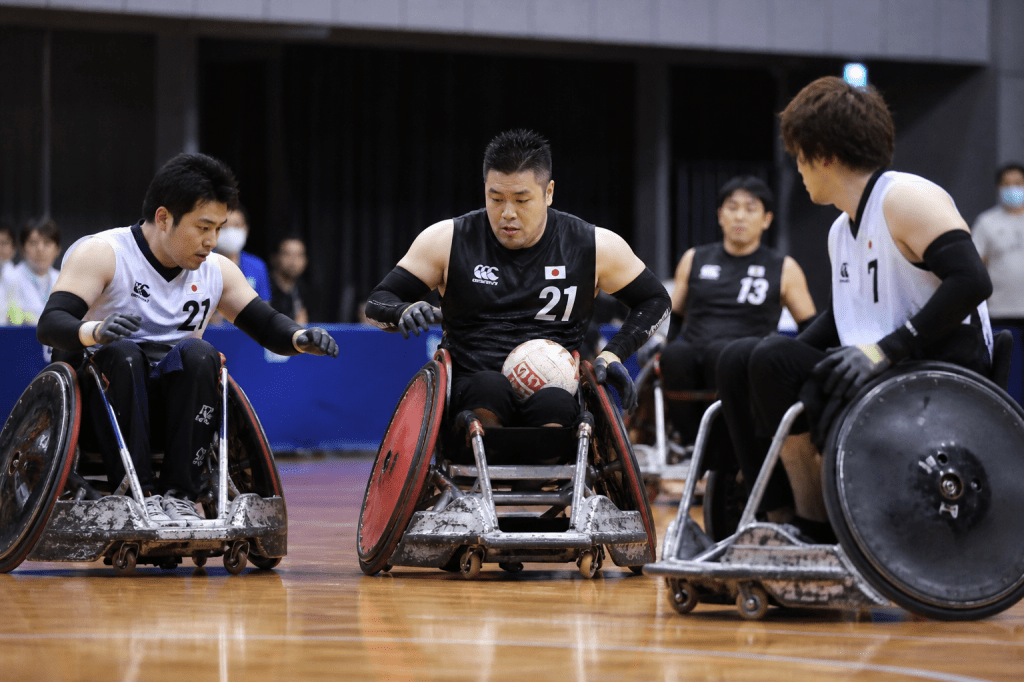
On May 3, the 2026 Japan Para Wheelchair Rugby Championships took place. Japan — the gold medalist from the Paris 2024 Paralympics — was facing off against powerhouse international rivals on the sport’s biggest domestic stage. I briefly considered inviting my daughter and her boyfriend too, but getting there would’ve required three train transfers and nearly 100 minutes each way. That felt a little too harsh for elementary-school legs.
Thankfully, the matches were being livestreamed.
So while the young couple bounced around in a double state of weightlessness — trampolines and first love — I settled into a corner of the gym to watch the broadcast. Laptop ready. Headphones on. There was no way I was missing the Japan vs. USA final.
One thing I immediately appreciated was that the stream began by explaining the rules. In about five minutes, it neatly summarized the sport’s most exciting features for newcomers.
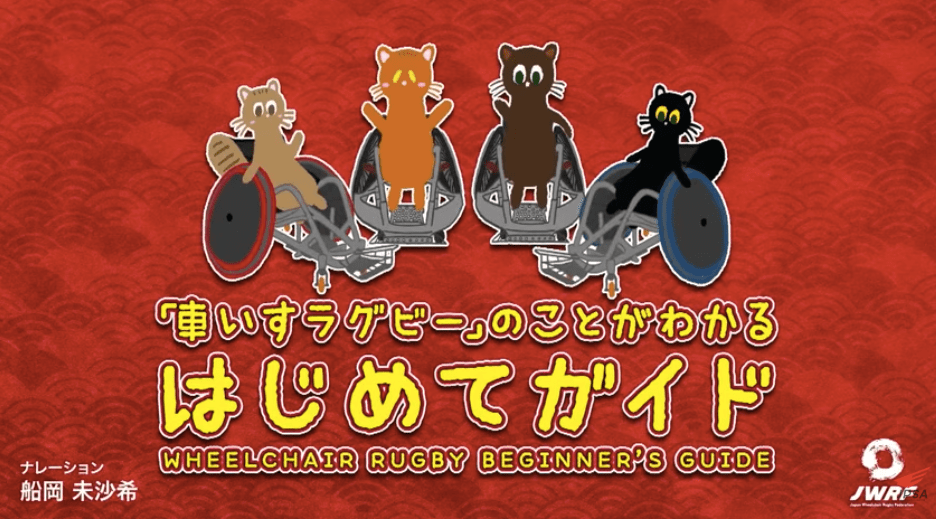
Then came the hype video, condensed with highlights and intensity. It may have been produced by the event staff themselves. The production had a certain homemade roughness, but it carried the unmistakable heat of people who genuinely love the sport — something polished corporate work often lacks. That passion gave it charm beyond technical perfection.
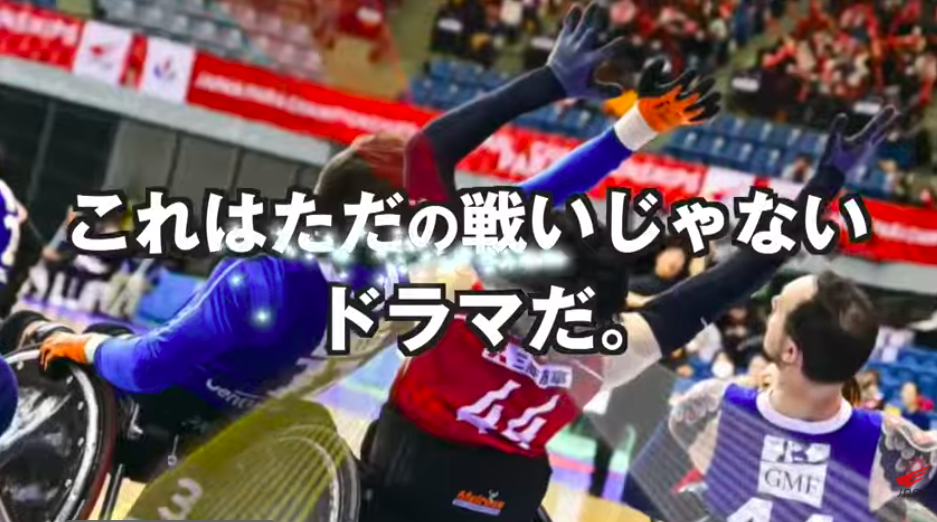
The commentators introduced the players from both countries, and finally the match began. The play-by-play had the dramatic rhythm of an NBA or Major League Baseball broadcast, and it absolutely fueled the excitement.
And the game itself was incredible.
The United States looked like an army of giant tanks — massive athletes clearly raised on a different diet from the rest of us. Wheelchair rugby is the only Paralympic sport where full-speed collisions are openly allowed, so naturally it becomes an anything-goes heavyweight battle. There’s a reason it’s nicknamed “Murderball.”
Japan, physically smaller and less powerful, countered with speed and precise passing. By the end of the third quarter, they still held a razor-thin lead. Then came the final quarter — and Japan’s intensity became unbelievable.
Their defensive pressure never slowed. Loose balls were chased down with pure desperation. They caught up to everything. Their attacking drives never weakened. Through my headphones echoed the crashing of wheelchairs and the groans of impact. It felt like I could even hear players grinding their teeth.
And somehow, amid all that chaos, Japan still looked composed. Even though both teams should have been exhausted by then, Japan’s defense stayed tightly coordinated, locking down the Americans like heavy chains.
One of wheelchair rugby’s defining features is that the rules are designed so players with more severe disabilities — not just those with lighter impairments — can fully contribute their strengths. Which also means that building tactics around each player’s abilities directly determines victory. And the brutal defensive battles are often the domain of the “low-pointers,” players with heavier physical impairments.
They kept getting knocked down and climbing back up again, over and over, until they won.
In wheelchair rugby, getting flattened isn’t the end of the play. It’s where the fight begins. That’s the sport’s greatest thrill. In some ways, it reminds me of professional wrestling.
Of course, powerhouse America wasn’t simply on the defensive. The deadlock continued. The American captain was a woman. Yes — wheelchair rugby is not only a full-contact sport, but also mixed gender. Ruthlessly genderless. And leading the charge was a woman.
Calm, but openly fierce, she shouted instructions to her teammates with blazing intensity. Her expression went beyond intimidating — it was almost beautiful.
But Japan’s tough, relentless style steadily widened the gap little by little. You could feel victory slowly approaching. For the Americans, that also meant feeling their chances slowly suffocated away. Truly dominant teams don’t just defeat opponents — they crush their fighting spirit.
Japan eventually won by nine points. The confidence of Paralympic gold medalists was unmistakable.
It had been a while since I’d watched wheelchair rugby via livestream, and I was surprised by how compelling the experience had become. The camerawork stayed tight on players racing across the court, making quick plays and violent collisions easy to follow. You could practically see movement down to the tips of their hair. Rugby often turns into tangled piles of bodies, but here even the close-contact battles were easy to understand. There were no moments where casual viewers would ask, “Wait… what’s happening?”
Recently, wheelchair rugby has also been expanding not just its tournaments, but its media presence. One example is the TBS Sunday drama series GIFT. It pairs surprisingly well with live streaming. Apparently the show has become quite popular — the YouTube comment section was filled with enthusiastic fans. I’m sure the lively crowds visible in the arena were partly influenced by the drama as well.
When it comes to entertaining spectators, wheelchair rugby already felt ahead of many other parasports — honestly, even ahead of many niche sports in general. But this time, it felt like the sport had evolved even further.
At the same time, wheelchair sports still struggle with a shortage of facilities for practice and competition. Many venues apparently worry about floor damage or lack accessible equipment. Yet there’s already preliminary data suggesting that facilities hosting wheelchair sports experience no more damage than with other athletic events. Hopefully that means acceptance will continue to grow.
If more events were held closer to home, maybe I could take my daughter and her boyfriend to watch someday. Honestly, I suspect the best experience would be attending live while listening to the commentary broadcast at the same time.
Until then, I think I’ll use the TV drama to teach my daughter the rules. There probably isn’t much time left before she stops wanting to go places with her dad altogether. Before that day comes, I want us to witness together what it means to keep getting back up.
 Musuta Kusaka's Everyday Journey with Diversity, Equity, and Inclusion in Japan
Leave a comment