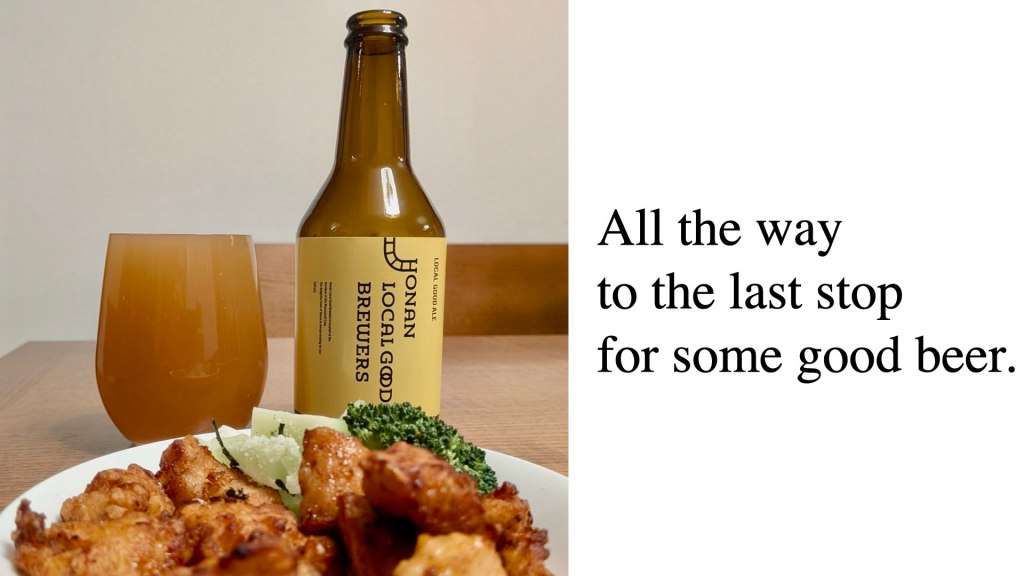
I used to joke that beer goes to a separate stomach.
Turns out it went straight to a beer belly.
Ever since I fell ill last year, I’ve hardly been able to drink alcohol. Maybe my body changed. Maybe I already drank my lifetime quota. Probably both. In any case, I no longer even feel like drinking.
Except for beer.
There are nights when I just want a beer. Every now and then, suddenly, irresistibly. Even if my waistline has passed 100 cm. Especially on days when, at the age of forty-six, I get scolded by a client.
Some say beer has been around since 8000 to 4000 BCE.
There’s no way I can defeat a ten-thousand-year temptation.
That said, I can’t crack open a can, chug it, and go “ahhh!” the way I used to. These days I slowly savor a single bottle or can of a slightly nicer beer. If I can enjoy it together with some food, that’s more than enough.
Then I found the perfect beer for someone like me.
It’s called Honan Local Good Brewers.
I first tried it at an event called “rootus night” hosted by the ethical media outlet rootus. The moment I took a sip, I thought, This works. I spoke with one of the brewers who was there, and learned that the beer is brewed by brewers with disabilities. Hearing that somehow deepened the flavor even more. The story behind it lingers along with the taste.
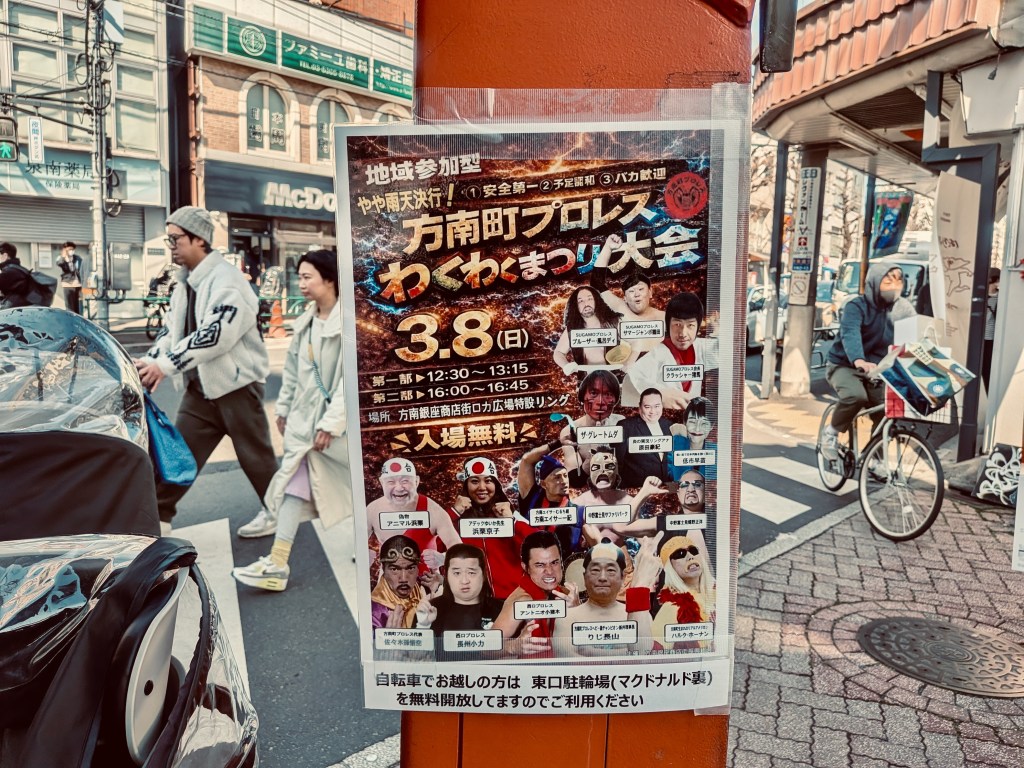
The very next week I went to buy some myself, traveling to Honancho in Tokyo’s Suginami Ward. It’s the last stop on the Tokyo Metro Marunouchi Line.
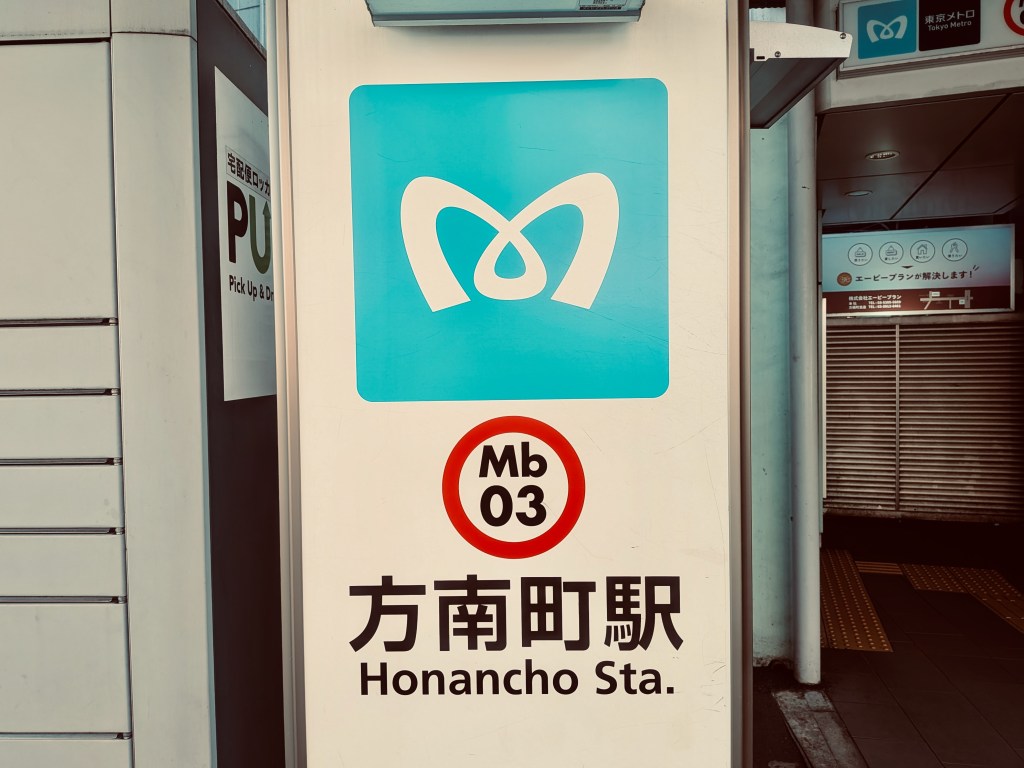
There were four varieties available at the shop. I picked three.
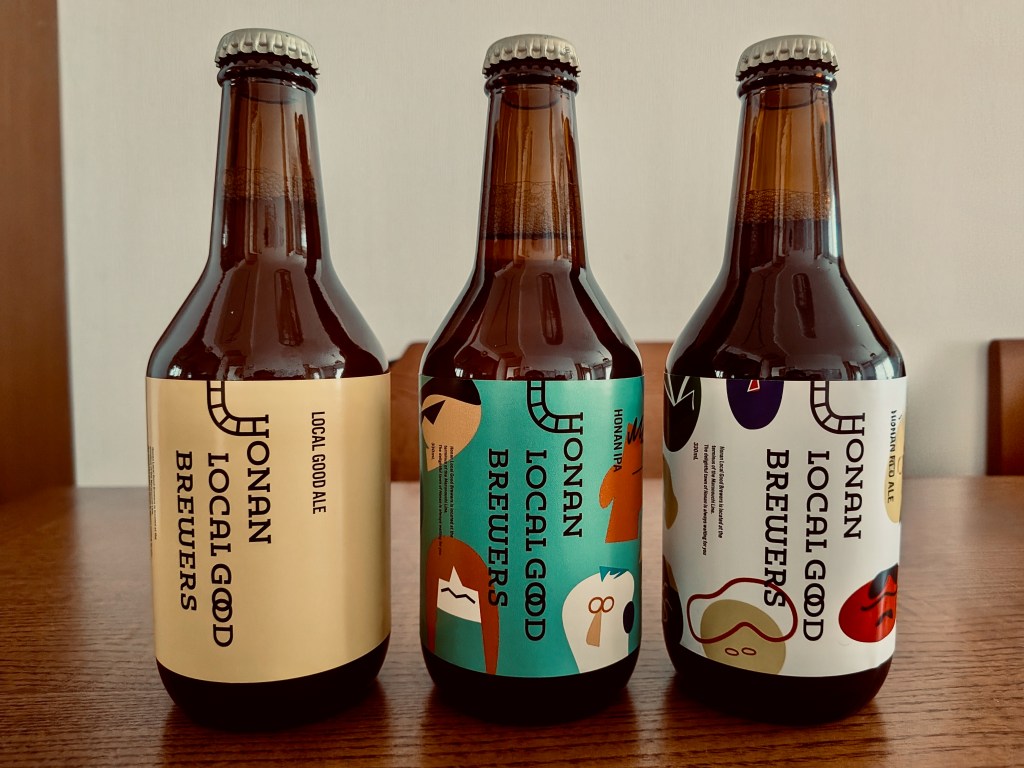
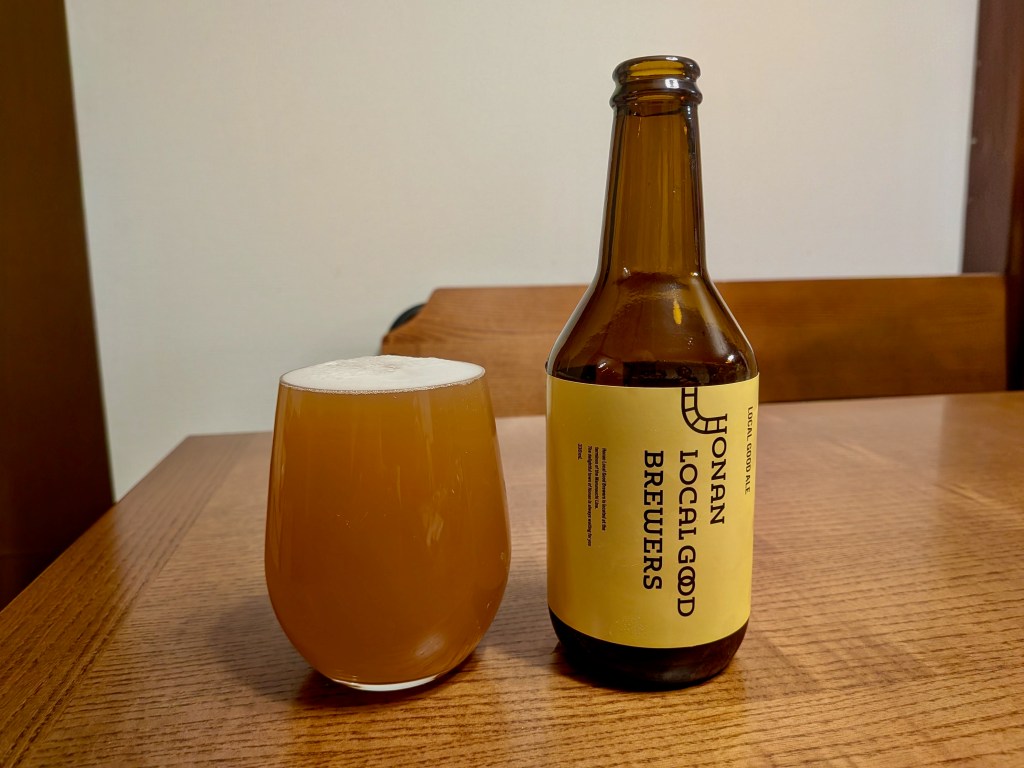
From left: Local Good Ale, Honan IPA, Honan Red Ale.
My favorite was the Local Good Ale. The aroma is wonderfully bright, and the mouthfeel is light. But it’s not watery at all—you can still clearly taste the malt. The beer’s richness flows from tongue to throat, then the finish turns crisp. The aroma lingers for a moment before fading away.
I had it with garlic-heavy fried chicken, and I nearly fell into an infinite loop.
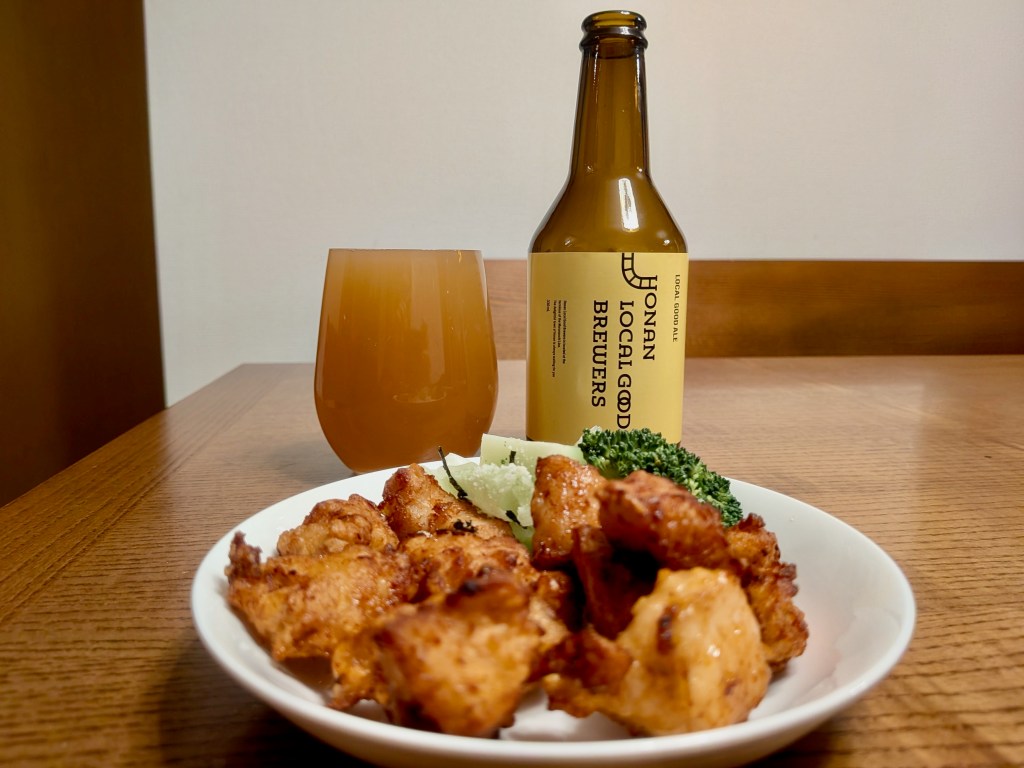
Incidentally, my wife—who drinks 364 days a year except the day before her annual medical checkup—seemed to prefer the Honan IPA.
“The bitterness doesn’t feel like typical craft beer,” she said. “And the smell is stylish. Feels like a grown-up beer. I could drink this forever. If you’re drinking beer as a snack for beer, this is the one. Or maybe with sashimi.”
That was her indirect way of telling me the seasonal vegetables I served were not proper drinking snacks. Drinkers are picky about sweetness and bitterness.
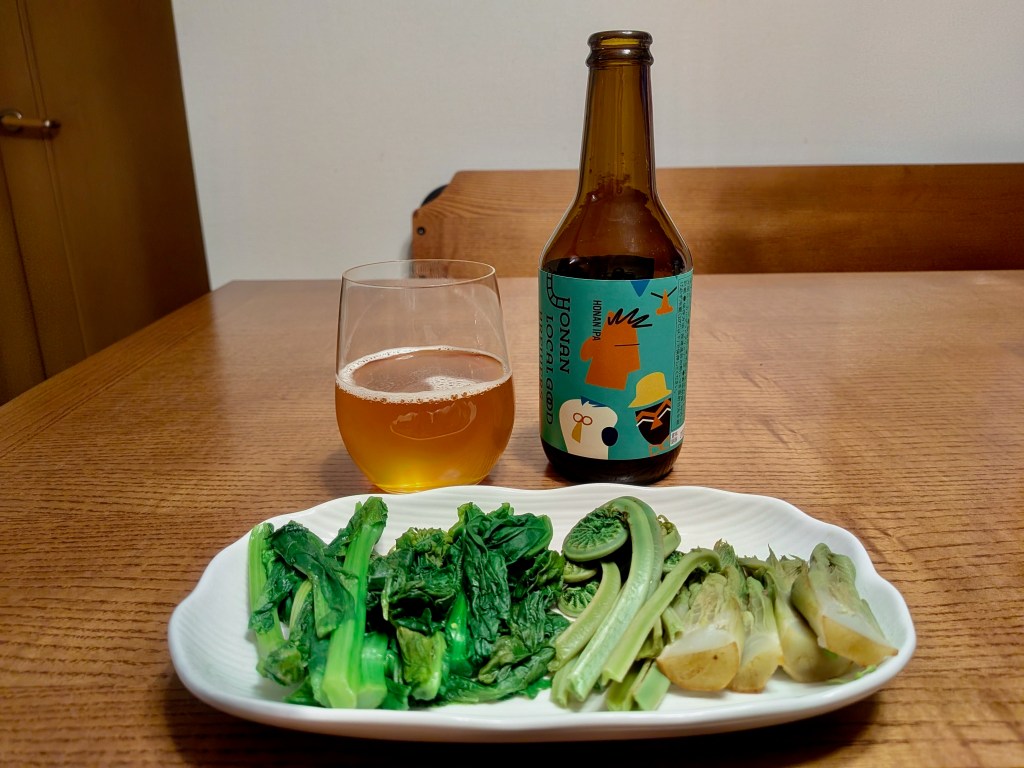
For the record, the snacks were rapeseed blossoms, ostrich fern shoots, and tara buds.
To be honest, we’re not huge fans of the strong personalities and heavy aftertastes that craft beers sometimes have. We get tired of them halfway through. That’s one thing we completely agree on. Usually we just drink canned beer from the big breweries. But even for people like us, Honan Local Good Brewers worked beautifully.
These beers are brewed at a Type B continuous employment support workshop in Honancho. In other words, the brewers are people with disabilities.
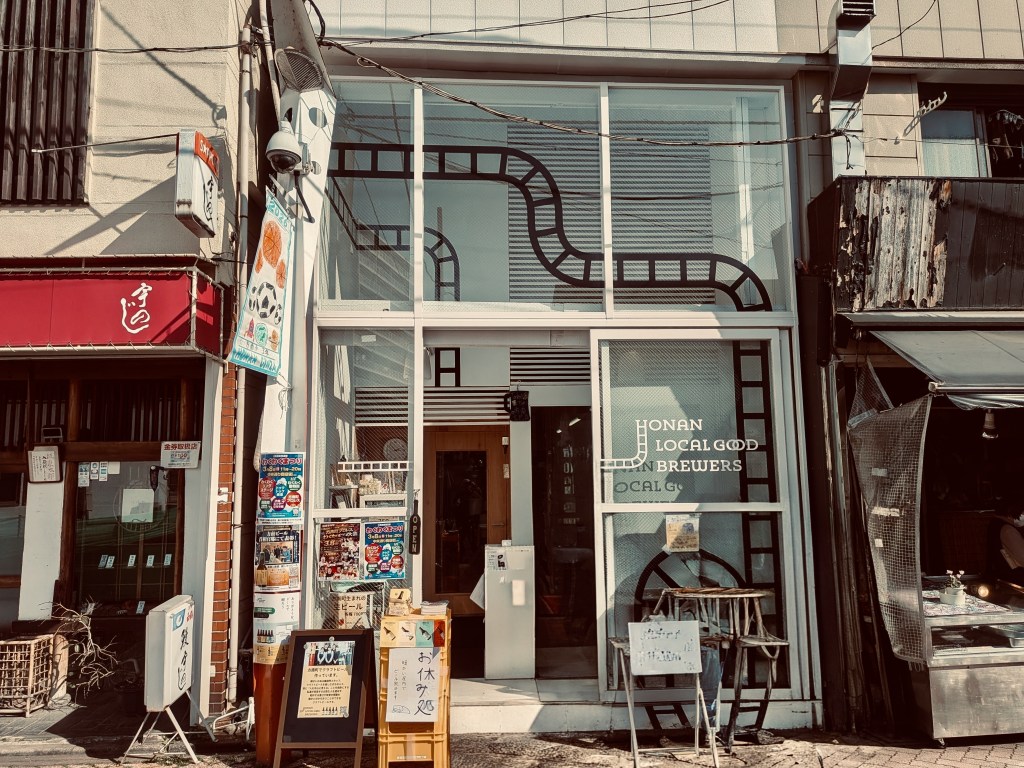
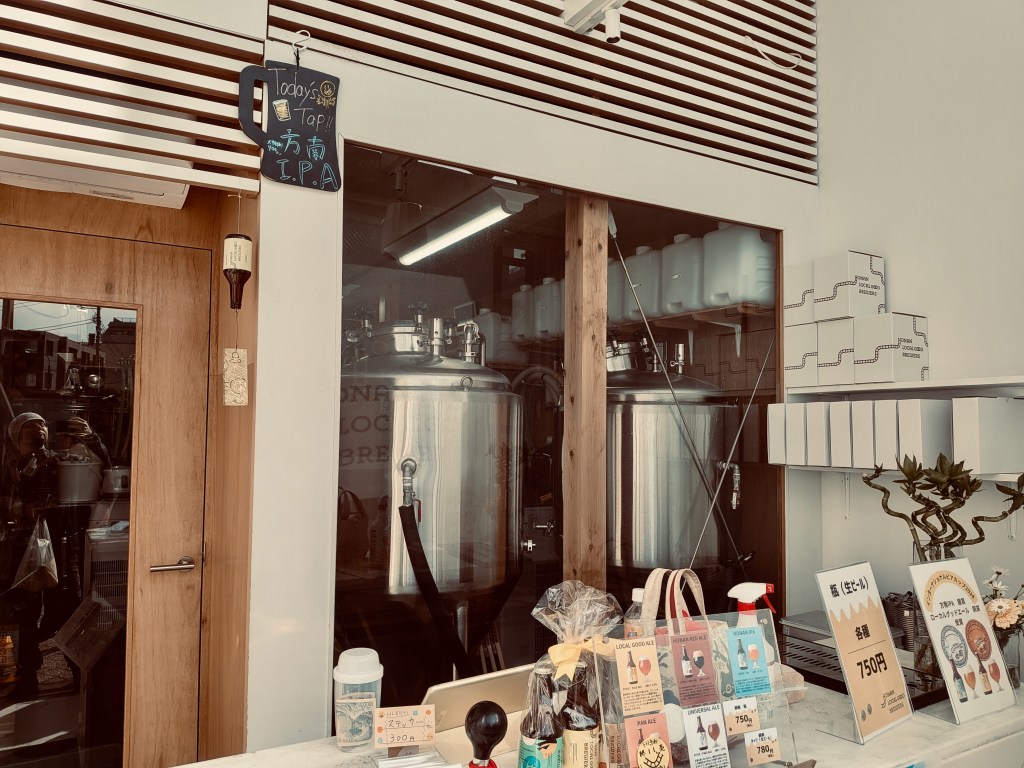
But it’s not simply about employment support. Another major goal is to create a local specialty that represents the neighborhood. The project is run closely with the local shopping street, an NPO, and a general incorporated association called Beans. The revenue goes toward employment for people with disabilities and support for children.
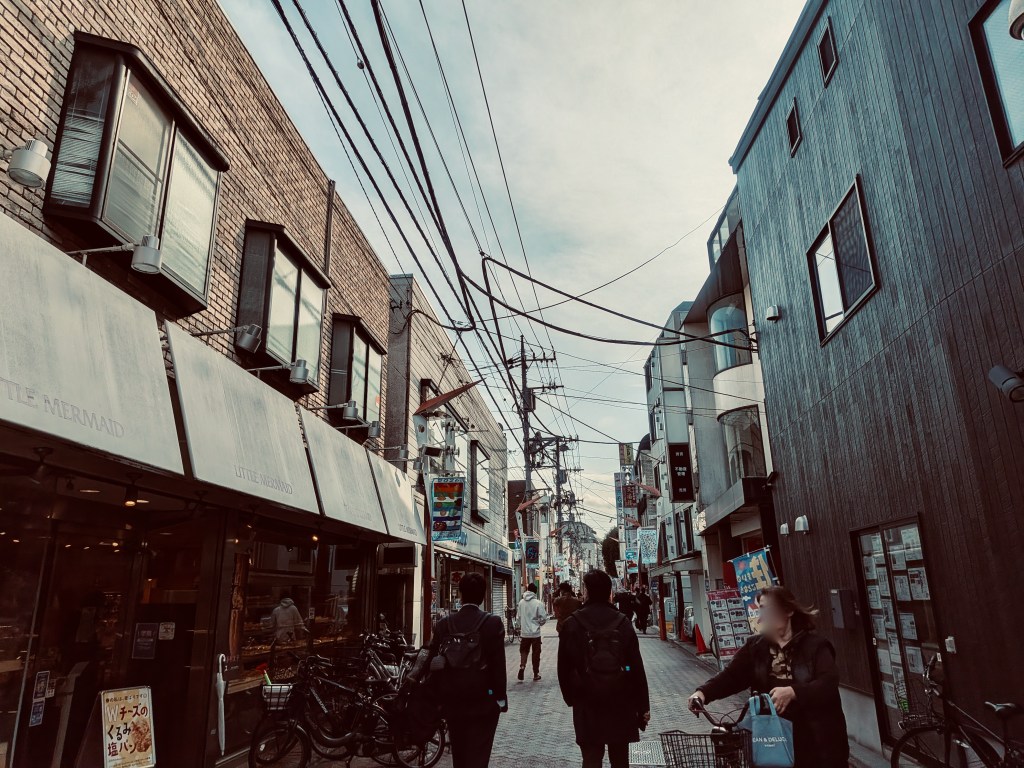
When I learned that this brewery was operated by Beans, I suddenly thought, Ah, that makes sense.
Because not far from Jimbocho in Tokyo there’s a café called Social Good Roasters. It also employs roasters with disabilities who brew wonderfully aromatic coffee—and it turns out Beans runs that place as well. Sorry, that was a long explanation.
But essentially, the technical skills and operational know-how developed in Jimbocho are now being applied to beer brewing in Honancho. No wonder it’s good.
Lately, I feel like I’ve been seeing more unique approaches to employment and independence support.
For example, there’s a Burger King in Osaka’s Aeon Mall Rinku-Sennan that also functions as a Type A employment support workplace. There’s Nijigen, which has locations from Hokkaido to Shikoku, where people can work while developing creative skills. And then there’s the Avatar Robot Café DAWN ver.β in Nihonbashi, Tokyo. As the name suggests, robots are involved. People who have difficulty leaving their homes due to disabilities operate humanoid robots remotely. The robots carry food, chat with guests, and even guide visitors around the neighborhood. My daughter was absolutely thrilled.
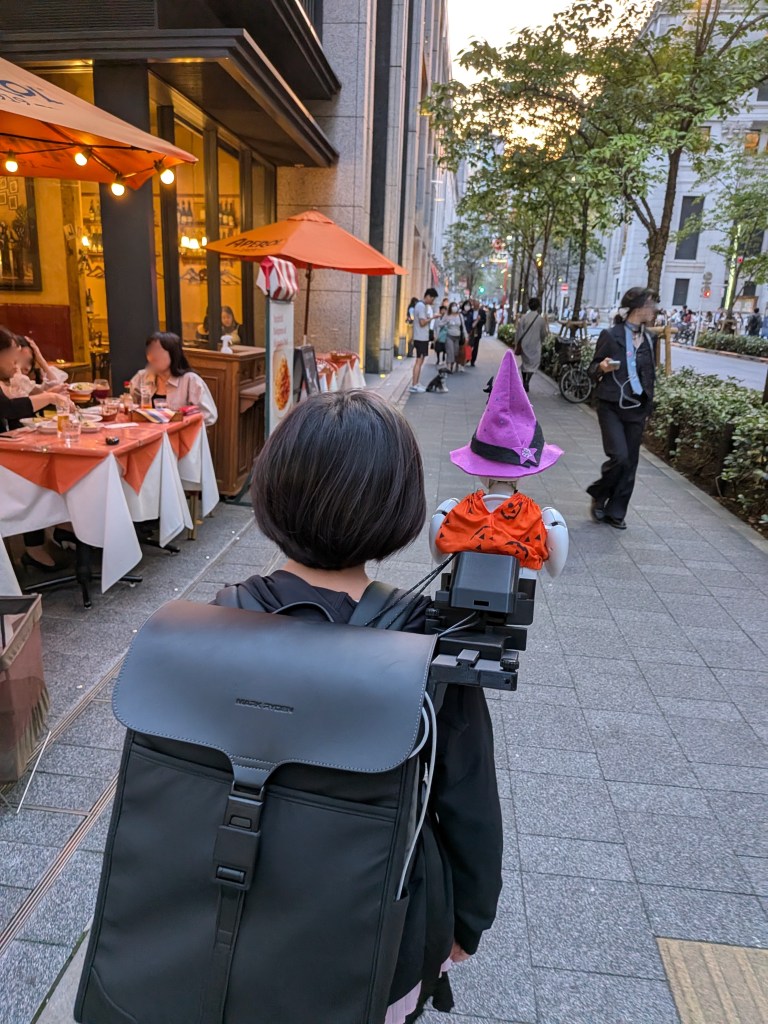
One autumn last year, she walked around Nihonbashi with a robot on her shoulder, guided by a remote pilot who couldn’t leave home.
Perhaps Honan Local Good Brewers is part of this same bright movement, maybe even ahead of it.
Work becomes a kind of glue that connects a community. People share the weather and the seasons simply as neighbors who happen to work nearby. Instead of a one-way relationship of helping and being helped, something more mutual emerges—something that quietly raises the livability of the whole town. Honestly, I think I’d like to grow old in a place like that.
None of us really spends that long living completely independently. And yet we grow up without learning how to rely on others. By the time we realize it, we’re already older.Seeing this neighborhood where voices from different generations mingle—I find it quietly inspiring.
And besides, it’s beer.
Living somewhere known for great beer is an appealing idea all by itself. Deregulation has allowed breweries to pop up even in residential areas and housing complexes, but this project feels like a particularly forward-looking model.
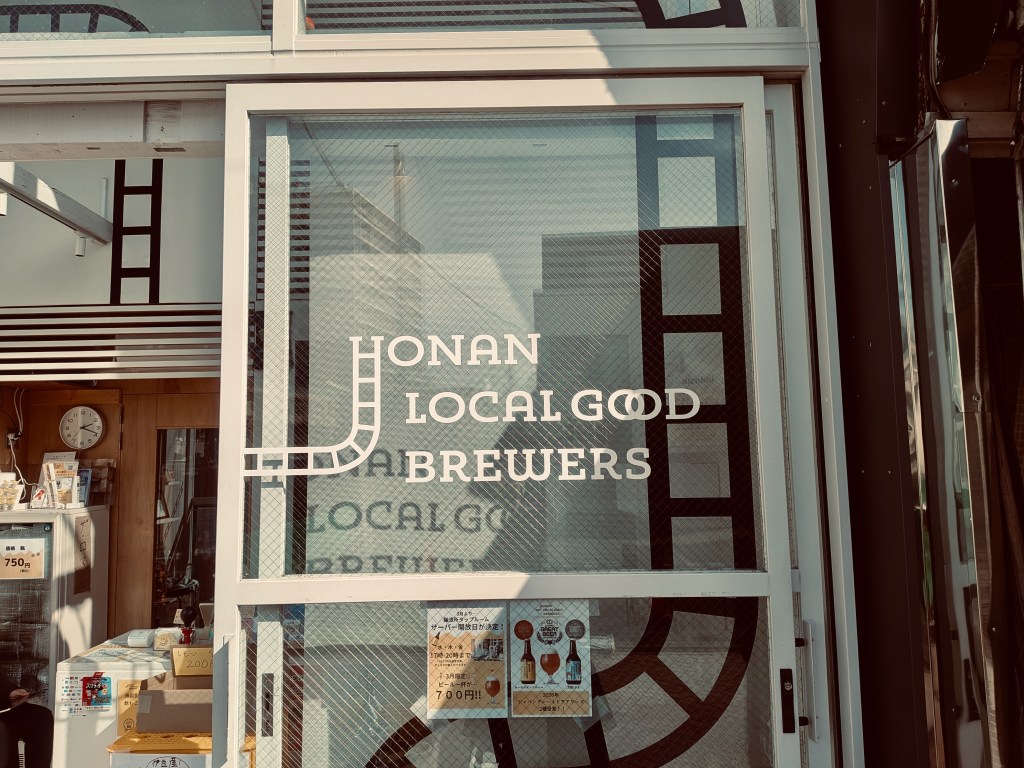
One of the shop staff told me: “Thankfully the beer has been getting great reviews. People who really love beer are the ones who groan with satisfaction. We designed it to be easy to drink, but somehow it’s the connoisseurs who appreciate it. The brewers with disabilities take pride in that—and honestly, it’s selling well.”
To be honest, the price tag of 750 yen per bottle made me hesitate at first. But then I thought: this is the kind of story worth supporting.
And once you start drinking, all the complicated ideas fade away anyway. The beer is simply that good. Even if you drink a little too much, at least the money goes toward supporting someone. That softens the guilt. Beer is a magnificent thing.
Honan Local Good Brewers doesn’t distribute its beer widely. After all, it’s local good. Representing Honancho. If you want it, you either visit the shop or order online. The shop is closed on Tuesdays and Sundays.
For someone like me, whose days usually consist of nothing more than commuting between work and home, visiting a completely unfamiliar neighborhood—sweaty and curious—felt like part of the run-up to that cold beer.
When spring fully arrives, I think I’ll go again. I bet it tastes even better under the cherry blossoms.
 Musuta Kusaka's Everyday Journey with Diversity, Equity, and Inclusion in Japan
コメントを残す