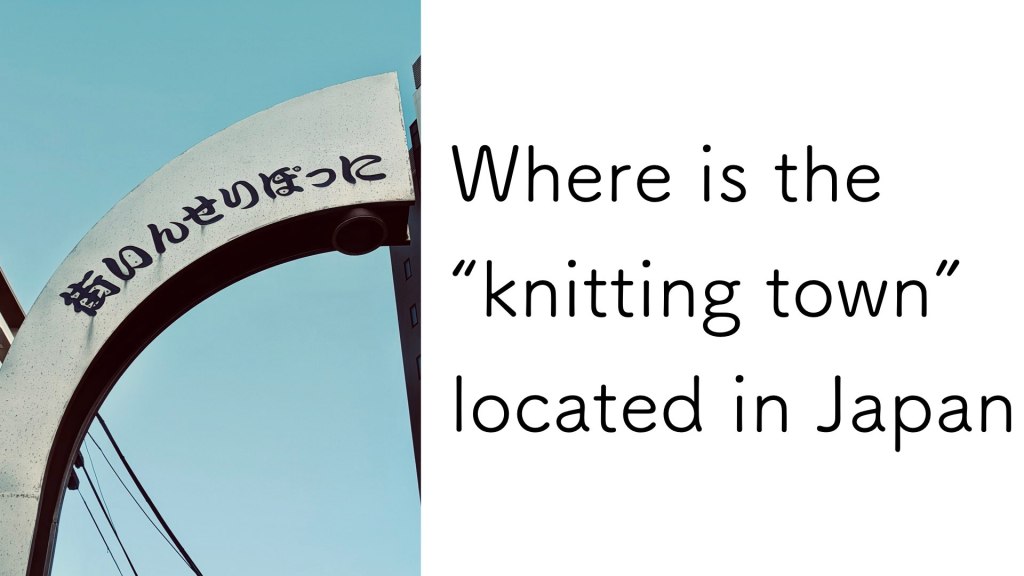
When it comes to secondhand books, it’s Jimbocho. For cooking tools, Kappabashi. For anime, Akihabara. There are plenty of specialty districts like that—musical instruments, vintage clothing, and so on.
But I’d never heard of a “knitting town.” When I looked it up, I found that Nippori, on Tokyo’s JR Yamanote Line, is apparently known as a fabric district. Yarn is a fiber too, right? So I thought, why not take a look? And off I went the other day.
Oh—let me give you the conclusion first. Total swing and a miss. According to my pedometer app, I walked 17,855 completely pointless steps. The “knitting town” was farther away than a mirage.
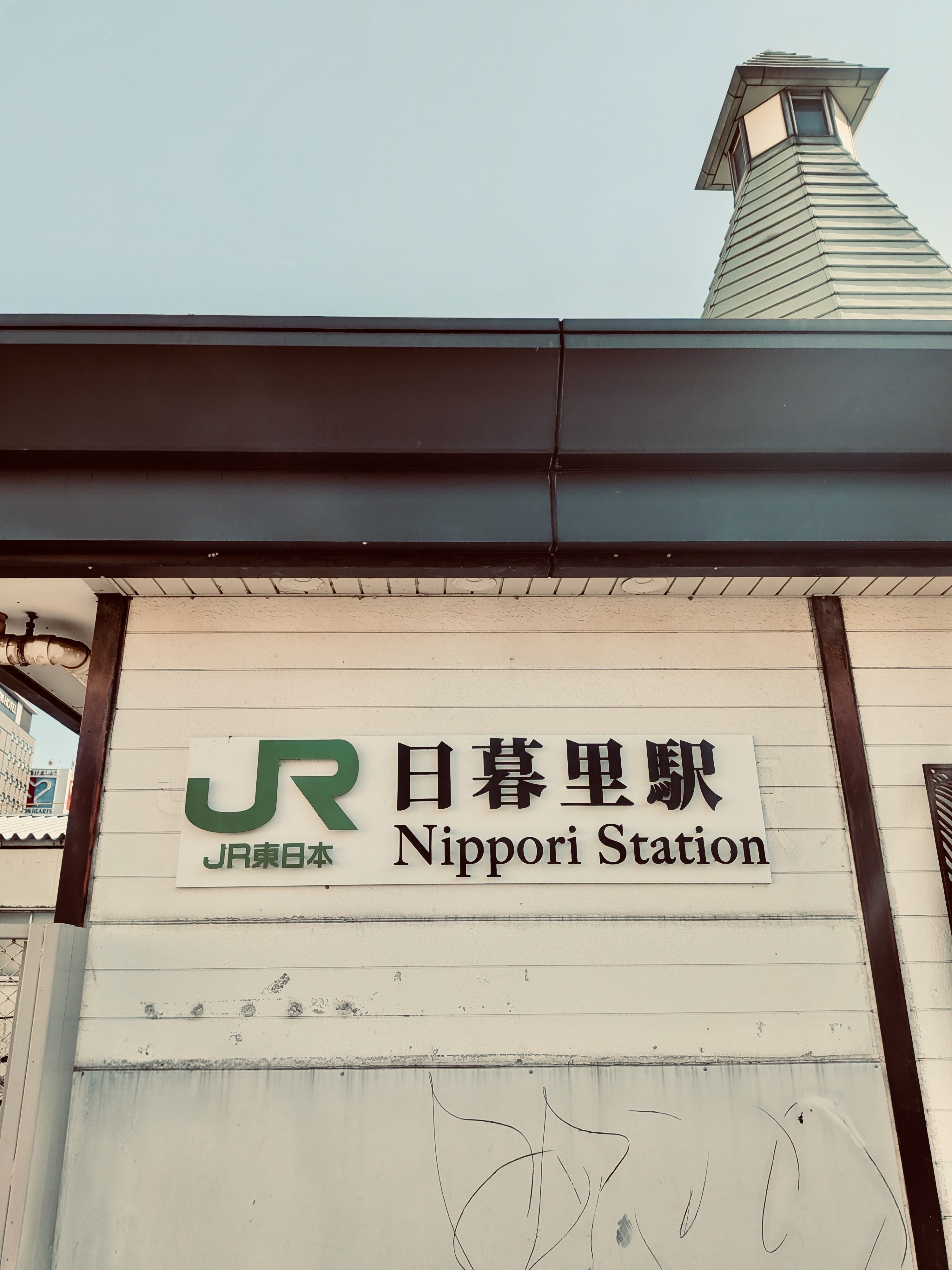
Here’s JR Nippori Station. The South Exit, closest to the fabric district, is surprisingly small. The spire rising behind it is just part of the roof design. It doesn’t serve any particular function. None at all. Really.
The atmosphere is a curious mix of big-city Yamanote energy and old downtown charm. Somewhere, something was being grilled—I could smell it in the air.
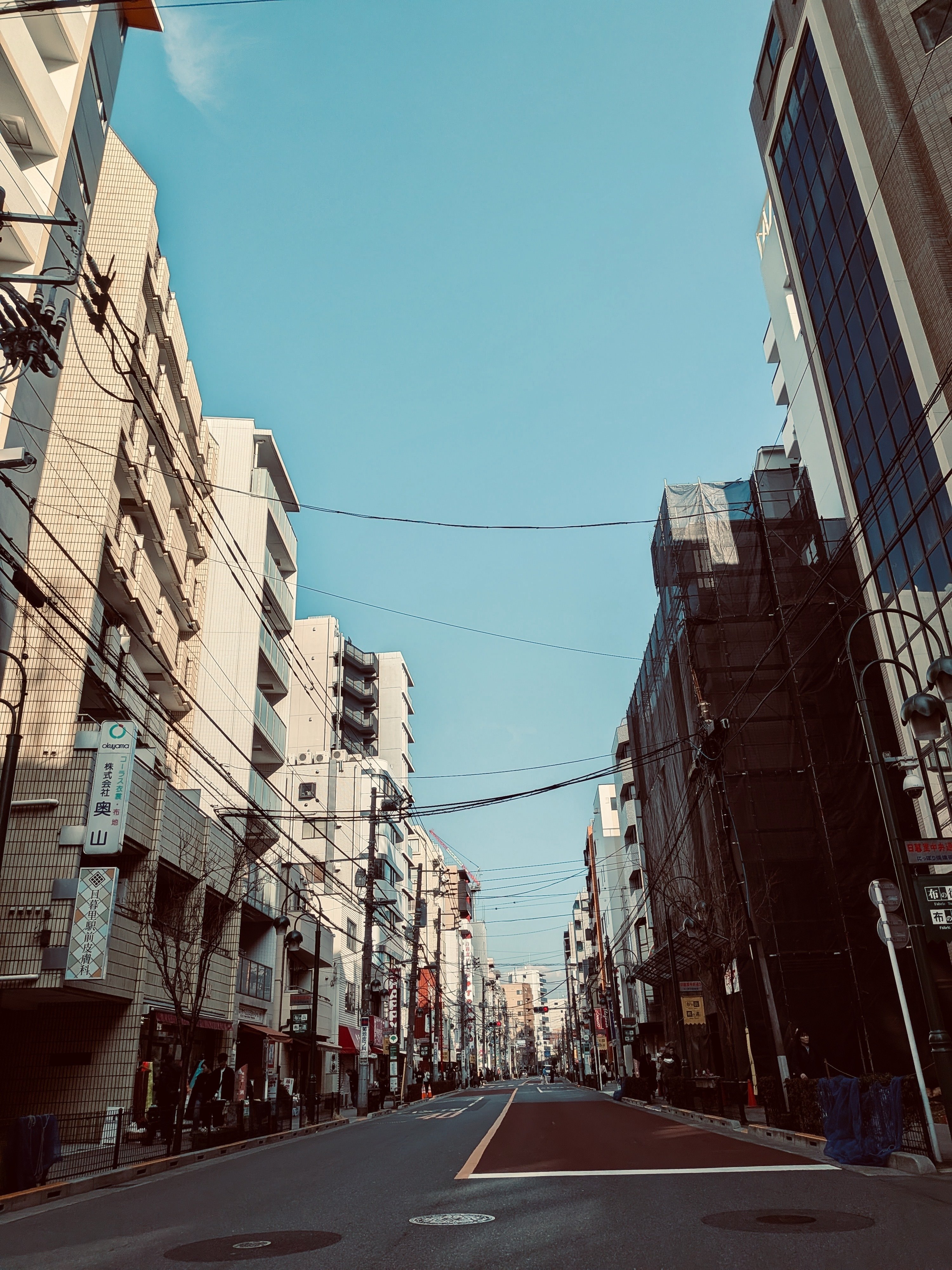
Walking around, the area felt very livable. With so much redevelopment happening along the Yamanote Line—Takanawa Gateway and beyond—it’s oddly comforting to find a neighborhood that still feels lived-in. Even the tangle of overhead power lines starts to feel nostalgic.
All over town, there are signs promoting the fabric district. At that point, I had no idea it meant “fabric district—except for knitting.”
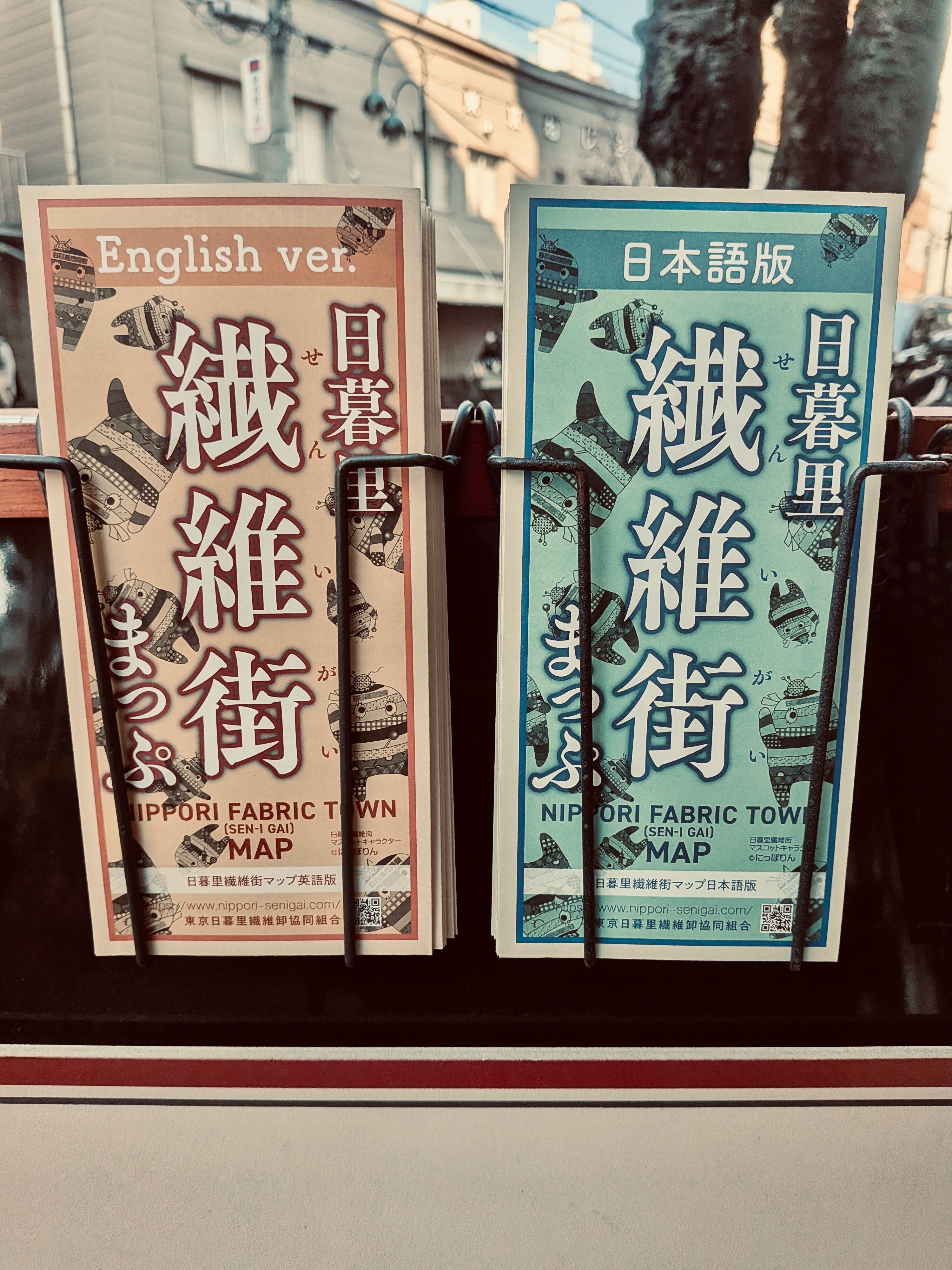
The town map comes in both English and Japanese versions. I did notice quite a few foreign visitors strolling around. The main street is about a 15-minute walk end to end, lined on both sides with shops selling fabric, sewing tools, and materials.
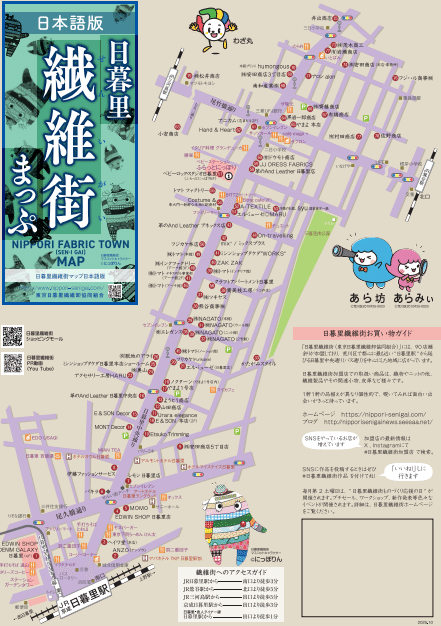
The map gave the impression of a bustling area, but in reality many shops were closed. Rather than densely packed, they felt scattered. Some stores looked impressively timeworn; others seemed to be leaning in more ways than one. You could sense the effects of aging owners and labor shortages.
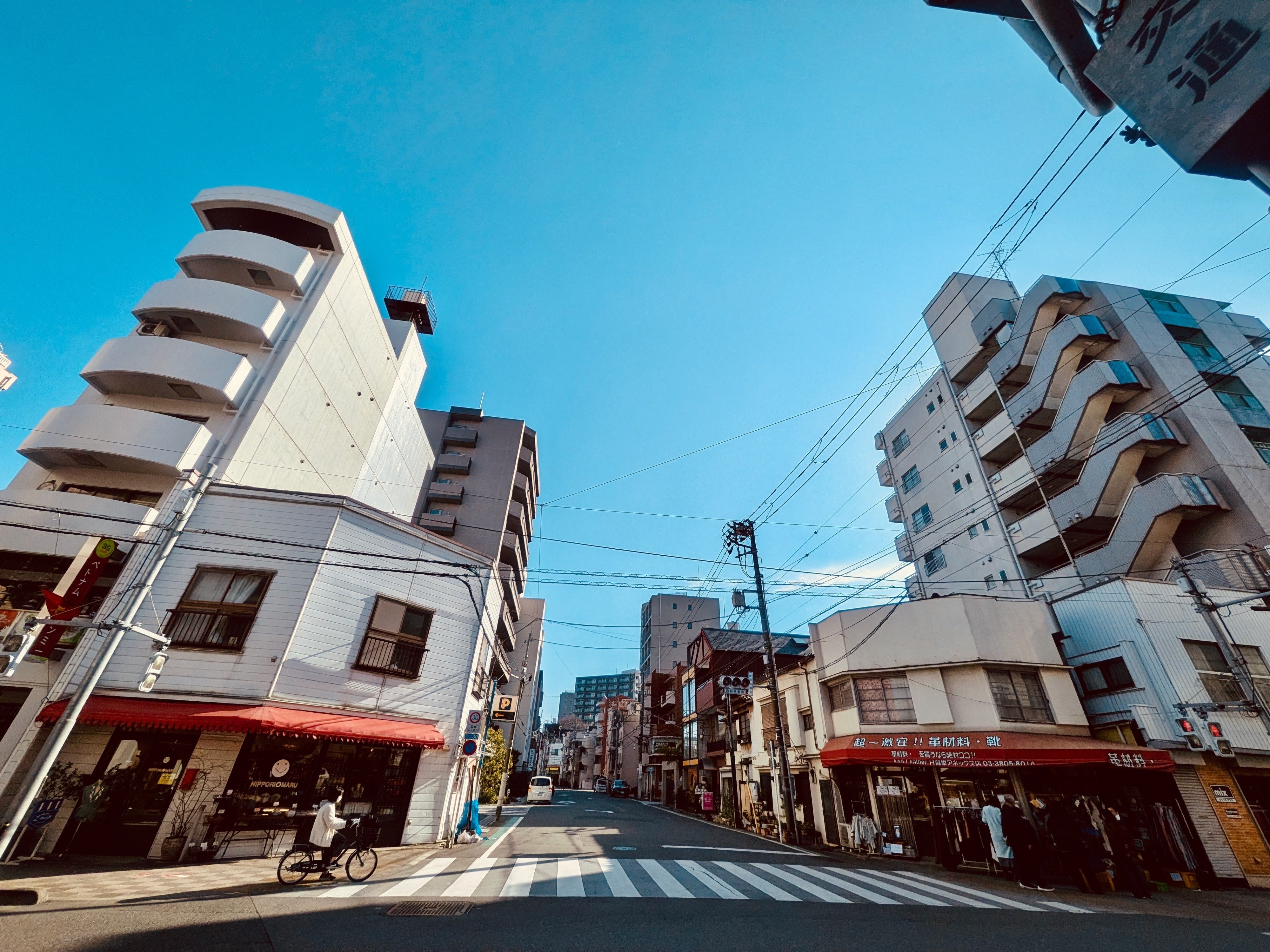
That said, Nippori is also home to the flagship store of the major jeans brand EDWIN. In that sense, it certainly lives up to its textile credentials.
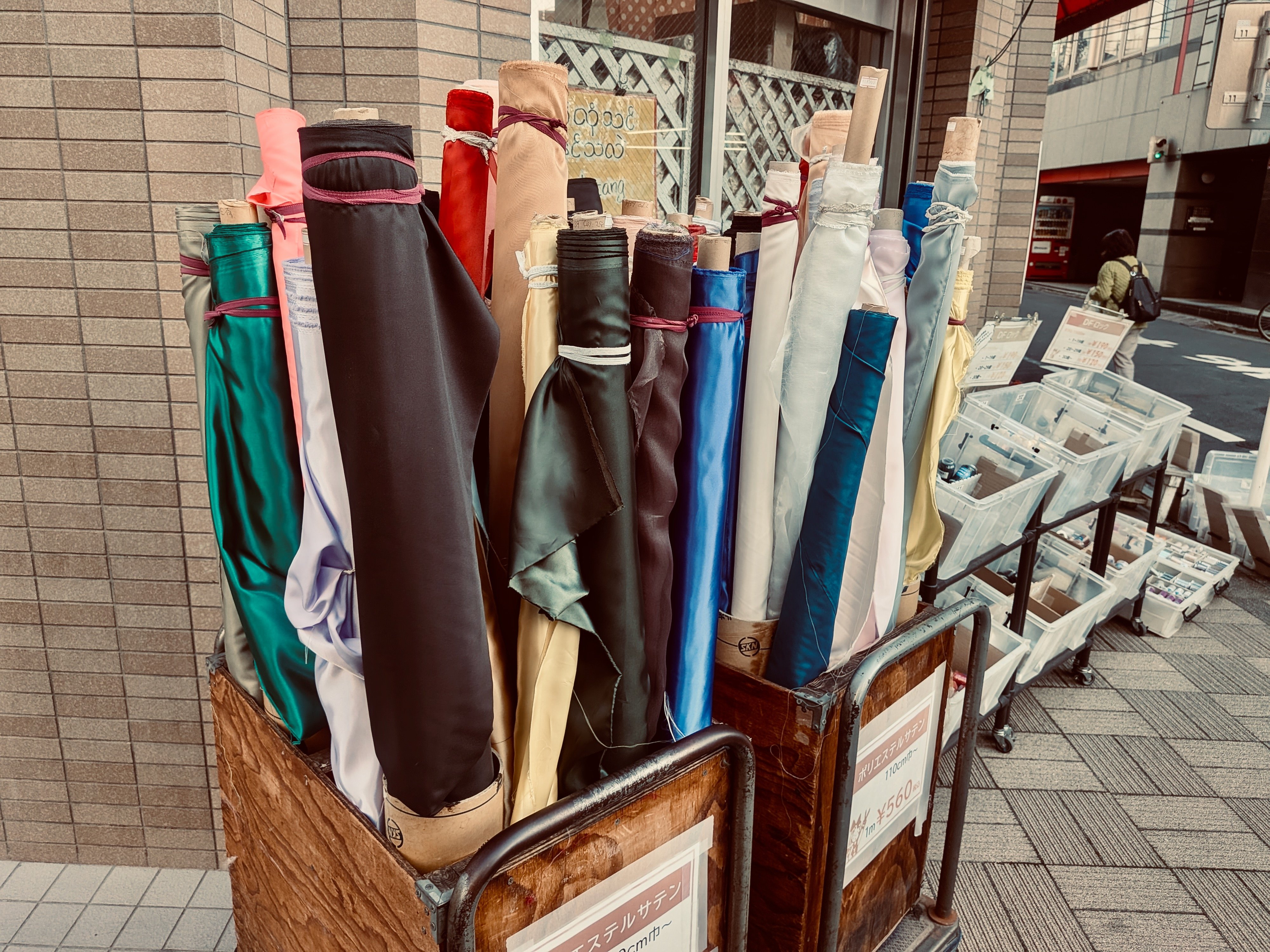
Bolts of fabric spill out onto the sidewalks in front of nearly every shop, creating a riot of color. Some are glossy to the touch; others have distinctive textures. I picked up something wonderfully fluffy—only to realize it was fox fur. With the head still attached. I hadn’t seen real fur in ages. Is that still a thing these days?
Many shops prohibit photography—not just inside, but even of the wagons outside—so I couldn’t take many pictures. A pity.
As for the knitting supplies I was searching for? I walked and walked and found absolutely nothing. My feet were starting to hurt. It was around then that I began to suspect: maybe there aren’t any knitting supplies here. A bit late to realize that.
Wait! There they are!
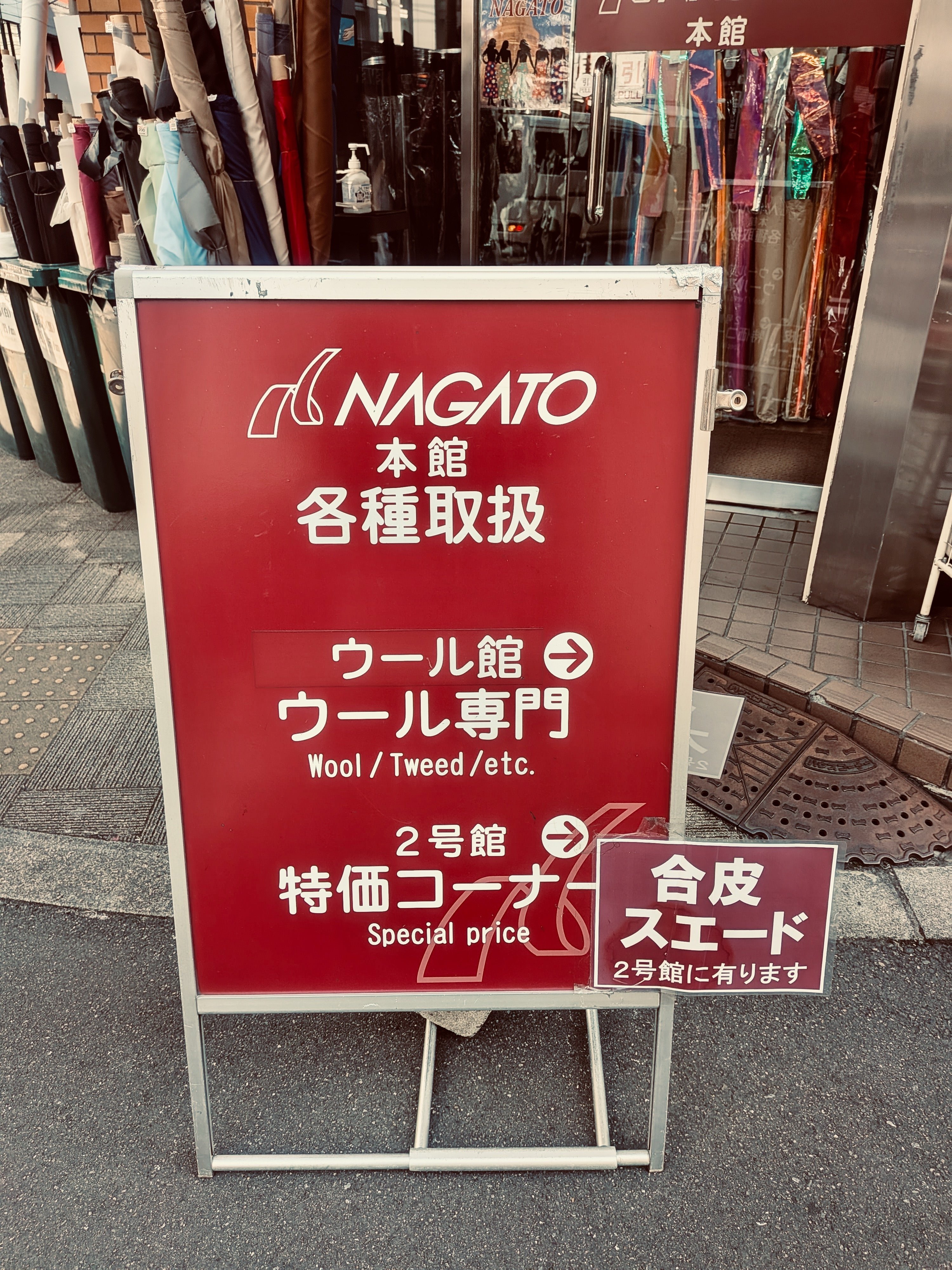
Nope. Just a shop selling wool fabric—like carpet material.
Most stores exude the air of long-established businesses, but here and there you see younger sensibilities peeking through.
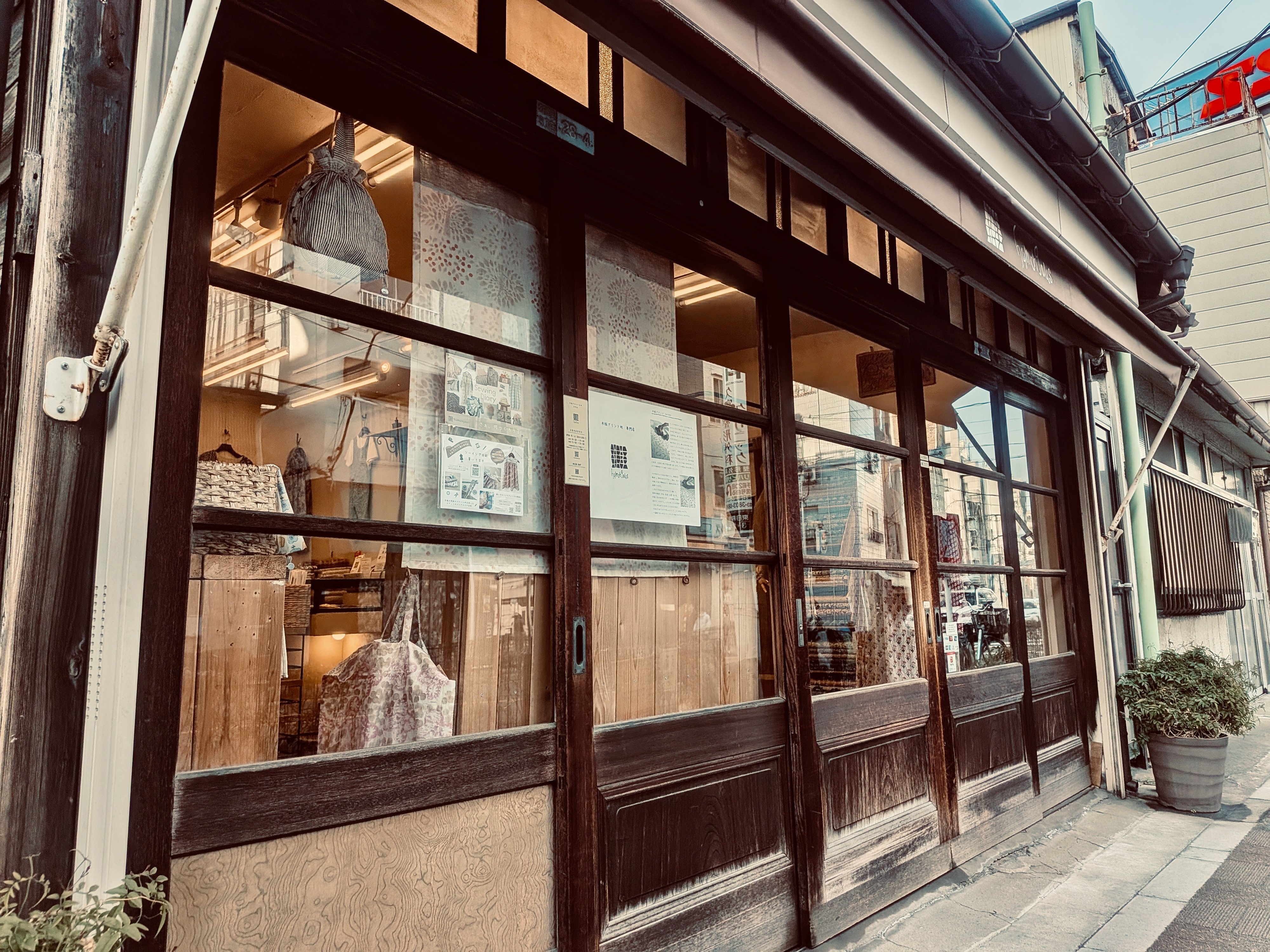
One shop kept its retro Showa-era exterior but renovated the inside. The wooden-and-glass sliding door makes you want to fling it open with a satisfying clatter.
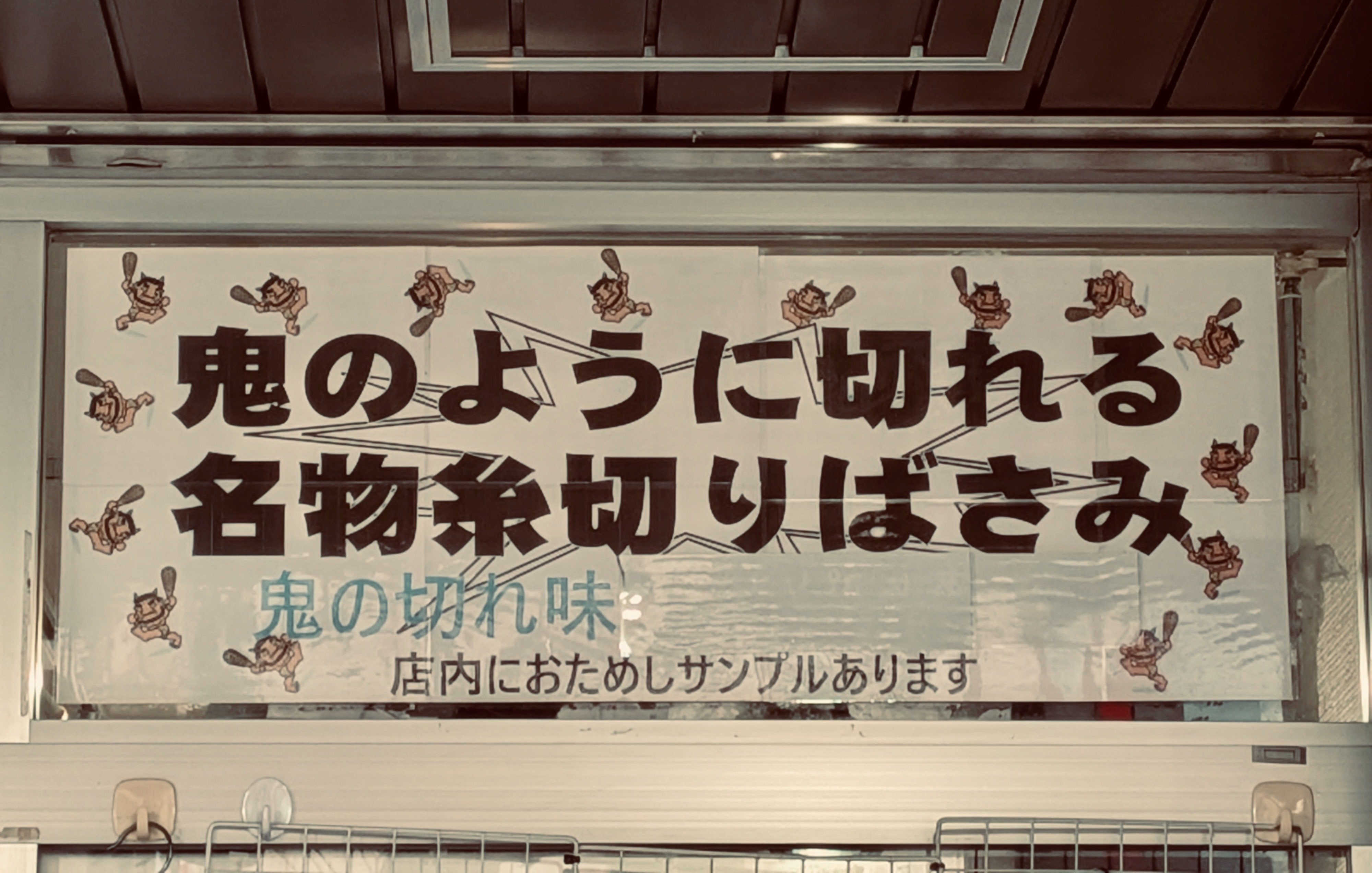
I could imagine the conversation behind one shop’s sign:
Manager: “I’ve come up with a great catchphrase!” Staff: “‘Sharp as a demon’? Doesn’t that sound odd? Aren’t emons the ones getting cut?” Manager: “Then we’ll add ‘demon-level sharpness.’” Staff: “But the demons in the picture are holding clubs.” Manager: “Forget it. Let’s just have people try it.” And anyway—do you really need that kind of cutting power just to snip thread? Sorry. Silly question.
In the end, after walking until I broke a sweat, I found only one shop that carried knitting supplies.
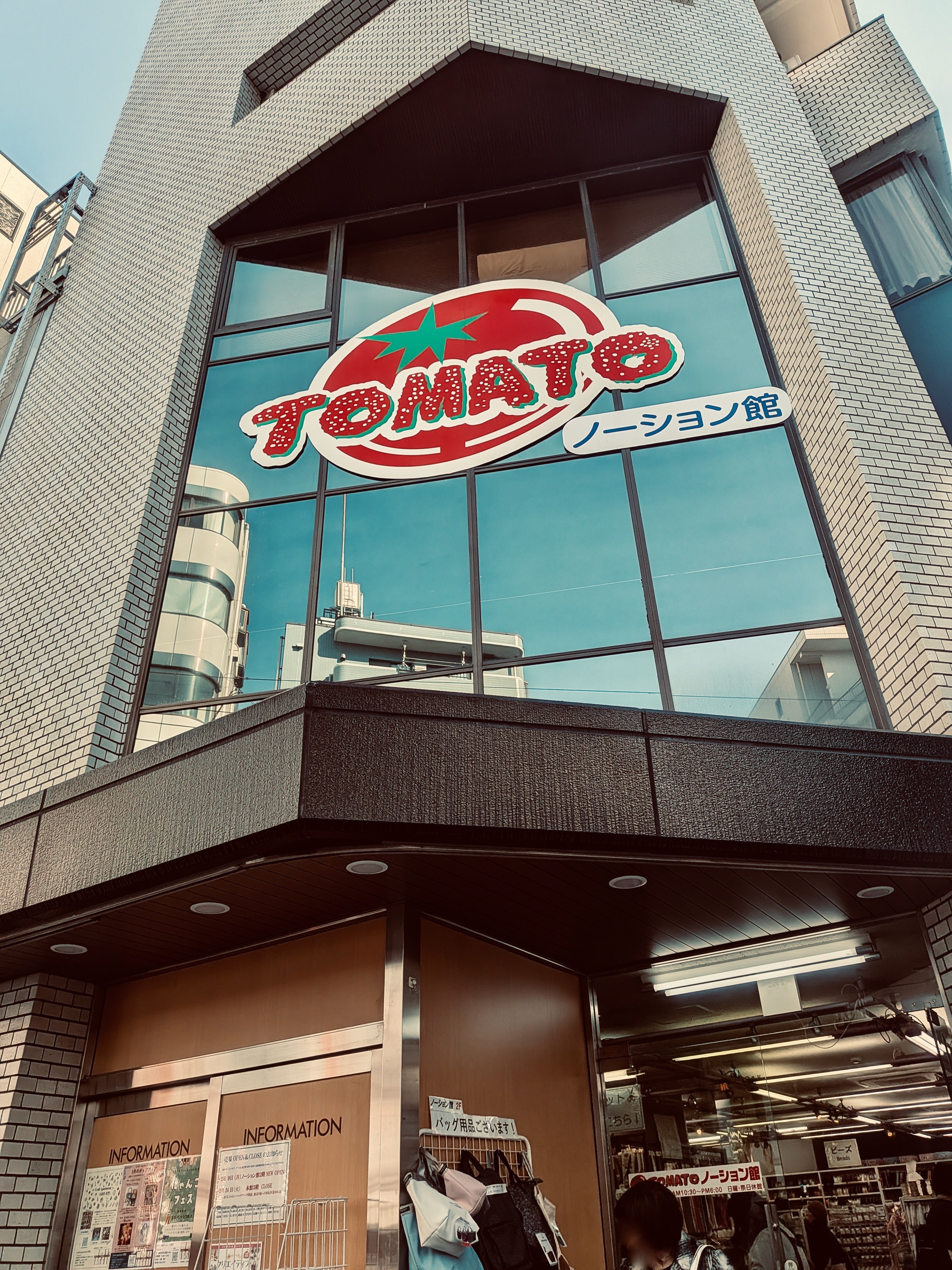
What is a “Notion Hall,” anyway? “Notion” means an idea or concept—but it also refers to sewing supplies.
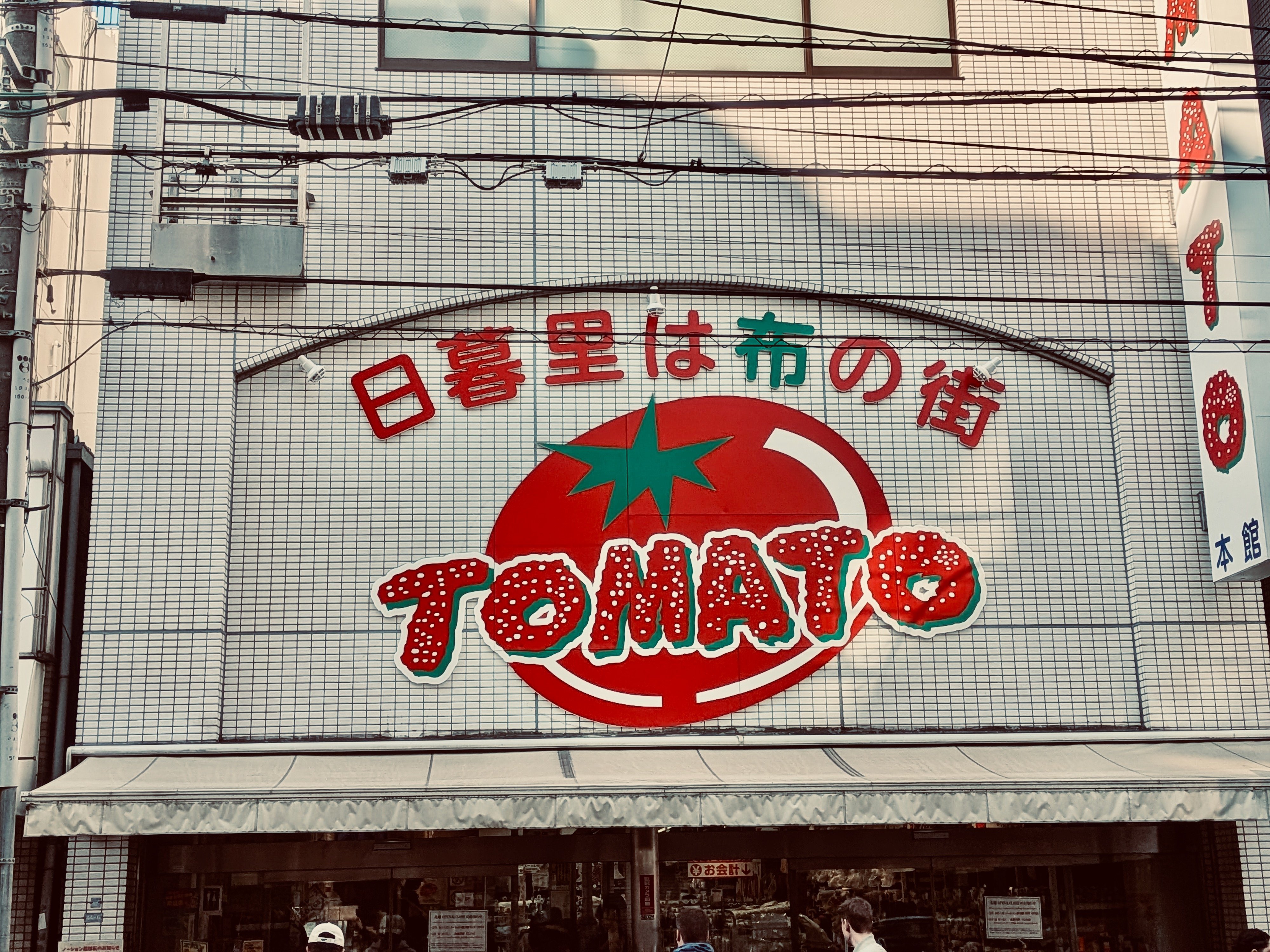
Nippori is a town of fabric. The fact that only “fabric” is highlighted in green on the map says it all. The answer had been written in huge letters halfway down the main street. No wonder I couldn’t find knitting goods. My kneecaps were about ready to burst into tears.
Still, I wasn’t about to slink home defeated. So I turned to ChatGPT, which suggested Asakusabashi—“accessory materials and handicraft supplies. Many wholesalers of metal fittings and craft parts. Developed as a handmade mecca.”
Luckily it’s only about 15 minutes by train, so I extended my walk to Asakusabashi.
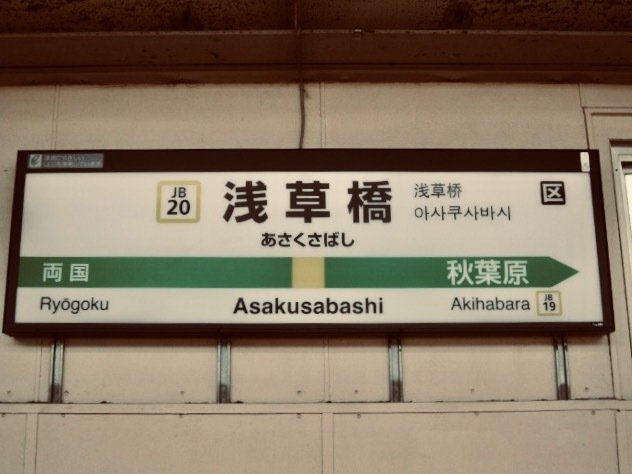
I used to come here almost weekly because a client’s company was nearby. I didn’t remember handicraft shops, though.
But they were there. Inside, there were many foreign tourists—especially couples and families. I was impressed by how well-informed they seemed.
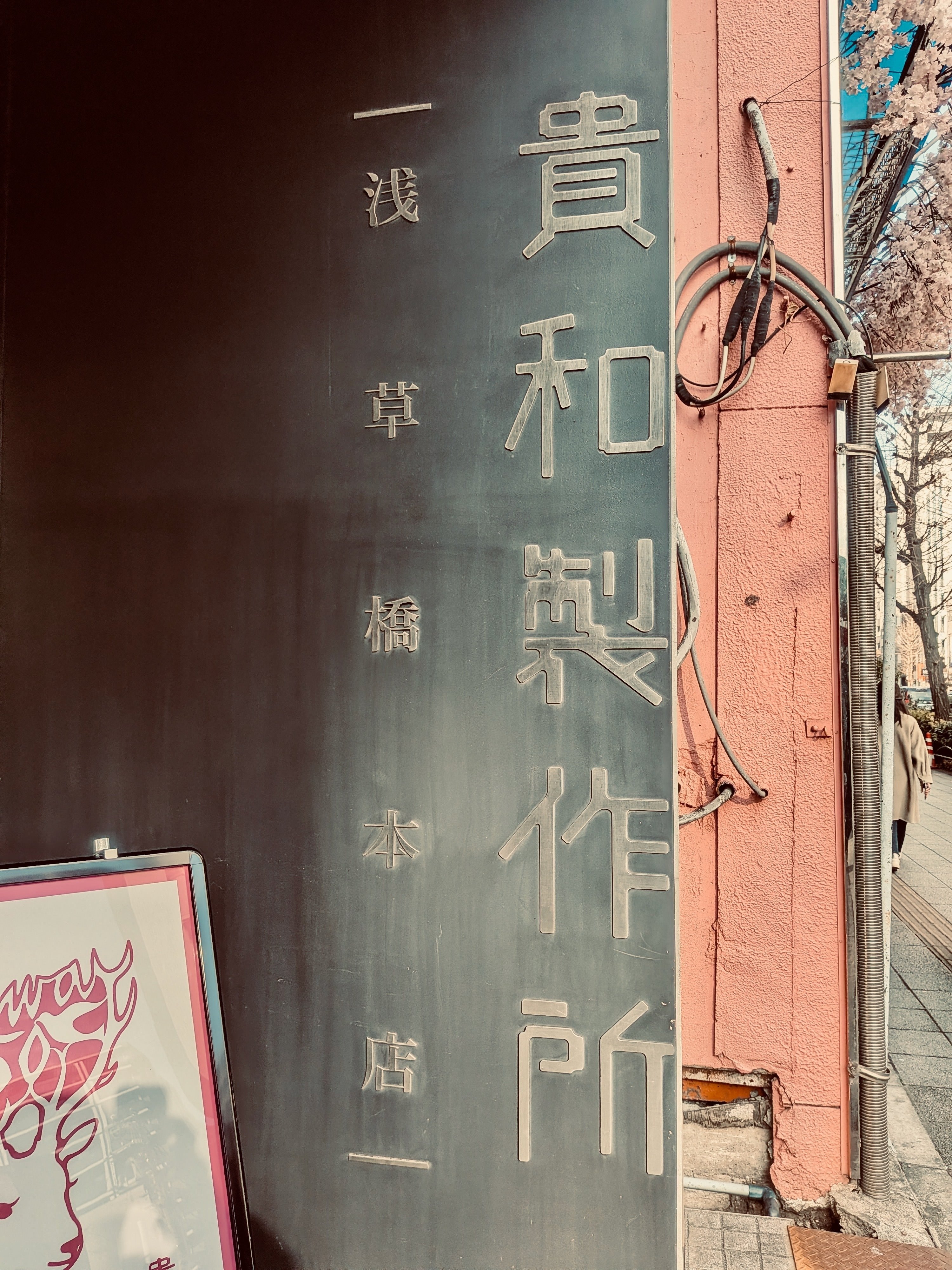
That said, most shops focused on beads and ribbons. No knitting supplies.
I kept wandering with Google Maps as my guide.
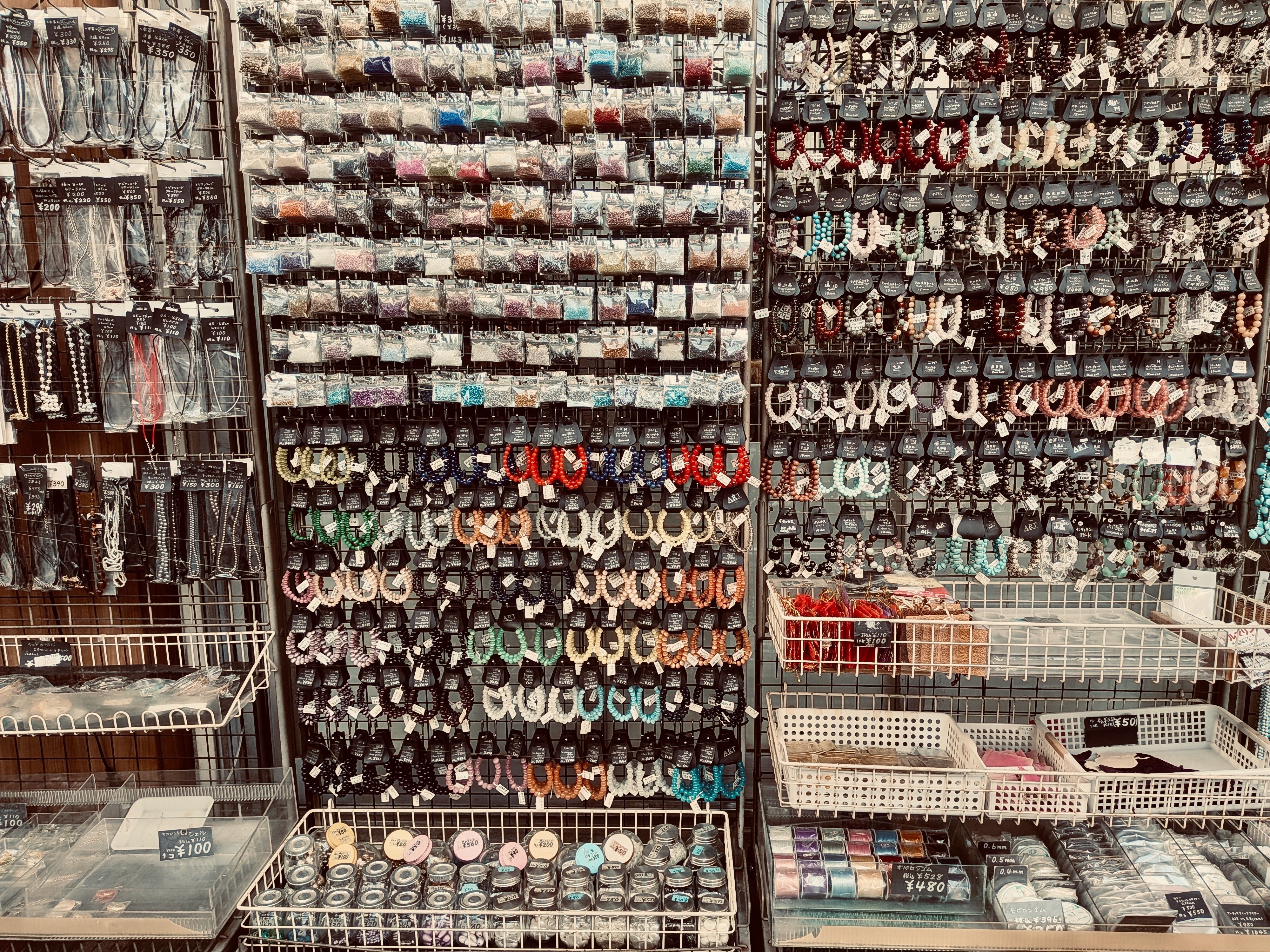
But again, mostly bead and decorative item shops. The shock of the asphalt was echoing up my spine.
Then I found a shop called “Stitch Leaf.” Literally translated: “leaf of stitches.” Makes no sense! But maybe this was promising?
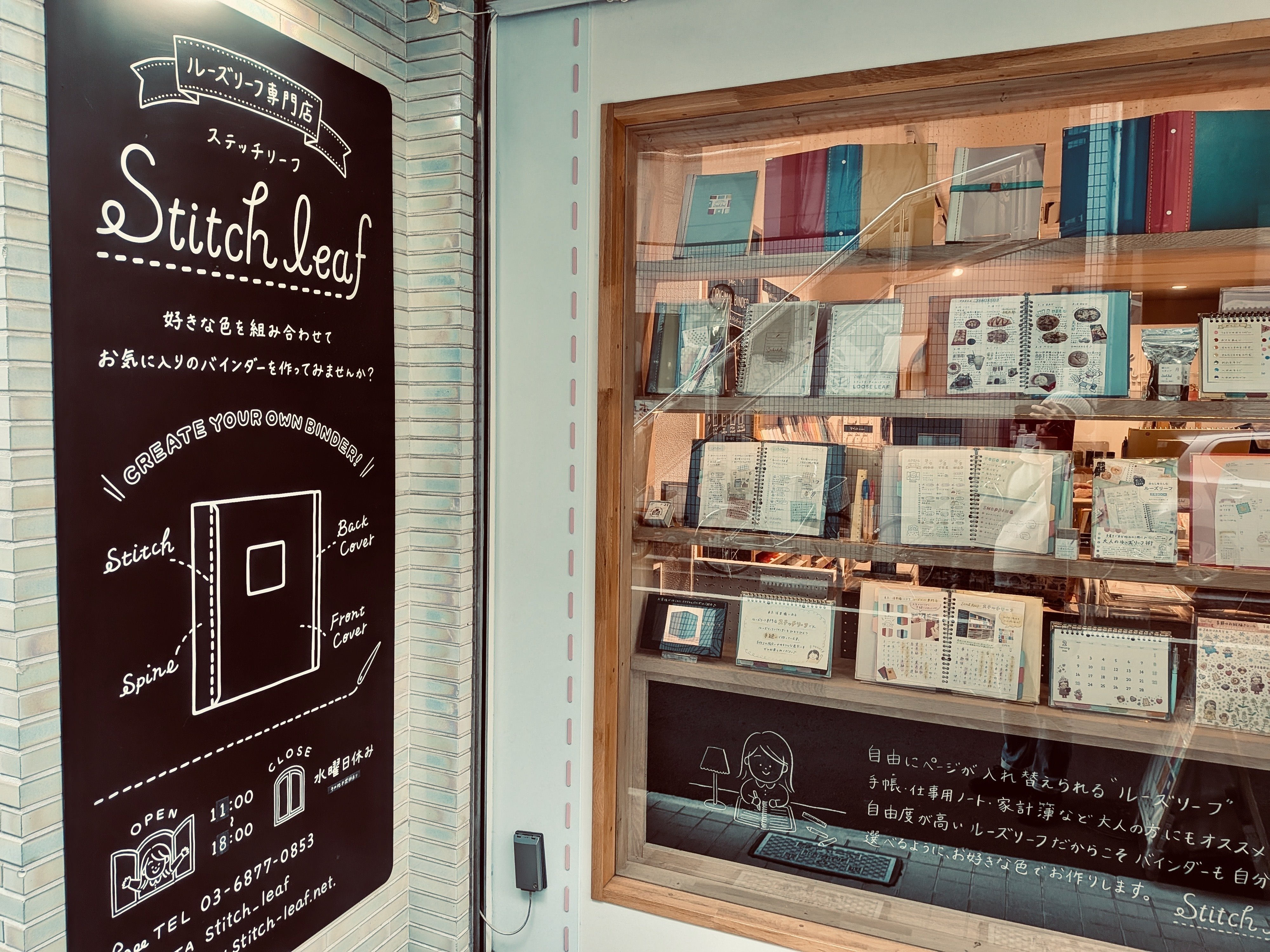
It was a specialty store for loose-leaf paper. A loose-leaf specialty store? What even is that? Intriguing in its own way—but by this point my shoulders were slumped so low they were giving me shoulder pain.
Just when I was about to give up on Asakusabashi as a barren land for knitters, I spotted a mysterious place on the map. I arrived at the location—but there was no entrance. I looked around. Nothing.
Finally, I found it.
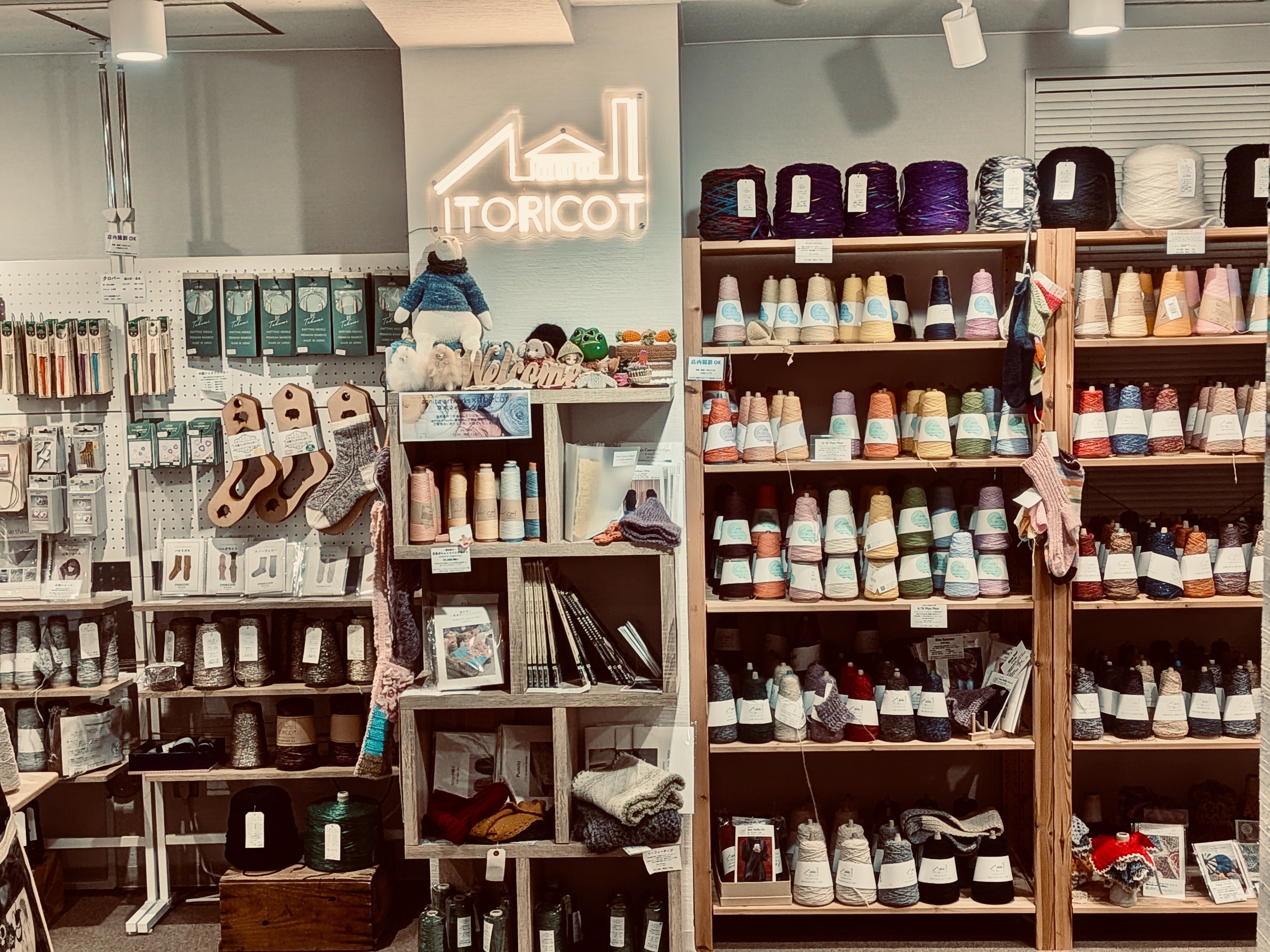
ITORICO. Lovely! This is exactly the kind of shop I’d been searching for. No wonder it was hard to find—it’s on the third floor of a small office building. Dragging my feet up those stairs was worth it.
They sell leftover yarn from factories around the world—surplus or discarded thread, highly technical and niche varieties. Stylish, tasteful, even pleasantly fragrant. Mostly younger customers, and the foot traffic never stopped. How do people even discover places like this?
I felt a shift in fortune. After betting on luck all day, maybe it was finally turning. With legs that felt like they were dragging iron balls, I headed to the final shop: Kanda Handicrafts, said to be the largest craft store in Asakusabashi. There’s even an annex nearby called Stitch Hall. Surely this would demonstrate why the area is considered a handmade mecca.
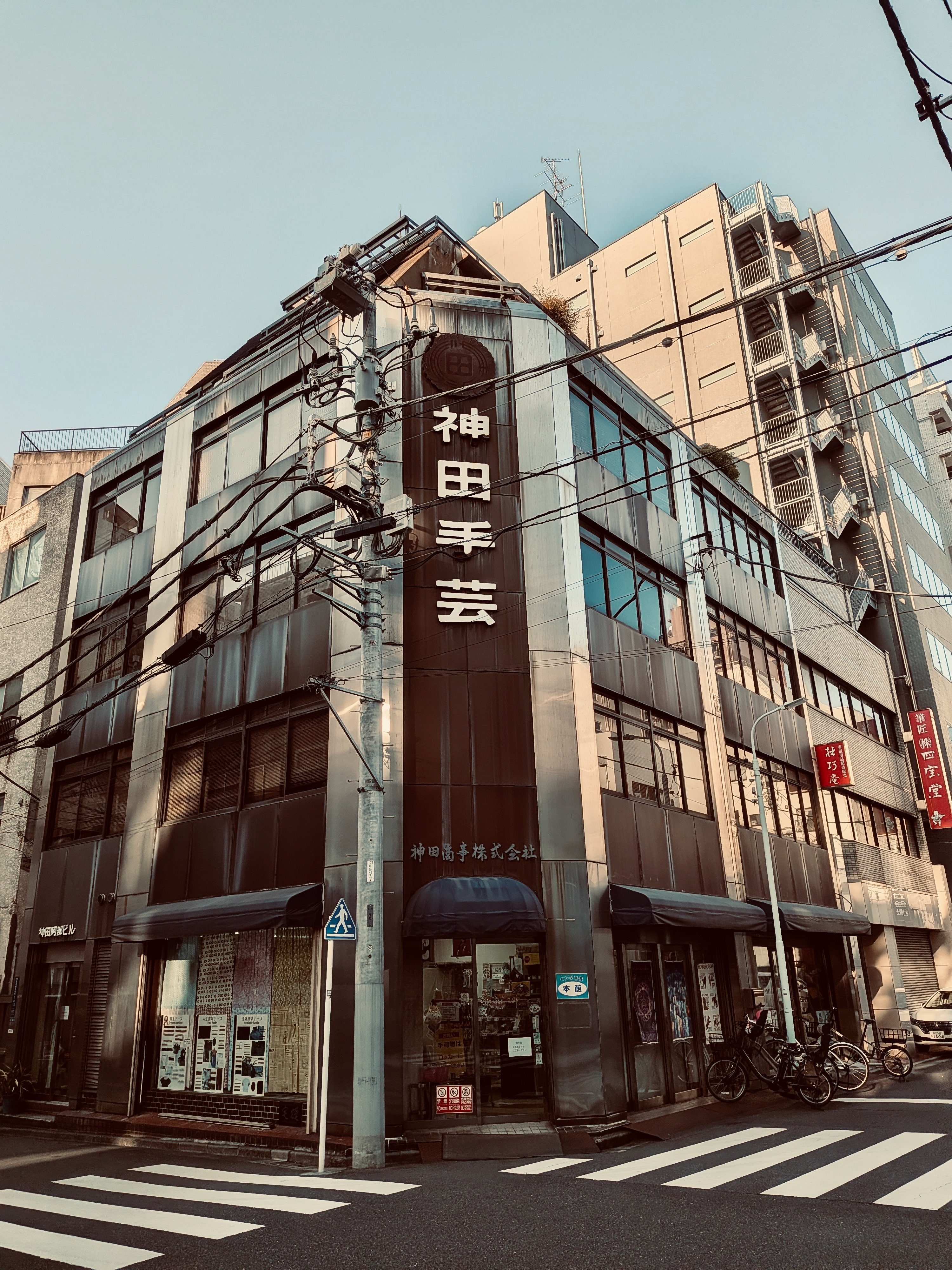
The sacred-site vibe was almost too real. Intensely old-school. I could only stand there in awe. A quick search on my phone revealed it was founded in 1931. This felt less like a pilgrimage and more like paying respects at a shrine.
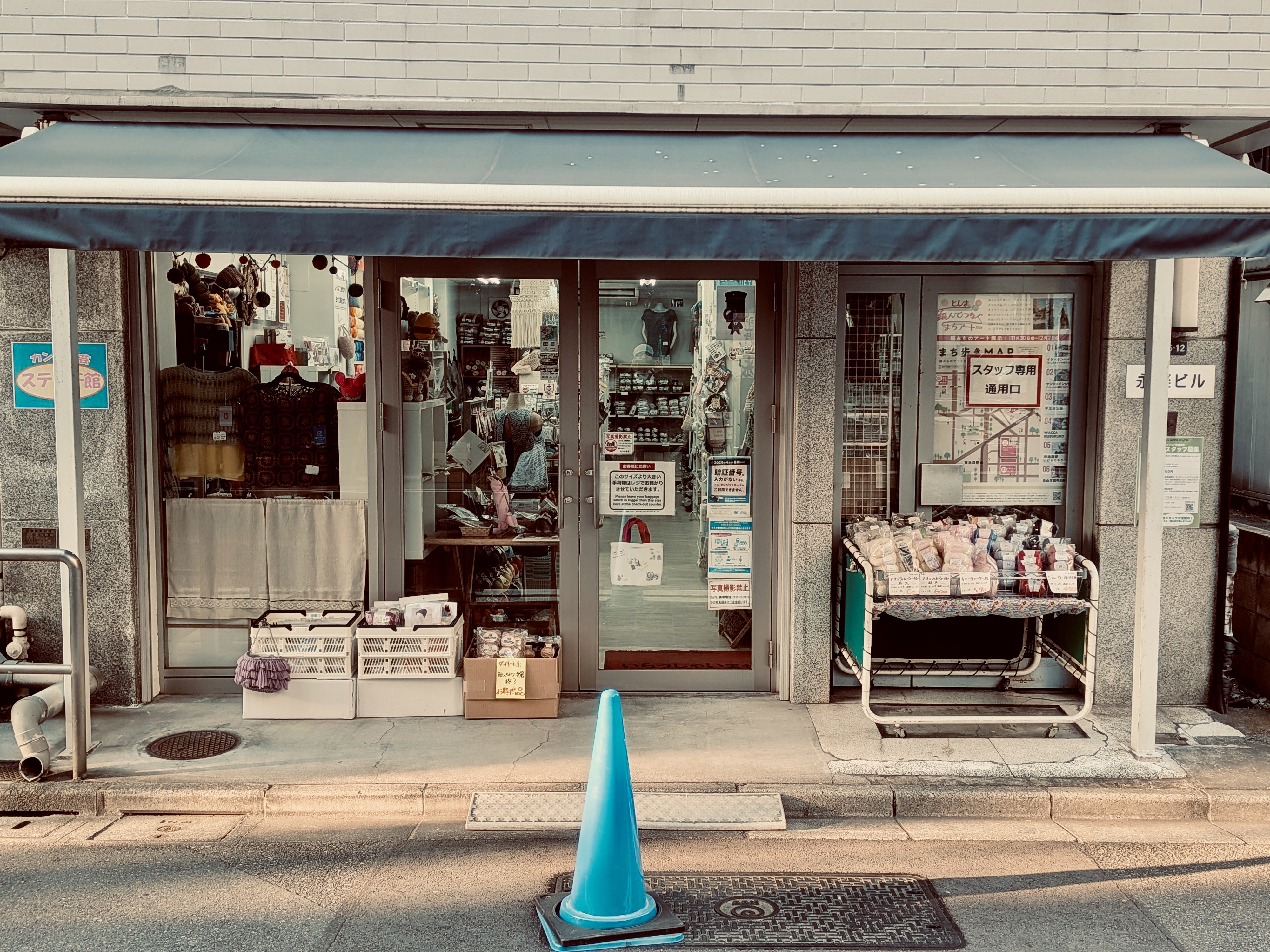
And here’s “Stitch Hall.” I salute the courage it takes to call yourself a “hall.”
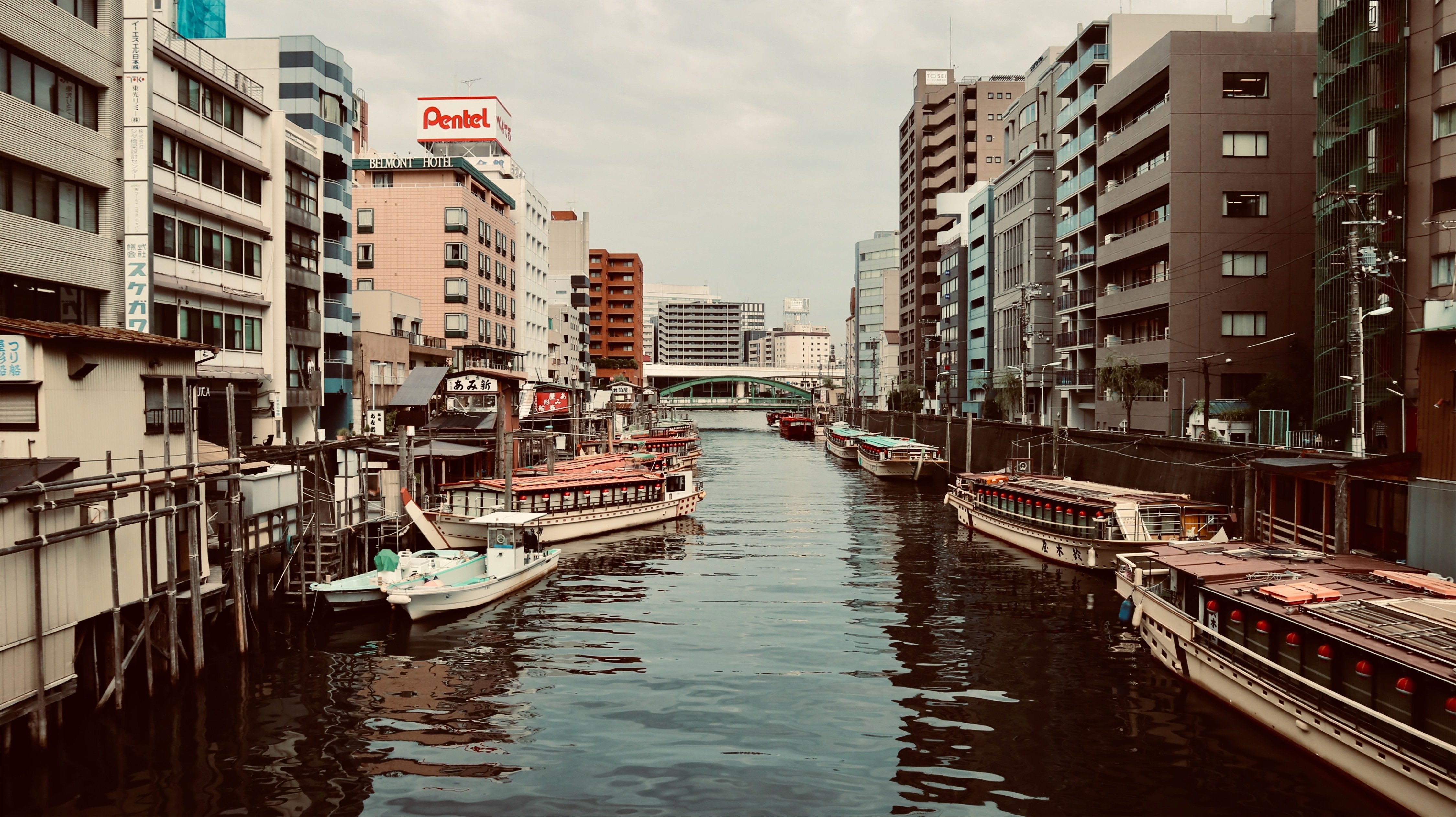
The cheerful mood from earlier had vanished; a cold wind blew in from the Kanda River. It was time to head home and cook dinner. I walked about 15 minutes to Bakuroyokoyama and took the train back. Come to think of it, Bakuroyokoyama is also known as a fabric wholesale district.
This time I walked through Nippori and Asakusabashi, with a bit of Bakuroyokoyama. Nippori’s fabric district dates back to the Taisho era, when used-fabric and textile dealers relocated there from the Asakusa area. Asakusabashi has been a wholesale district for dolls since the Edo period. Bakuroyokoyama is one of Japan’s largest textile wholesale areas—apparently predating even the Tokugawa shogunate.
And yet, with all these textile-related neighborhoods clustered together, why is the “knitting” genre so thin on the ground? Is knitting history surprisingly shallow? Or are there simply not enough specialized tools to warrant an entire district?
Then again, maybe that’s part of the fun—setting out to find hidden gems. Shopping is, after all, one of the pleasures of knitting. Sometimes it even comes first. And there’s yarn bombing, too. Knitting might have more leisure potential than we tend to think.
 Musuta Kusaka's Everyday Journey with Diversity, Equity, and Inclusion in Japan
コメントを残す