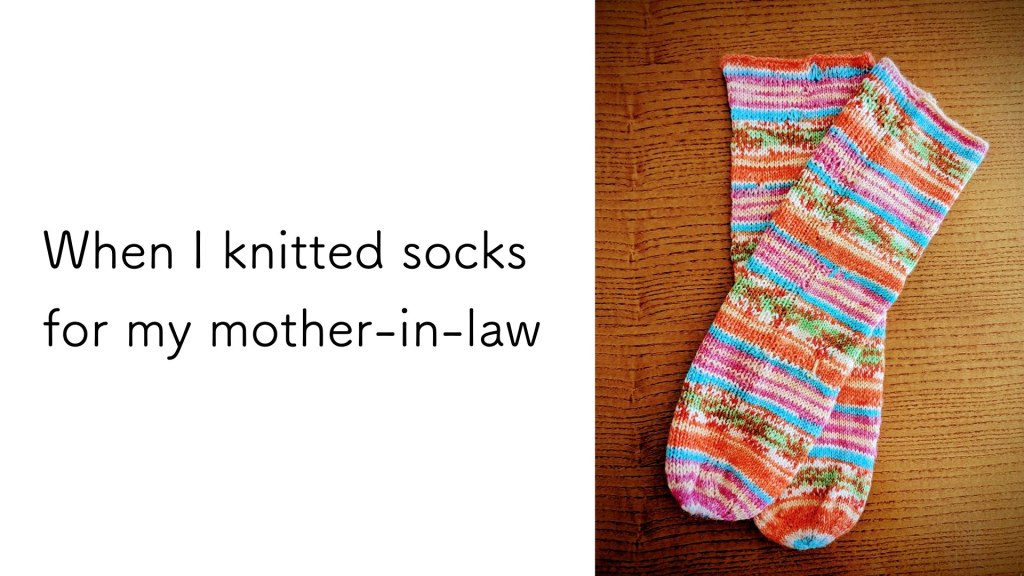
My mother-in-law was beside herself on the other end of the video call, saying it was the first time in her life she had ever received a Christmas present.
Ms. M—born during the war. That was last December.
The present was a pair of socks I had knitted and sent her.
My wife had told me, “Mom keeps saying her feet are freezing,” so I made them for her. Every year-end and New Year’s, she insists on sending our daughter a Christmas present and New Year’s money. Even if we tell her not to, she always does. The socks were the smallest gesture of thanks I could manage.
That said, I was still a beginner. With so little time at the end of the year, I could only knit what I was capable of knitting. The socks I finally finished were simple—no heel, almost primitive. I’d made mistakes everywhere; though brand new, they were already full of repairs.
And yet. Ms. M reacted as if she’d won the year-end lottery.
“You’re good at this, aren’t you! The yarn’s lovely—yes, it’s all in the yarn. You must’ve been busy, thank you so much.”
“I’ll wear them to my dance class and show everyone.”
“They’re too precious to wear. I’ll frame them and hang them up.”
So… were you going to wear them or not?
She must have been genuinely delighted, because the high spirits carried on into the New Year. “Happy New Year! And those socks you sent—my goodness, they’re warm!”
Apparently, she’d worn them. On the video call, she was cradling a one-shō bottle of sake like a ukulele, in perfect celebratory form. My wife had surely sent her New Year’s money as well, but that seemed to have slipped her mind entirely.
Once the holiday period ended and work returned—not to normal so much as to aggressive tailgating levels of busy—a large cardboard box arrived from her.
Inside were miso and soy sauce from my wife’s hometown. Leftover kuri-kinton from New Year’s, packed into plastic containers. And, wedged in as cushioning, local mandarins.
And then, hand-knit low socks.
“These are to return the favor. Wear them!” When I called to thank her, her voice was bright and utterly without hesitation. Socks in return for socks—this was pure Ms. M.
Two pairs: blue × pink, and yellow × light blue. Round and charming. But look closely and the stitches are immaculate, lined up quite literally “without a single thread out of place.” When I run my fingers over them, I feel something like a quiet melody at my fingertips. You can tell how carefully she knitted them.
The fabric curves as it’s knit, fitting the foot even without a heel. What kind of technique is this?
Two pieces of knitted fabric are sewn together, palms pressed as if in prayer, yet the toe is gathered into a single point. I can’t even imagine the original shape of the fabric.
She’d even threaded elastic into the cuff so cold air wouldn’t sneak in. Where did she insert the elastic? It’s a mystery on par with where exactly the subway enters the ground.
To be honest, my “thank you” was overtaken by “this is incredible.” I completely forgot to thank her for the miso, the soy sauce, the kuri-kinton, and the mandarins, and blurted out: “These socks are amazing. How did you knit them?” “It’s called Afghan knitting.” “How do you do it?”
“Just roughly.” “How long did it take?” “I forget.”
No intention of answering. She’s always like this. Ask her for a recipe and you’ll only ever get “more or less.”
Truth is, she’d given me the same kind of socks before. Each time, I wore them daily for their warmth and comfort, never making a fuss, wearing them down over a few years as if it were only natural.
But now, I understand. There’s no such thing as knitting that’s “quick.” And ever since she fractured a bone last year, her hands cramp easily. Her eyesight has long since passed presbyopia and entered the realm of late-elderly vision. It must have taken her even longer. Given that there are two pairs, she may well have started knitting them while I was still working on hers. She may have unraveled and redone them more than once. Our family has three members. Perhaps she really wanted to knit three pairs.
I found myself unable to wear them.
Maybe I should frame them. As I was thinking this, my daughter snatched one pair away. I called again to thank her properly. “Thank you. I’ll take good care of them.”
Ms. M always says she wants nothing. “Cash is best. Heh heh heh,” she laughs it off. I’m sure—no, absolutely sure—that’s her true feeling. But she’s not the sort who’d simply accept money from her daughter and son-in-law with a polite “much obliged.” She’s too old to take on trips, and traveling with grandchildren costs too much.
But knitting—that was it. While knitting, a person empties their mind. And at the same time, they keep thinking: Will it suit them? Will it fit? Will it keep them from catching a cold? You think about the recipient the entire time. It’s a little like prayer. The crystallization of that time becomes something warm. Something joyful. Ms. M knew that. Now, I do too.
“So then,” she began, instead of saying you’re welcome.
“Mm-hmm,” I replied. Go ahead. “I want you to knit one for Y, too. A beanie. Red yarn, please. Passion red. And put his initial on the edge. It’s cold now, so hurry and send it!”
I take it back. Ms. M—you do know how much time knitting takes, right?
Y is my brother-in-law—my wife’s older brother. There’s no way I could refuse. Of course not! The thought never crossed my mind!
And so here I am, knitting a red beanie at full speed. If I keep at it night after night, I should manage to finish by the end of January.
Maybe I’ll knit Ms. M’s burial clothes someday too, in pure white yarn. Hopefully—very hopefully—that day is still a long, long way off.
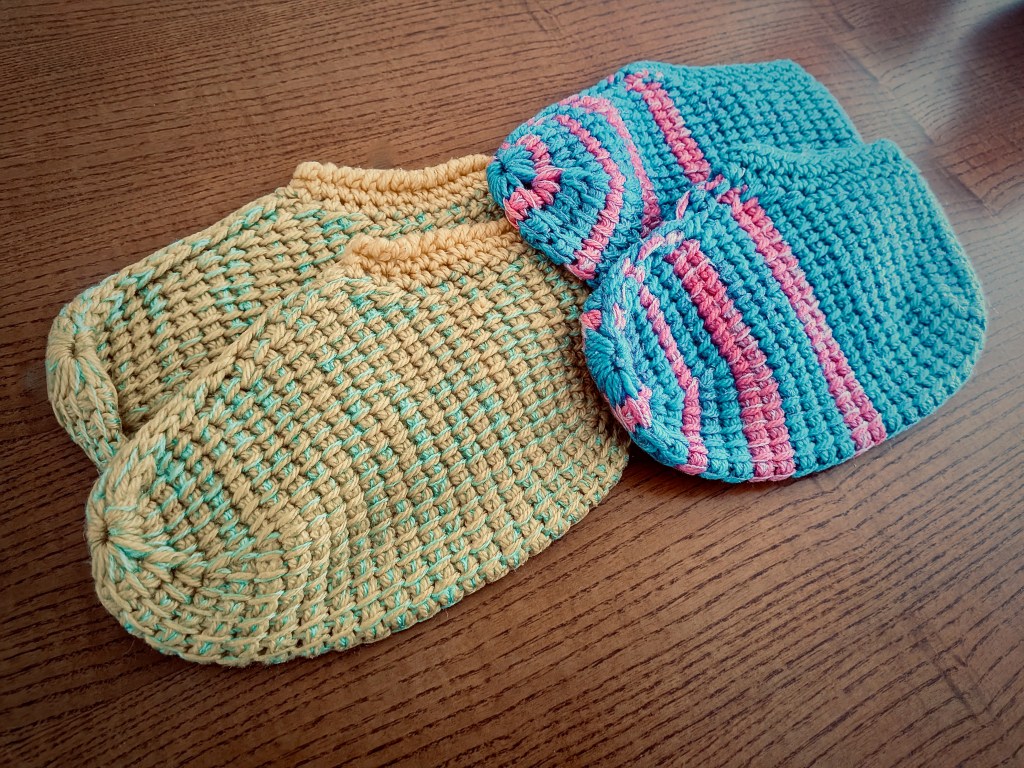
These socks were knitted by my mother-in-law. They're very comfortable. As you'd expect from someone born during the war. They're very different in age. My daughter was the first to claim them.
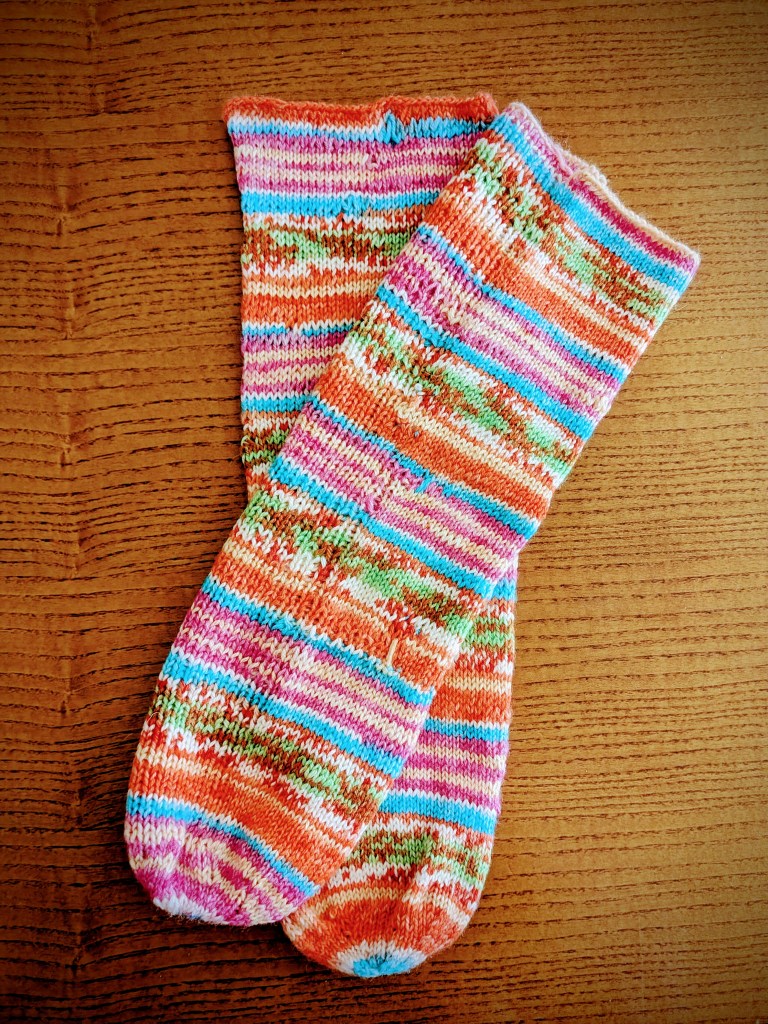
Kesennuma wool. It's thin, soft, and feels good on the skin. My mother-in-law was impressed, saying, "I didn't know there was such a yarn."
 Musuta Kusaka's Everyday Journey with Diversity, Equity, and Inclusion in Japan
コメントを残す