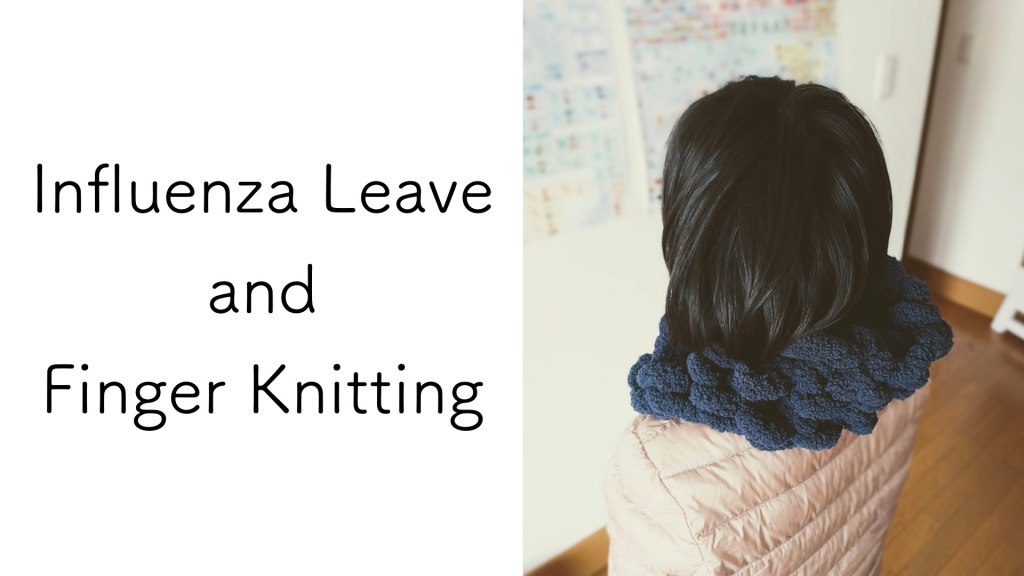
There’s a thing called the courage to rest. At least, I’d like to believe there is.
37.8°C — just high enough to feel sick, but not quite high enough to call in sick. Now that remote work has become the norm, it’s gotten harder to take a proper sick day, even with the flu. “You can work from home, can’t you?”
Deadlines and quotas only make the chills worse.
Still, I decided to take the day off. This year’s flu is spreading early — it’s only a matter of time before more people in the office go down. If I take a break now, maybe my team members will feel freer to rest when they need to. This is strategic attendance management — leadership in action! …That’s my story, and I’m sticking to it.
“I’m so sorry, but I may have caught the flu. I’ll be taking the day off today.” I sent the message to the team chat, wrapping my guilt in polite phrasing.
And then— Boredom. Restlessness.
By noon I’d finished cleaning, doing the laundry, and washing the dishes. I even cooked lunch for my wife — who was working from home — and prepped dinner while I was at it. Now there was nothing left to do. The rest of the day stretched out endlessly before me. Wasn’t there something I could do? Anything? I should’ve just stayed still — I was sick, after all — but “doing nothing” was apparently beyond my ability.
Maybe it wasn’t deadlines or quotas keeping me from resting. Maybe it was me. A full-blown productivity addict.
Wandering around the house like a restless ghost, I must have gotten on my wife’s nerves. “You’re terrible at resting,” she sighed. “If you’re that bored, knit a neck warmer for our daughter. She lost the one from last year.”
New order received. “She wants it cute.” “And not itchy.” “It should go with her down jacket, so make it a bit big.” A demanding client — but that’s the kind that fires me up. The sales rep in me lives for this stuff. “Yes, ma’am,” I said.
I decided to try finger knitting — a method that uses only your fingers, no needles or hooks. Perfect for someone like me, who finds fine handwork a little tiresome.
Thick yarn works best for finger knitting. From my stash, I picked the fattest one — more rope than yarn, really, but soft as a cloud. I was thrilled to finally give it purpose.
Not that I had any idea what I was doing. I opened a YouTube tutorial, slowed it down, rewound, replayed, and followed along.
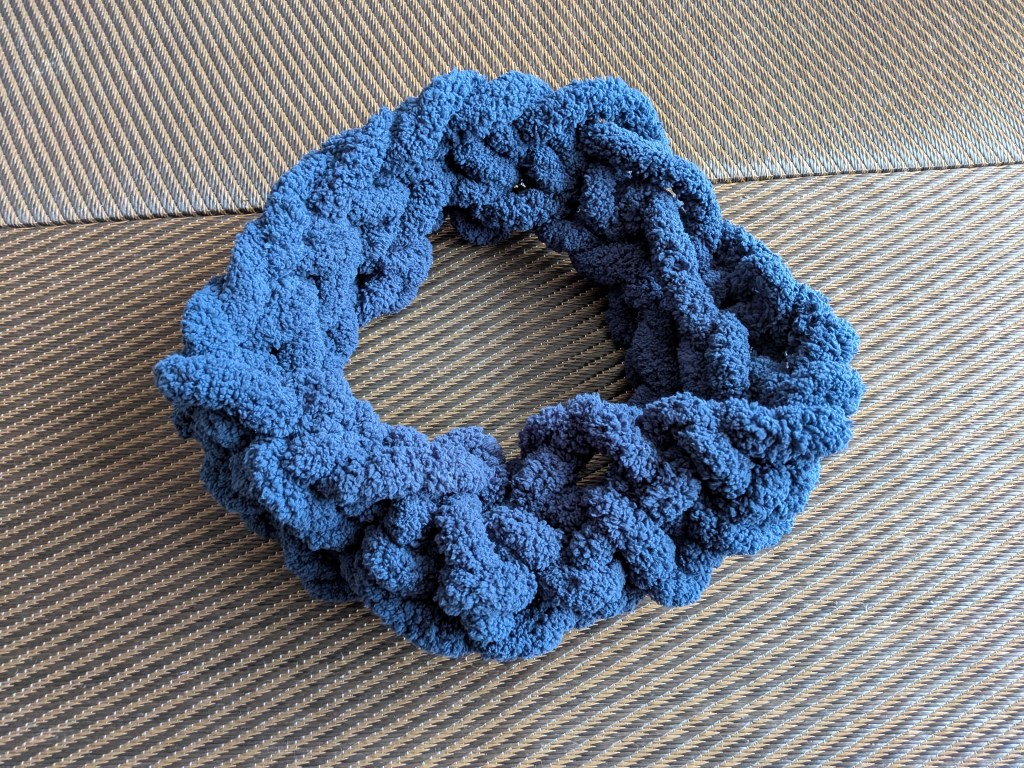
You start by making a loop — like the shape of a spoon — then thread another loop through it, and another, and another, until you get a chain. Connect the head to the tail, and you’ve got your first round. Then, stick your fingers through a loop, grab the one next to it, and pull it through. Repeat that simple motion over and over, and somehow, magically, it becomes a neck warmer.
Who came up with this? I was amazed. The movements are so simple, yet unlike anything else — forward, back, up, down, twist, pull. How did anyone ever invent such a thing?
What’s more, even if you mess up, it hardly matters. You can always recover. After all, there are thousands of stitches; mistakes are inevitable. The design itself forgives you — maybe that’s why it’s survived for centuries. Meticulous yet loose. Precise yet lenient. Beautifully balanced.
Whoever invented knitting was a genius. And the people who carried it through generations, long before writing or film — they were geniuses too. In modern terms, you’d call them innovators or evangelists.
Reading the classics gives you a sense of humanity’s wisdom. Knitting feels the same.
About halfway through, the neck warmer started to take shape. Time for a progress report. “Looks like this,” I said.
“Nice, nice. Maybe a bit too big?” my wife said. “You told me to make it big!” I protested. Too late now — classic client behavior. “It’ll shrink a little when washed,” I said smoothly, “and it’ll fit better around a down jacket that way.” Even with a slight fever, my sales talk was as sharp as ever. Twenty years in the field pays off.
“Oh, that reminds me—” And then she started talking.
About how our daughter’s winter clothes no longer fit.
About how she can’t wait for the next Horiemon REAL VALUE stream. About how our daughter might be in a love triangle.
About wanting to spend New Year’s at her parents’ place.
And about the sushi place doing a crab special next week.
“And then—” Her sentences had no punctuation. She talked and talked, sipping her coffee, while I listened, fingers moving over the yarn.
They say knitting has a therapeutic effect, and maybe it’s true. My ears started to open. I couldn’t remember the last time I really listened to her voice like this. Talking without eye contact felt comfortable, like exchanging quiet monologues. Two people sharing time before our daughter came home — it reminded me of our long phone calls back when we were dating. Maybe I’d been the one rushing to the conclusion in our daily conversations.
When I finally finished — wrestling with the last thick loop — a wave of real satisfaction hit me. I’d actually done it. It felt like an accomplishment you could hold in your hands: solid, warm, useful. A symbol of family care, even. More rewarding than payday. For a productivity addict, it was the perfect kind of day off.
As I was taking a commemorative photo, our daughter came home. The moment of truth — the user review.
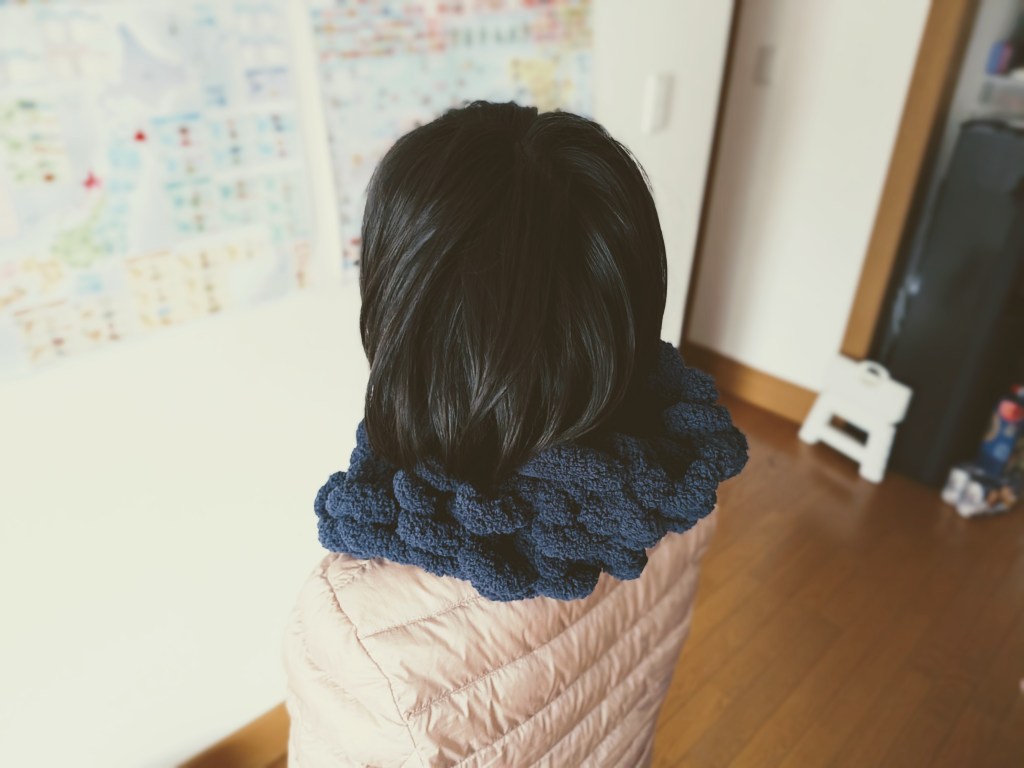
I slipped it over her neck like a medal. “Well? How is it?” “It’s huge!” she said. Uh-oh. She was mad. I shot a desperate look toward the kitchen. “Told you it’d be too big,” my wife said, also mad. “It’s loose. My neck’s cold.” Okay, okay. No need to gang up on me.
In the end, peace was restored only after I promised to make another one — thinner yarn, red this time. Apparently, the problem wasn’t size but color. Lesson learned: never make decisions about someone else without them.
That day, I learned two kinds of courage — the courage to rest, and the courage to start over.
Total cost: 800 yen. About three plates of crab sushi.
 Musuta Kusaka's Everyday Journey with Diversity, Equity, and Inclusion in Japan
コメントを残す