It is operated in 66 locations across the country, with approximately 36,000 employees as of the end of 2022.
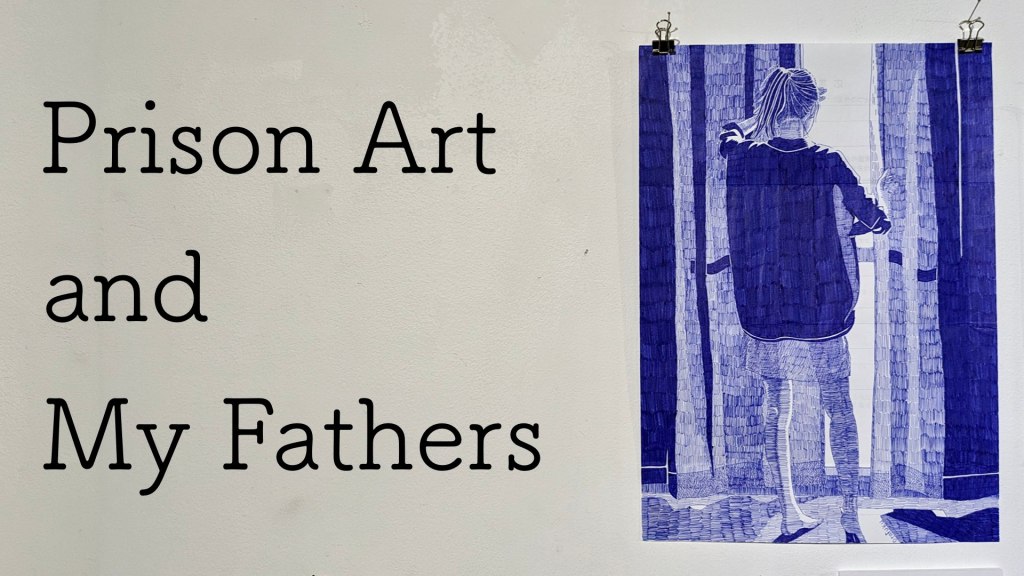
When I learned that this was about prisons and inmates, I was surprised and asked, “Is this a listed company?” But when I thought about it, it wasn’t surprising at all. Prisons are an important part of the separation of powers under the jurisdiction of the Ministry of Justice. About the prison system. About the environment inside. And above all, about the inmates. I learned a lot that day. Late March this year (2024). It was at a prison art exhibition held in Kita-Senju, Tokyo . Art questions common sense. My “common sense about prisons” was completely overturned.

The Prison Art Exhibition was part of a project that invited artworks from inmates serving time in prisons around the country and returned comments from viewers to the artists. It was an attempt to create communication between the other side of the walls and here.
This was the second time the event was held, and 135 works by 52 people from 29 facilities were submitted
for the event. All submitted works were exhibited at the venue and online, and can still be viewed here even after the exhibition has ended.

At first, I imagined poetry, tanka, haiku, senryu, compositions, and paintings based on the title of the exhibition. Even though it was art, it was serious, or rather, plain. I thought it would be well-behaved.
But I was completely wrong. There were essays, novels, calligraphy, and even manga. There were not only serious works, but also a lot of entertainment content. As a cultural person, I was impressed by just the lineup.
People do not create because they are free, but perhaps they become free because they create. While feeling this way, I was also confused about whether it was okay to feel this way.
Even more striking were the super high-level works by skilled and accomplished artists. One after the other, works that I wanted to watch forever and read to the end jumped out at me. “Seriously?” I thought, taken aback, not expecting such high quality to begin with. I also felt ashamed of my arrogance for unwittingly underestimating the artists.
Speaking of arrogance, there were some works that made me think “I wonder if I could buy this.” I want to hang this painting in my room. Or rather, I want to live in a room that suits this painting. Even if I didn’t know that it was made by an inmate, I would have thought the same thing without a doubt.

On the other hand, there were of course many works that shone with their own light precisely because they were aware of the nature of the writers as inmates. I feel that this was especially the case in haiku, senryu and other linguistic arts. The words rang in my head. Some were like bells, some like bells. The works themed on the child I cannot meet, or the precious daily life I share with my child, tingled the back of my nose. “Haa,” I let out something that was neither a deep breath nor a sigh. I felt so helpless that I wanted to click my tongue.
Among them were some works filled with humor and rebellious spirit that made me think, “This guy hasn’t learned his lesson.” I was excited to see that such works were acceptable.
I don’t know what crimes the creators committed. I don’t know what kind of people they are. But every work doesn’t fit into my “prison common sense.” They have a presence that can only come from works created by people who love to create. The gravitational force is on a whole different level.

As I became more and more drawn into the works, I felt as if I was sitting next to the artists, watching their hands and gazes.
What position were they in when they made them? How many times did they start over? Did they ever look out the window? What did they see in the sky? What were they thinking?
Someone silently creating something in a solitude where their outline seemed to become clearly visible. It was a strange sensation to vividly picture the profile of someone I don’t even know.
Easy conformity is hypocritical and no good. I knew that in my head.
But once I got close to the work, I didn’t want to let go.
The wall that separates us is not so high or thick that it makes us feel guilty. Because I knew that.
I had two fathers. And both of them were criminals.

My biological father had killed someone. It must have been before he married my mother. It was negligence resulting in the death of a minor. My mother told me that his bad friend, who came to collect a debt, told him about it while harassing him. My father kept it a secret and disappeared when I was 9 years old.
Later, the man who acted as my father for a few years was also a former yakuza, who said he had quit, but got involved in multiple crimes, including stimulant drugs.
My brother and I, who were in elementary and junior high school, were forced to help with simple tasks. For us, who
dreamed of eating our fill of Puchin Pudding, a few hundred yen in part-time pay was a lot of money. Later, I found out that it was for pasting address labels on underground videos, and that my mother was in on it. He had also been sentenced to prison, and I think it was in Fuchu. So we were spared the trouble, but after his release, he returned to his legal wife, who was actually still there.
Thinking back, crime and prisons were close to me in my childhood. It’s been more than a quarter century since I lost contact with either, but when I hear “this side of the wall,” I still think of the prison walls.
I don’t know what my ex-fathers are doing now, or if they’re even alive. It would be a hassle to know. But now that I’m 45, I understand that they were sensitive, too. Sensitivity is possibility. As I walked around the exhibition, I couldn’t help but imagine “what if they were.”
If they had been able to express themselves like this.
If they had been able to meet people other than their friends through expression. And what if they had been able to learn about different values and different options.
The two of them had absolutely no connection to art or creativity, so perhaps that was impossible. But perhaps it was precisely because they had no connection that they could have become something that could put their bad relationship into perspective. Even though I knew it was a faint hope, I couldn’t help but think about the possibilities of art.

But that doesn’t mean I immediately wanted to say,
“Give all inmates more opportunities to express themselves! Improve the prison’s environment for expression!” Is it really okay to allow freedom and joy to those who have taken away someone’s freedom and joy? Before that, can’t they give back what they took from us? As someone who has been provoked by good-for-nothings, I wanted to speak out loudly. To begin with, I don’t think there are many inmates who are quietly reflecting on their actions.
But at the same time, I remember being a member of a criminal’s family. My fathers were all alone. There was no one to ask for help. It seemed to me that they were being forced to live, having been deprived of something they needed to live. I wonder if many of the inmates were also people like my fathers. What if, before they were perpetrators, they were victims of birth, family, or society?
If we connect the dots of our lives, where something has been taken from us in advance, then I, my fathers, and those behind bars all make a straight line. There may not have been much difference between us.
The only difference was a fine line of luck. I loved to “write,” and it just so happened that it wasn’t taken away from me. It just so happened that I was allowed to make an effort, and I just so happened to be able to earn a living. It was all just by chance. Even now, I don’t think that I’m living in a safe zone.
Don’t take away people’s expression and possibilities to connect with society. A contradictory thought echoed in my head, louder than before.

I have almost no memories of my biological father, and they are all vague. Perhaps this is even more so because he was as silent as a monk. But what I remember is the day we went for a drive together as a family.
While driving, he was humming an old song. It was Blue Chateau by the Blue Comets. “Blue Chateau, sleeping quietly, surrounded by forests and springs.” He
sang in a faint voice so as not to wake up the sleeping family.
I pretended to be asleep and listened secretly in the back seat. I thought it was “unusual.” That was the only time I ever heard his song. Maybe it’s because that voice was so fleeting that it still remains in my ears.
A lonely feeling that was not addressed to anyone.
I can only become a person who can accept me if I am surrounded by people who can accept my loneliness.
There was no such person for him. I was too young to accept it at the time.
That’s why my father probably failed to return. To his family, to society. He disappeared without being able to believe his “I’m home” or our “Welcome home.”
There may be people like that among those behind bars. When I thought about it, I felt an unbearable emotion.

By the way. My father suddenly appeared after that. He came in a tracksuit and sandals, and we met for the first time in 16 years. He said, “I got a wife and a daughter, so please give me back my family register.” So that’s how it is, Dad. I laughed, and my brother cried. We couldn’t even say “welcome back,” and he got his family register with his death revoked, and disappeared again. He was a kind man, skilled with his hands, and good at drawing. Just as he once drew me a picture of Perman, he must have drawn something for his new daughter. I hope that this time, and even now, that picture is connected to a place where he can return to. As I walked around the exhibition, I felt like I wanted to see the works.
(end)
 Musuta Kusaka's Everyday Journey with Diversity, Equity, and Inclusion in Japan
コメントを残す