I almost hit the “Tweet” button. What a hateful post. That was close.
My hobby (a strange one) is researching, watching, and attending events and content related to diversity. Every now and then, I see and hear discriminatory remarks and hate speech against minorities.
That night, I came across some extremely spiteful tweets.
I was about to start a fart fight, throwing hate at hate. I came to my senses just in time, but it was dangerous.
Even though the words weren’t directed at me, I was honestly hit with hate.
But what I realized then was that I was no different from the people who made discriminatory remarks. It was
a knee-jerk discriminatory remark. It was the worst when I was drunk and feeling bold. We were both birds of a feather in the sense that we were prone to falling to the dark side.
So, can’t I at least put a stop to my own lust? But how?
The hint was in the hip-hop I love. In a certain university course. And in a certain live performance. I discovered something of my own, so I’d like to write it down here.
It’s also a reminder to myself that I tend to forget things easily.
No, there’s no need to be so roundabout about it – discriminatory remarks are just not okay.
Hip hop and diversity, how to deal with discriminatory remarks and hate – from Meiji University Liberty Academy.

On October 15th, I took an online course called “Rap Music, Race, and Gender – From Two Frontlines” offered by Meiji University Liberty Academy, a lifelong learning institution.
The event featured academic lectures and discussions on social phenomena and research on race, ethnicity, and gender. There were also lectures on Korean studies in Japan and hip-hop feminism. I was interested in the unique approach of hip-hop and rap.
The presentation that made the biggest impression on me was by Associate Professor Kawabata Kohei of the Faculty of Liberal Arts at Tsuda University, who gave a research presentation entitled “Rap Music and Anti-Racism: Cultural Practices for Regaining Power.”
Here are just a few examples (with some supplementary information).
- Especially in hip-hop, it’s important to be cool. Being cool empowers the listeners.
- In recent years, human rights and political values have been connected to pop culture, and “correctness” has been incorporated into that coolness. For example, anti-racism. Or feminism. “Correctness” is becoming a component of coolness.
- On the other hand, there are also people who rebel against this trend, especially those who post discriminatory remarks and hate crimes.
Cool is the right way to be cool. And then there are the people who rebel. Get out of here. I don’t need you scum. You bastard. It was a post by someone who made such a statement that almost made me vent my emotional anger.
Associate Professor Kawabata gives the following opinion:
- The difference between hate and diss is whether you show respect for the other person. Whether you identify yourself and then attack them verbally.
Diss means disrespect. In other words, there is respect. Regardless of your attitude, you should first find out what the other person is saying, or try to find out. Furthermore, even if you are going to argue, you should make it clear who you are before engaging in an argument. These can be said to be the basis of MC battles. This is why dissing is a style unique to hip-hop, and sometimes even its glory. Speaking without respect, and anonymously. This is simply discriminatory remarks and hate. It’s the same for hip-hop and diversity. (By the way, there seems to be research that suggests that only about 3% of users make xenophobic remarks online.)
The research introduction continues.
- However, as long as these people live in the same society, we cannot think of them as separate from us.
- How to deal with anti-comments?
How to deal with anti comments. I felt like he was speaking for me. This was exactly what I was feeling. The moment I stared intently at the projected slides that Associate Professor Kawabata was explaining, his research presentation concluded with this:
- I think this will become an important issue in the future.
Isn’t there a solution?
Well, that’s true. There is no convenient solution. There is no solution at this point. But it’s a scientific approach. I can trust it.
Hip-hop, born from minorities, and diversity. I believe that these two things have something in common, so I felt encouraged just knowing that there is previous research that has the same perspective as me. But still, there is no solution. It doesn’t have to be something that is accepted by society. Can’t I at least find hip-hop knowledge that I can use? I found that at a live concert I went to later.
Because there was an experience that was the exact opposite of discrimination and division.
The answer is on the dance floor. The diversity of coolness in hip-hop – from THA BLUE HERB’s live performance

“This is another way to win”
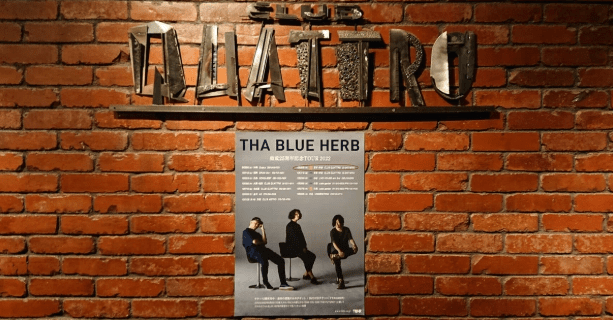
A rapper shouted on stage and raised his fist. The full audience also raised their fists especially high in response to him. It was as if they were trying to break through the ceiling of Shibuya Club Quattro. This was one of the climaxes of the night (there were many climaxes).
October 21st. I left work early and went to a live performance by a hip-hop group called THA BLUE HERB . The rapper who shouted was ILL-BOSSTINO .
Why did “This is one way to win” resonate as such a powerful punch line? It requires a little explanation.
They formed in 1997. Looking back at the time, Japanese hip-hop was in its infancy and was thriving. The center of the scene was Tokyo. THA BLUE HERB (Representing Sapporo), active in Sapporo, Hokkaido, appeared as a counter-movement. They released an album that raised the middle finger and said, “What’s Tokyo hip-hop worth?”
This was a hit, and they became one of the pioneers who brought the scene outside of Tokyo to light (there were many others, but I won’t go into detail here).
This year marks the 25th anniversary of these bands, who appeared as heretics or minorities . The rapper is also 50 years old. But don’t underestimate them as veterans.
The live show that day was also clearly sold out, so much so that you couldn’t even fit your toes in. They completely rocked the 500-strong audience without a moment’s pause (160 minutes went by in a flash).
A major contract, Oricon charts, Red and White Song Battle. They had nothing to do with any of those.
For a quarter century, they have been attracting audiences who fill the floors. They have been surviving in the hip-hop industry, which is full of ups and downs, by taking it on a very long battle. If this isn’t “winning,” then what is?
Yes. There is more than one way to win. There are various values, and many ways to survive. Even if you are someone who makes you wonder what kind of person they are, if you have musical ability and props, you can rise to the top, which is the depth of hip-hop. That diversity is why I love hip-hop (it’s a tough world to live in). Their appearance, which embodies that, can be summed up in one word: cool.
Speaking of diversity, there was another thing that impressed me about this concert. It was the demographics of the audience.
There were mischievous young boys, sparkly girls. Men and women who looked like they were in the industry. Men and women from far away who seemed to be on tour. Tough-looking older men (and sometimes older women), gentlemanly older men. Salarymen in dress shirts. Elderly men. There was also a person with a disability. Soloists, friends, lovers, couples, colleagues, seniors and juniors. People who drink alcohol, people who don’t. The demographics were all over the place. Even from what I could see, there were so many different kinds of people there.
But… I’ll say this without fear of being misunderstood. The customers at THA BLUE HERB are generally well-mannered.
And that goes beyond just being well-behaved. They know a certain kind of hip-hop etiquette.
For example. Before the live performance, everyone was squeezing together to give a woman who was behind a tall man a space where she could easily see. Some people were helping a disabled person to sit down. There were no signs of old fans using their wives’ space to save places.
Even during the live performance, no one was taking pictures with their smartphones.
The best part was just before the end of the show (this was my favorite scene).
“Let’s all take a photo.” The MC tried to take a photo with the audience from the stage. Just as he was about to finish saying, “But you know, only the people in the front row always get in the photo…”, the audience started to bend one after another. One of the customers looked back and muttered,
“Huh? Everyone is bending over…”
Yes. Everyone was bending over. Everyone, even the people at the back of the floor. The people at the back couldn’t get in the photo unless they stood. The whole venue was laughing. Despite the wide variety of people gathered there, or perhaps because of it, there was not a shred of ugliness in excluding anyone.
Good vibes. There’s nothing more uncool than ruining a party. They ‘re taking a break from their studies and work, and somehow managing to make time to be there.
To make the place everyone is in a place they can stay in. To make it a place they want to be. Everyone knows that this is what has made THA BLUE HERB’s activities sustainable for 25 years. I felt that these people were cool, too.
Being cool doesn’t mean trying to look cool. It means not behaving in a lame way. Maybe that’s what it means.
I thought as I watched the audience all crouching down.
Why discriminatory remarks are “lame”: A night learning from hip-hop

Discriminatory remarks and hate. How do we deal with this, even if it’s inside of us?
I think the perspective I was missing was, “What exactly do I consider to be uncool?”
And as a hip-hop fan, I wondered what I found uncool
, and I reflected on the fact that this was a discriminatory remark.
Because hip-hop was born from discriminated minorities.
If I were to make discriminatory remarks, I would have never listened to anything from hip-hop.
“Isn’t that tweet lame?” “What in hip-hop have I been listening to?”
I deeply regret it. But as long as I direct this punch line at myself, I think I will be able to avoid repeating the same mistake. What I found on the dance floor was the brakes I got because I love hip-hop.
Once again, hip-hop helped me out. That was the feeling I had when I left the venue that night.
However, when I got home and turned on the light in the entrance, I realized that my zipper was wide open.
There was something I needed to be careful about before making discriminatory remarks. Lame.
That’s it. Thank you for reading to the end.
Two bonuses. Some memorable episodes from “Rap Music, Race, and Gender
Research from the perspective of feminism and hip hop. Hip Hop Feminism (HHF) also includes women’s liberation activities.

The video lecture by Dr. Aisha Durham (Professor at the University of South Florida), who has written a book on “Hip Hop Feminism,” was also very impressive and I learned a lot from it.
Dr. Aisha Durham is a professor at the University ofSouthFlorida. She specializes in communication studies. She uses auto/ethnography to study the relationship between media representations and everyday life in the “post” era from the perspective of intersectionality as a black feminist. Her publications include the award-winning book Home with Hip Hop Feminism (2014). She is a Fulbright Fellow and serves on the advisory board for the Hip Hop Anthology at the National Museum of African American History and Culture. She has appeared in entertainment media such as the Tampa Bay Times and NPR.
The professor explained the history of hip hop and discrimination against women and its research in three periods: 1990-, 2000-, and 2010-. Hip Hop Feminism was introduced in a video.
#SAYHERNAME #MeToo #MuteRKelly, etc. (I only knew #MeToo).
she said, “Hip Hop Feminism is the expansion and liberation of women’s rights. It amplifies the voices that speak out against injustice.”
In the United States, research on hip hop and women has been around for a long time, and a paper on Beyonce’s body has been published in a well-known academic journal. Research on video representation seems to be popular in the United States.
I learned for the first time that there is a hip hop perspective in feminism, and that it is widely studied and practiced.
Also, I knew about BLM, but I had never heard of black women being killed by police officers. But when you think about it, it’s possible.
I was impressed by his final words to the audience,
“The World is Listening!”
 Musuta Kusaka's Everyday Journey with Diversity, Equity, and Inclusion in Japan
コメントを残す