There are movies that make you feel uncomfortable.
Of course, in a good way. Movies that make you question where you are right now.
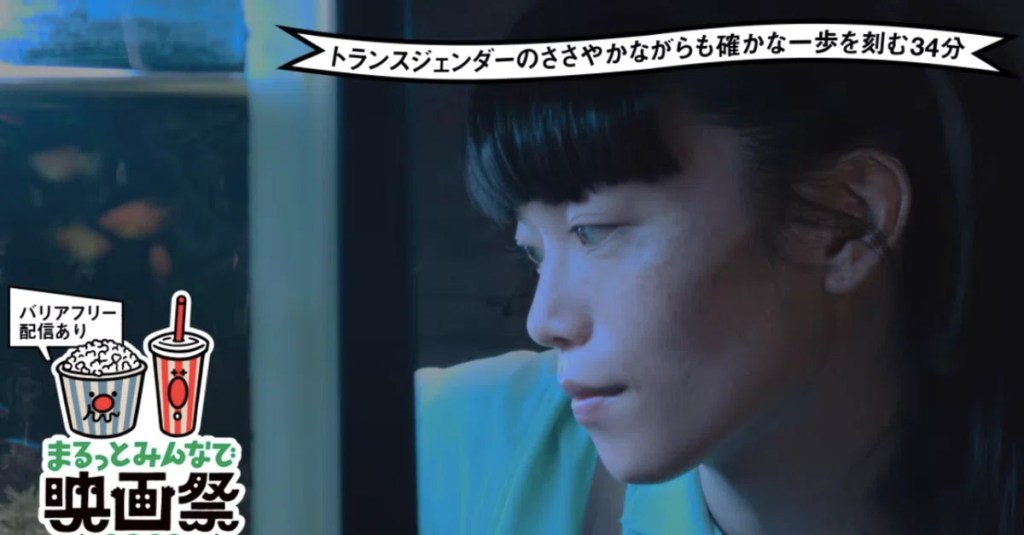
The film ” One Sleeve Fish “, available on Theatre for All , was exactly that.
Discriminatory words and actions that innocent people unintentionally use on a daily basis. One of the themes of this film is “small attacks on minorities.” According to the director, “This is the first film in Japan to be made by auditioning transgender people from the general public.” After reading this film, I was left feeling unsettled. Interesting. Indignant. Instructive. None of the above. It just made me feel uneasy. It was like being turned from someone who thought they were doing nothing into a suspect. It was so strong that I wanted to write my thoughts on the film here.
They go to a class reunion and come back. Just that is all in the 34 minutes, and the viewer is left feeling overwhelmed.

“One Sleeve Fish” is a 34-minute short film. It is scheduled to be released in 2021. The main character is Yu Ishizuka. He is a fashion model and actor. Many people may know him as the MC of NHK Educational TV’s “Shakin!”
The plot is quite simple. The main character, Hikari, played by Ishizuka Yu, is transgender (MtF). She works at a tropical fish company and meets with clients as a salesperson, but she is often subjected to inconsiderate remarks and curious looks. When she feels like she is suffocating, she goes to a friend’s bar to take a breather.
One day, she is invited to a reunion of her former soccer team. Her former teammate, Kei Hisada, whom she secretly has feelings for, will also be attending. Her profile clearly shows her unshakeable love for him.
And then the night of the class reunion arrives. Hikari, who has left her hometown and is starting to live her own life, dresses up in her best clothes and jumps into the company of her former teammates who don’t know her situation, but… This is the story.
By superimposing the image of her as a clownfish, her mental image is portrayed beautifully, delicately, yet robustly.
(The clownfish is this↓. It has an ecology that allows it to change sex depending on the environment.)

This film is a so-called “go and come back” film. Like Mad Max: Fury Road and Stand by Me. There was no value in reaching the destination. Rather, it’s the type of film where the real value is in the change and growth upon return.
So why is a movie that only involves going and coming back interesting? It’s because there is something about it that makes you want to empathize with the protagonist’s motivation for going and applaud her change and growth when she returns. But there’s more to this film than that. Every part of her little adventure poses questions to the audience.
That’s why you can’t take your eyes off it. “Have you done something similar?” “What would you do if you came across a scene like this?” Even if you do it unconsciously. Or even if you think you’ve been careful. It’s as if you’re being forced to think about other people’s feelings. Here, I’d like to say, “I think these are 34 minutes that everyone should watch, or rather, experience!” and move on to the next part.
——–
The following contains spoilers. Please be careful if you haven’t seen it yet. However, I believe that spoilers will not diminish the charm of this work. Because. There is no point in giving spoilers now. This work is our lives itself, and the spoilers are also commonplace in our daily lives. Unfortunately.
——–
A small attack, too much damage. Big courage, too little progress. “It’s not worth it!” I feel like drinking myself to sleep.

I lived with a transgender person for about six years.
He was FtM. He was my mother’s boyfriend. His name was R.
Although I was confused by the rather shocking situation, we shared a room and food for six years, from when I entered university until I left my parents’ house after entering the workforce . We were family by this point. So the discriminatory scenes that the protagonist encounters in the story were like deja vu for me as well.
For example, a client at a sales meeting told Hikari, “There is a public restroom on the second floor, so please use it.”
From behind, the employees were staring at her with lewd looks. At another sales meeting, someone asked, “Is Shintani a man?” Ah, something similar happened. I know about this situation.
The discriminatory behavior directed at Hikari was all unconscious and innocent. However, its true nature is ignorance and thoughtlessness. I might as well add some ignorance.
This. The person attacking her isn’t using up that many calories. They’re using their mind, but not their head.
So I doubt they’ll get it even if you reprimand them.
I too have been attacked in a similar way many times alongside R-kun. At the time, I felt indescribable, but now I feel I can put it into words. “How would you react if someone looked at you the same way and asked you the same question?”
“I think I’m living a more normal life than you!”
But as long as I was feeling angry, it was okay. As I continued to be attacked by random attackers with no understanding and no consideration, a sense of futility grew. That could easily have turned into a feeling of despair.
For some people, it may affect their mind and body, and even their social life. It’s very unreasonable and heavy.
Hikari was also taking some kind of medicine. There were patches that looked like ointments. There were a lot of them on the table. It seems like she takes it on a daily basis. If this is some kind of mental medicine (possible).
Attack and damage. Because it’s not balanced at all!
The blade is “just one word”. Even such a small knife can threaten a person’s life. There are so many violations of the Sword and Firearms Act in the world.
It’s like blood is constantly trickling from my heart. It’s like when the wound heals, it’s like I’m being cut again. This is torture. It’s impossible to stay sane. Even my old wound, where the blade was only cut a quarter century ago, was throbbing.

The pinnacle of this is the reunion scene at the end of the film.
What should she wear to the reunion? After much deliberation, Hikari finally decides on this! A vibrant red dress.
Perhaps she was starting to feel a little more confident. She ‘s excellent at her job, and there are people at work who understand her. Armed with courage and her newfound confidence, she changes from her black and white pantsuit into a red dress.
Her appearance is elegant. And striking. One wrong step and the outfit would turn into something too flashy, but she wears it beautifully. It’s a metamorphosis (as you’d expect from a fashion model).
But it’s also a death flag in the cinematic sense. Uncle, I’ve got a bad feeling about this!
Thus, as expected, she has a tough time at the reunion.
At first, her former teammates treat her like a sore thumb, but then they start teasing and looking at her with curiosity.
There were some guys here who were considerate but didn’t use their heads. And this time they appeared in groups.
“Who among us is your type?”
Such comments, like the crappy replies, pop out. If it wasn’t a class reunion, it would be harassment and would get you banned. Yes. They don’t even care anymore. Because this is a class reunion where everyone knows each other well and there is no need to be shy.
I also agreed that the setting of this film is not a funeral or wedding, but a “class reunion.” Unlike funerals and weddings, which are held for working adults, class reunions are a lawless zone of family culture. It’s perfect for depicting this theme. Scary! It’s a closed-room horror.
Another thing that made me go “Wow” was the character portrayal. At first, I felt that the former teammates were portrayed very symbolically. Their roles were just that:
“Wow, there’s this rude guy. He has no sense of humor. I hate him.” They’re not there to stir the emotions of the audience, but to create incidents in the story. They’re shallow people.
But after watching the film twice, I realized. I was wrong. It
was a jumping-together conclusion. They weren’t depicted symbolically. I felt they were depicted as “people who behave symbolically.” What I ‘m trying to say is that my former teammates are viewing transgender people (or rather, people in general) symbolically.
“Transgender people are like this, right?”
People who don’t question that preconception and don’t move from there. And they say it out loud and act on it.
Do you know someone like that? People who can’t communicate unless they wear a name tag that says “XX character.” That’s exactly it.
It’s not just people with athletic backgrounds like my former teammates. It’s not just people like the old men of the Showa era that people talk about. But from my limited experience as a working adult, I feel that there are many people who have a habit of dividing human relationships into friends and enemies, and who live in a culture of labeling, such as superiority and inferiority. People who live with a rough dualism.
In other words, they are closed. It’s rough, communication. And ultimately, understanding of human beings.
But this is a discriminatory statement in itself. They live in their own world. Rather than their origins, it may be influenced by the environment they are in now. That’s all I’ll say.
But, I don’t think the world is designed in such an easy way that they can understand it on their own terms.

On the way home from the class reunion, Hisada’s behavior here is so pointless! (He’s not a nice guy at all! Please watch the movie.)
Hikaru gets revenge on Hisada in a small way, in a way that is fitting for a former soccer club member. Having put an end to her past love (or rather, losing patience with it),
she has become a little tougher and returns to her own everyday life with a dignified step.
Luckily, Hikari had a place to return to. The world is complicated because there are people with all kinds of personalities, and it can be hard to live as one of them.
But it is precisely because the world is so diverse and complicated that there are people out there who will understand and welcome her. There are always people out there. This is the moment when she gains her own world, with a perspective that is unique to her.
But…
Isn’t the progress they made too little considering they mustered up so much courage? It’s not worth it at all! It’s so ironic! But that’s what makes it real! The aura of the transgender actor adds to that reality. It’s so realistic, it’s exhausting…
It’s not fair that Hikari has to be the only one to be strong.
I feel like drinking my eyes out next to Hikari as she sits at the bar! Let’s toast to our frustration! A movie that makes you want to drink after watching it is definitely a good movie.

However, the real flavor of this work begins here.
After empathizing with Hikari, you are shocked.
“Then what about me?”
“Am I in a position to be angry about it?”
Have you ever been present at a similar crime scene, yet been a bystander? Have you ever turned a blind eye, thinking it was just another common sight? Have you been complicit in
the act of ignoring? Many scenes in this film are circumstantial evidence. When confronted with it, you feel as if you are being interrogated (although I have never been).
“No, I don’t think I did it…”, “It should be okay. Probably”, “Oh… I wonder”, “Hmm, maybe”.
You gradually lose the confidence to say with absolute certainty that you are okay. It’s exactly like your alibi crumbling away.
“I’m sorry! I might have done it!”
The urge to confess grew inside me and I couldn’t get rid of it.
First of all,
the way this article is written, “Transgender…” is also like that. It’s written as if the person’s individuality and humanity are summed up in the single point of being transgender. It may be one thing when it comes to content that contains intentions, such as movies, but aren’t we behaving in the same way in our daily lives?
I am definitely one of the people in the story, such as the clients, Hisada, and my former teammates. I think it’s not unlikely that this article is also a mass of incomprehension and thoughtlessness. It could easily have become a minefield of a manuscript.
But there was something they didn’t have that I did. It was an opportunity to doubt my own thoughts. That was all.
This film saved me by a thread.
That’s why I’m truly glad I watched this film.
One of the themes of this film is “microaggressions.” The question is whether they are really “micro”
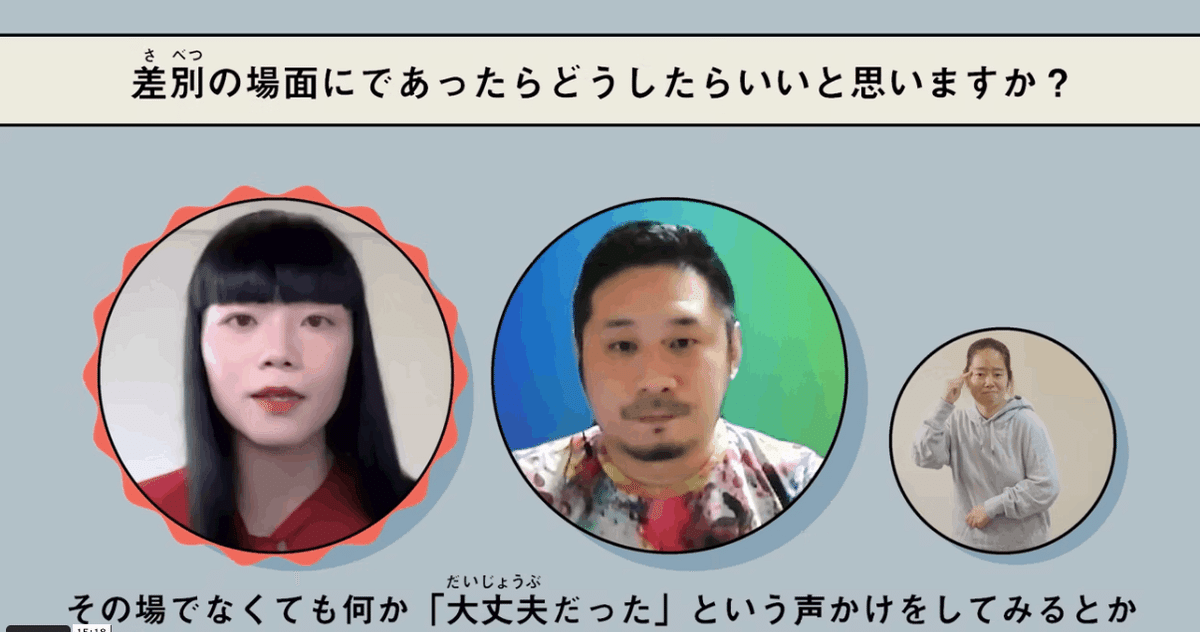
To repeat, in the director’s words, this is the first film in Japan to be made by auditioning transgender people from the general public. The director of this film is Takeshi Tokairin. In
Theater for All’s subtextual video ” Two Qs to Also Watch,
” the director says, ” I’ve always wondered why transgender actors aren’t cast in transgender roles in Japan,” and he was dissatisfied with the situation in Japan.
He also said,
“We exist in society without any particular meaning, but (omitted) I think that if we can’t give our existence a meaning in a drama, then we won’t appear as a presence.” He added, “I think that there is a tendency for minorities to be portrayed in Japanese films as people who are still outside of society, or on the fringes of society. I don’t think that’s a good thing. “
This is only a small part of the director’s comments.
He also talks about the background of the production from various perspectives, but even just reading this will undoubtedly make the work even more interesting.
And the key word the director mentioned was “microaggression.”

Many of you may already know this, but for reference I will quote from the literature.
“These are everyday, everyday words, actions, and situations that, whether intentionally or not, target specific people or groups and are hostile and derogatory, such as those based on race, gender, sexual orientation, or religion (Sue, Capodilupo, et al., 2007).”
“Microaggressions Embedded in Everyday Life (by Derald Wing Sue)”
In other words, microaggressions are a term that refers to all discriminatory expressions. They include not only clear actions and remarks, but also gazes, facial expressions, and even situations. Regardless of whether they are intentional or not. In other words, they are difficult to put into words. As soon as you define them in words, something is lost in the nuance. That something may be the problem, and the area that film excels at. The director also said, “Microaggressions can only be expressed through the medium of film.”
What makes microaggressions difficult is that they are not just blatant hate or harassment by racists (although there is still the shield of compliance), but also unconscious discriminatory behavior by good people. What’s more, they are said to have a major negative impact.
People who commit microaggressions don’t see themselves as racists, they’re often against discrimination, and they may not have chosen to be born into a position where they are likely to be criticized for discrimination (like white people against African Americans, for example).
Alternatively, people who are vulnerable to discrimination may also be directing microaggressions at others.
Because it is unconscious, it can happen to anyone, in any situation. Therefore, it is very difficult to get rid of. However, there are certainly people who are burdened with the difficulty of living because of it. Such people make up a large part of the community and the country.
Although they are called microaggressions, they are not micro at all, either on an individual or societal level! This is the story.
In this situation, in order to avoid hurting someone, we have no choice but to decide that “silence is golden”.
However, in relationships and societies where dialogue has stopped, the hunt for words begins and can easily transform into conflict. It is not a matter of distancing yourself from people in different circumstances and becoming estranged.
“So what should I do?”
That is exactly what this movie is asking.
In the midst of the uneasy and uncomfortable post-viewing experience, one thing suddenly occurred to me: I had forgotten that I was a minority.
Everyone is a minority in some way. It’s natural that there are many different kinds. There is no life in which you can escape from being a minority, you just don’t realize it.
Even I, who lived with R all my life, must have forgotten that.
If we don’t forget that, that is, if we increase the resolution of the differences between each person, including ourselves, the world may look more refined, vivid, and enjoyable. Just like the light in the last scene.
That’s what I felt. I also felt the hope that was put into this work.
That’s it. Thank you for reading to the end.
 Musuta Kusaka's Everyday Journey with Diversity, Equity, and Inclusion in Japan
コメントを残す