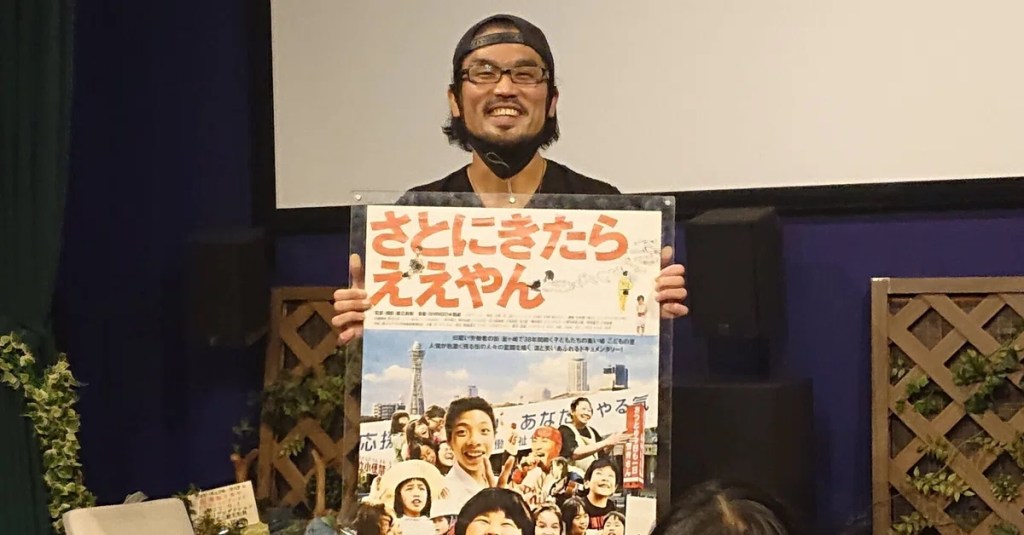
Have you ever closed your eyes while watching a movie? I watched a movie called
” Sato ni ki ra eeyan
Of course, I didn’t go to sleep (although there’s nothing more sweet than a nap in a movie theater) , but I had heard rumors that the audio guide (universal screening) at Cinema Chupiki Tabata in Tabata, Tokyo , was amazing.
I wanted to experience it for myself. And what’s more, I was looking forward to a re-screening of “Sato ni Kitara eeyan.” I had no choice but to go! As a result, this viewing experience was completely new to me, and even better than I had magined. Because. The style of film known as documentary. The nature of a movie theater known as Universal Theater. I was able to sense new possibilities in those areas. Because I was looking forward to films even more. I would like to keep these memories here.
About the movie “Sato ni kara eeyan”

This is a 100-minute documentary.Kamagasaki, Osaka, is often looked upon with prejudice. This film realistically and carefully follows the daily life of the certified NPO ” Kodomo no Sato, ” which has been operating here since 1977 (45 years of experience!) . Kodomo no Sato is not just an after-school children’s center, but also provides everything for children, from meals to accommodation.
Of course, there is no discrimination, such as whether they have a disability or not, or their nationality. There are now said to be at least 6,000 children’s cafeterias. Kodomo no Sato could be said to be a pioneer and giant of this movement. My writing skills are not enough to fully convey its longevity and power.
This place is open to all children as a place of rest, and many different kinds of children come here. Some come to play after school, some with disabilities, some are left in the care of their parents until late at night, and some live here as foster children. Of course, it also plays a very important role as a place of rest for parents (this is very important. Parental fatigue is contagious to children).
In a sense, this work is a group drama in which various people, both those with and without difficulties, come in and out and come back in again. The raw joys and sorrows shown there continue to stimulate the audience’s hearts.
Empathy, social consciousness, laughter, tears, hope, or nameless emotions well up as many as the number of characters. And for the whole 100 minutes.
So, the basic setting is centered around the children’s village, but it is by no means dull. Development after development. It invites the audience into the “scene” with a good tempo and a very dynamic performance.

And, I think this is important, but it’s not preachy. It’s not dark. It’s a heavy theme, but it’s very easy to watch. I shouldn’t say this, but it’s interesting. It makes you smile. Very much.
Many of the social problems and issues related to children tend to occur in closed spaces, such as at home or at school. There is a sense of being closed off. There is a sense of being stuck. There is a feeling that no one can help.
However, this film succeeds in depicting the “openness” of adults who are struggling to solve various problems.
This is probably because it raises the perspective to the “community” of Kamagasaki and carefully depicts the connection between the community and the people.
The local people watch over the children, and the children also look at the community. There is such an enviable exchange there.
That’s why I feel hope that “something might work out.”
Is it the power that flows through the land of Kamagasaki, to smile and live tough? The whole work is light-footed and has a bright tone.
“May everyone here have happiness!”
That’s what I felt after reading it. It’s addictive.
In fact, this was my second time seeing this film, having first seen it in June 2016. It seems I wasn’t the only one, and during the talk session after the screening, a repeat visitor, a mother, said, “I brought my child with me this time!” There’s no doubt that this is a film that is that captivating.
When you close your eyes, you can see the voices of children. A world view that only a documentary can offer.

Although it was said to be an ensemble drama, I watched (and listened) to the three characters.I think the structure of the film was probably intended to show it that way.
First, there is Mayumi, a third-year high school student (at the time). She is the daughter of a single mother. Her mother has problems and she lives in a children’s village. She is probably the foster child of Mr. Shoho, the director of the museum.
“Be careful, the miso soup is hot. How are you feeling?”
These are her words when she went round at night to check on the safety of homeless people. She is a good child. It makes me cry.
Next, there is Jo, a third-year junior high school student (at the time). She hides her diagnosis of intellectual disability (what would we call a learning disability today?). Her father was abusive and now she lives with a single mother. Moreover, her mother may not be good at Japanese. She also has four or five siblings.
“I want to tell her, but I don’t have the confidence to say it. What should I do?”
She is unable to confide her intellectual disability to those around her. Such was her worry.
And then there’s the director, Shoho-san himself. Big mama of Children’s Village. Her nickname is Demekin. Contrary to her nickname, in old photos she looks like a movie actress. There’s a chance she was the Audrey Hepburn of Kamagasaki, and had a big name. I don’t know.
“It’s the children here who have shaped my way of life.”
Every word Demekin says in the story is a punch line. It’s so persuasive that it’s intimidating.
Many other people also use Kodomo no Sato, but I couldn’t take my eyes (and ears) off these three. Because they were all, to a small extent, me. Or, they could have been me. For example.
—-
※The following contains spoilers. If you’re planning to watch it, please skip this part. But reading this won’t make the film any less interesting. It’s not that kind of weak movie. To begin with, their lives and lifestyles are not a joke.
—-
It seems that the children living in the village are given pocket money. And they manage it properly in a bankbook.
However,
“…”
Mayumi hesitates to show the bankbook to Demekin and the other staff.Because. Last month’s pocket money was taken by her mother.And on the day after she received the pocket money.A parent who is leeching off their child’s bankbook. That was Mayumi’s mother.
In the story, the mother is also interviewed. Her comments are unnaturally shallow. Frankly, I doubted her love for her child. To me, it seemed like the mother probably had a mental problem that she couldn’t do anything about. I think she may have some kind of disability.
Joe has a lot of problems that come from his parents. He is a kind young man who usually plays with younger children.But he can’t share the helpless emotions that sometimes explode with him. It’s like he has given up on being understood. Basically, he seemed very lonely.
But SHINGO★Nishinari’s songs save him, inspire him, and give him a push. He acts cheerful and high-spirited, but it was clear that his heart needs a breather. I’m glad he has music by his side.
I understand all of this. Because I was like that too.
There are times when you realize how hard it is that you only realize later on.Oh, it was a difficult situation.
To realize how hard it is, that is, to recognize the symptoms, you need objective knowledge and experience. In that respect, it is similar to a chronic illness.
That is why children who do not have these are more likely to become victims. They become victims of adults without realizing how hard it is in real time and without even sending out an SOS.When that happens, they end up living with worries and difficulties.It’s very hard to deal with yourself when you grow up.
It can have a negative impact on relationships and prevent you from becoming financially and mentally independent.
(When I was a new graduate, I blurted out, “Huh? Have you ever traveled abroad?” and froze my classmates.)
To avoid this, you need a third party to make you realize, “That’s tough. Run away.”But the person himself doesn’t realize it. He’s paralyzed. Especially if he acts cheerful like the kids in this story. So it’s hard for others to notice.
In order to notice, it’s necessary for an adult who is not a parent or even a school, but is in a position where there is no bias, to continue to look at it with understanding and experience. They call it social capital.But this is not easy. It’s very difficult.
But. It was Demekin and the rest of the staff at Kodomo no Sato who made it happen. So how did they manage to do it? There is an impressive scene that gives us a glimpse of how they did it.

This girl ↑ is Mayumi. She has secured a job after graduating from high school (congratulations! She feels like family now). There is a scene where she reports to Demekin that she has started making her own lunch every morning and has started going to school regularly.
However, she reports this from a hospital room. Demekin has been hospitalized with a subarachnoid hemorrhage.
Demekin listens to Mayumi’s report with a nod.
Then, enduring the pain, he holds out his right hand.
It’s a handshake.
The kind that would be handed over without a word and shook firmly. No shaking or stroking. Not a gentle handshake. Perhaps they were comrades in arms. They didn’t protect the children from above, but saw them as individuals who would overcome difficult situations together. The equality of their perspective. This must be the generosity, or rather the strength, of Children’s Village! I realised to myself. Although it may be a selfish assumption.
What decisions will Mayumi and Jo, who are watched over by Demekin, make after graduating? That is one of the major highlights of this film. I would highly recommend this film to anyone raising children, even if it is only for the final part.
Speaking of highlights, there are so many more to see in this film. Local sports days, live rallies, night patrols for homeless people, trauma seminars for parents, Christmas parties, and more. How long have they been covering these events?
And when I closed my eyes, they all seemed even more interesting.
A father yelling (he doesn’t mean any harm, but he’s a bad character. I don’t want to go back to the house where he’s there). A mother leaving crying (it’s hard for a mother to handle on her own, isn’t it?).Interviews with the staff (professionalism shining through in their friendliness).
Among them, the laughter of children stands out. The sounds of running. The sounds of jumping.
Kissing and squealing. Ahahahaha! Thud thud thud thud. Bang! Bang! Bang! The voices and sounds of children in places the camera doesn’t capture slip through the voices of the adults and come bang bang into my ears.
This is something I didn’t notice the first time I watched it.
Perhaps it’s because I’m a childcare worker and I’m sensitive to children’s voices (especially laughter and crying). The power of children that the director spoke of was conveyed powerfully and clearly. It’s all good that everyone is doing well. A sense of happiness.
On the other hand, it also means that the children who are suppressing their voices were able to use their imagination. It’s these children who really need to listen carefully.
This may be what documentaries are good at.
By cutting out the entire scene, even unintended things can be conveyed. In other words, there is an encounter.
This is achieved not only with images but also with sound.
If there is a world line that is unique to documentaries, this experience expanded the possibilities for enjoying it.
The tears flowed in 0 seconds. The lyrics of SHINGO★Nishinari, another star of this movie,
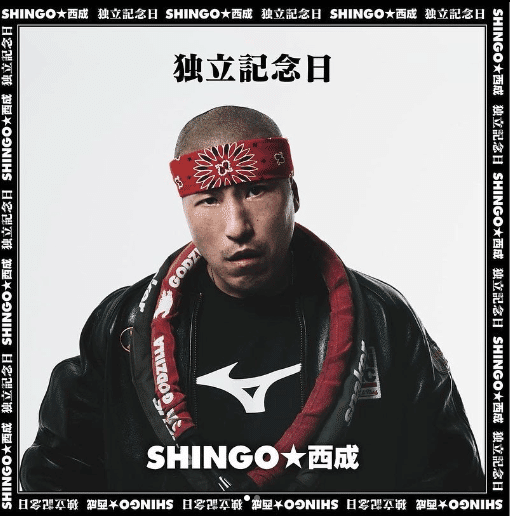
It was an experience beyond imagination that I was able to have by closing my eyes.It was the power of music. No, the power of rap. No, no, it was the power of rapper SHINGO★Nishinari.
SHINGO★Nishinari.
For hip-hop fans, no introduction is needed. A rapper who represents Nishinari. He raps on a wide range of topics, from real life in Nishinari to current affairs, sometimes seriously, sometimes humorously, and coolly.
In particular, his songs set in Nishinari are all about bitter days and painful feelings sugar-coated with human kindness. Not only his songs, but also his personality and way of life have earned him the respect of rappers all over the country, and he has received a lot of support from heads. He is someone who lives by the true essence of hip-hop, “Peace, Love, Unity and Having fun.” He is also actively involved in community activities, and appears throughout the work, such as soup kitchens ( his 100 Santas project is a really tasteful project ).
If you don’t know about SHINGO★Nishinari, please check it out. It’s hilarious.
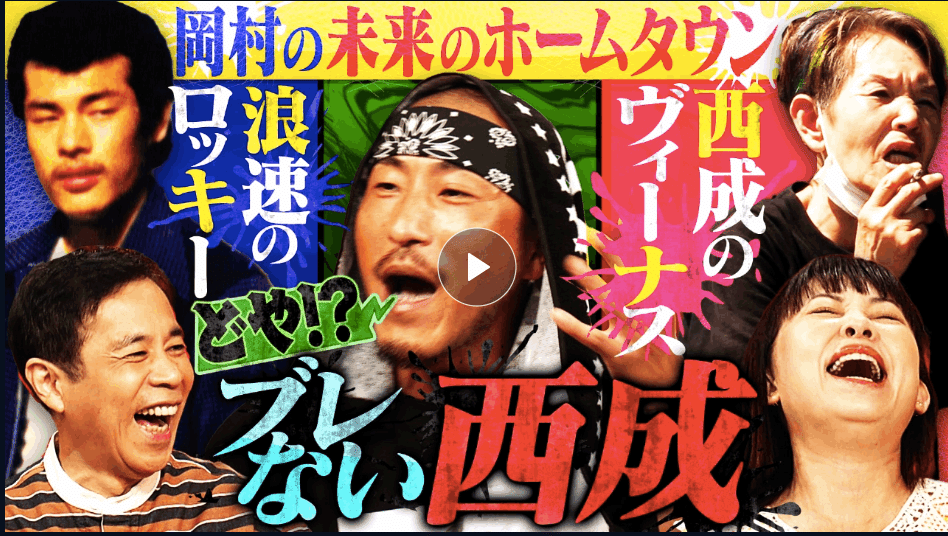
Although he doesn’t appear on TV much, he was on ABC TV’s “Narumi and Okamura’s Sugita TV”. You can watch it on TVer. I’m sure you’ll like it. Here are some related articles.
Nishinari, Osaka, which has a reputation of being “scary” and “violent,” is getting a makeover to become one of the city’s leading “towns for families raising children” [Sugiru TV] (Lmaga.jp) – Yahoo!NewsNishinari Ward, located in the south of Osaka City, is known as the birthplace of Hidekazu Akai, also known as “Naniwa Rocky.”news.yahoo.co.jp
This song by SHINGO★Nishinari is played at key points.
And it’s so effective that you’d think it was the only place to play it (I mean, the director is a pervert). Of
course. You’ll cry. To be honest, I don’t like saying that I “cried” after watching a movie because it seems to belittle the individuality of the work, but I really cried, so it can’t be helped. Because. If you’re not laughing, you’ll cry. That’s because his songs are based on a tough, cheerful nature.
It resonates with the characters in the movie. It’s impossible not to cry. In that respect, “Sato ni kitare iiyan” plays with the audience comfortably. It can be said to be a perfect piece of entertainment.
Joe, who I was paying attention to, is also one of his fans.
At the live concert, he takes his place in the front row with sparkling (or rather, glaring) eyes, and responds to SHINGO★Nishinari’s performance by raising his fist.
I wanted to be there too. Such good vibes vibrate my eardrums.
Music is, after all, second only to food, clothing and shelter. That’s for sure . But, can you live without it? Is it unnecessary or non-urgent? The answer is a firm NO.
Because of this song, I didn’t want to end it today.
For now, I thought I’d try to live just one more day tomorrow. I’m sure everyone has experienced something like that. Especially if you’re a child with nowhere to run.
For some people, music can be food for the soul.
SHINGO★Nishinari’s lyrics are warm. It’s just like floury food.
At the end of the film, his song plays as if to conclude the work. It is a song called ” When your heart and your pockets are cold, fill your heart with joy
” from the album “Burenai” . Here is a line from the song.
“I’ve been doing it with the determination not to give up
, but there’s always someone better, but let’s start by continuing, there are people who notice, let’s throw away what we don’t need, let’s meet again when we feel lighter, if we do what needs to be done, then things will be as they should, and someday spring will come”
By the way, the mother who was mentioned at the beginning of this article and brought her child to the movie theater, said that she also became a big fan of SHINGO★Nishinari after watching this movie.
A rapper who can rock the heart of a mother is the real deal. A must-listen.
I watched the film with my eyes closed. I was able to do so thanks to the audio guide at Cinema Chupiki Tabata (universal screening).

I’ve mentioned several times up to this point that I “watched with my eyes closed.” But the reason I was able to enjoy the movie was because there was a special audio guide that understood the feelings of movie lovers.
The movie theater where I watched this movie is Cinema Chupiki Tabata in Tabata, Tokyo. This place calls itself a universal screening , and they are working on various measures to make it easier for people with disabilities to watch movies. It’s not an easy thing to say, but they are putting it into practice.
Well. The audio guide is one of them. If you ask the receptionist to lend you some earphones, they will lend them to you. It looks like this:

All seats have earphone jacks installed on the armrests, and if you plug in your borrowed earphones, an audio guide will start playing as the movie begins.
But this audio guide is amazing. It’s quite different from the audio commentary for the visually impaired that you often see on TV. It doesn’t just give you a quick rundown of what’s going on.
What to convey. How to convey it.And what not to convey.
In other words, very delicate thought was put into how to convey the appeal of this work and immerse the viewer in it.
For example,
in this audio guide, homeless people are called “Otchan”. Not only that, but other working men are also called “Otchan”. As this is a film set in Kamagasaki, it would be a letdown if they had used stereotypical names such as “older men who do this and that”.
Anyone can casually be called “Otchan”. This film depicts the relationships between these people.
It was a truly “understanding” audio guide.
However, I am not visually impaired.
So, visually impaired people would probably evaluate it from a completely different perspective.Still, it was a valuable experience for me.Because without this audio guide, the idea of watching a movie as a blind person would never have occurred to me. The world I see is not the whole world. It was an attempt to question the receiver that is me. And I felt a lot from that attempt.
Cinema Chupiki Tabata has become a movie theater I want to visit again. The flyer I received said that it will be their 6th anniversary this September. It’s half a zodiac cycle. I
highly recommend you to visit if you are in the area.
Oh. But it’s popular, so it’s better to make a reservation.

lastly
This film is a very enjoyable one to watch with your eyes and your ears. It ‘s not just enjoyable, it’s a film that will leave a lasting impression. It’s a film that will (hopefully) enrich your perspective on society. But. This film was made in 2015. A lot of time has passed, and there have been social changes such as COVID-19. It is important to note that this film does not reflect the current state of the characters, Nishinari, or Kamagasaki. Especially considering the unique characteristics of the area, it is rude for outsiders to make such comments. But still, things
like Hoshino Resorts really opened. I had heard that the town of Nishinari was undergoing major changes. So, when the director took to the stage for the talk session after the screening, I mustered up the courage to ask him a question.
“Has the town of Nishinari changed?” The director replied
, “If I start talking about that, it will take about two hours (laughs). Some things have changed, and some things have stayed the same. There are many different opinions.”
I was thinking that as the city gets brighter, or perhaps as it gets bleached, some people find it harder to live.
I have seen adults like that myself. So I can’t help but be concerned about the future of Nishinari and Kamagasaki, just as I am concerned about the present and future of the children who appear in the film.
Because, somehow, that perspective seems directly connected to the questions: What is a city where people can live comfortably? What is the relationship?
I wonder if they’re still doing just fine.
The end. Thank you for reading to the end.
 Musuta Kusaka's Everyday Journey with Diversity, Equity, and Inclusion in Japan
コメントを残す